
Loire Valley Road Trip: The Complete Guide for US Visitors
The Loire Valley is one of France’s most rewarding road trip destinations, stretching for roughly 280 kilometres through the heart of the country and taking in more UNESCO-listed châteaux than anywhere else on earth. For American visitors, it offers everything that makes France magical — royal palaces, medieval villages, world-class wines, and cycling paths through sunflower fields — all within easy reach of Paris. This guide covers everything you need to plan a Loire Valley road trip, from the best châteaux to visit to where to eat, sleep, and drink your way through the region.
Love France? Join 7,000+ readers on our free newsletter → lovetovisitfrance.substack.com
Why the Loire Valley is Perfect for a Road Trip
The Loire Valley earned its UNESCO World Heritage status in 2000 — a designation that covers not just individual monuments but the entire cultural landscape, including the vineyards, gardens, and villages woven between the châteaux. Locals and visitors alike call it the “Garden of France,” and rightly so: the light here is famously soft, the soil extraordinarily fertile, and the pace of life unhurried in a way that feels genuinely restorative.
From a logistical standpoint, the Loire Valley is one of the easiest parts of France to explore independently. The main corridor runs roughly east to west along the Loire River, linking cities and towns with well-maintained roads and clear signage. Most major châteaux are within a 90-minute drive of each other, which means you can realistically visit two or three in a single day if you choose wisely — though the region rewards lingering far more than rushing.
For US visitors, the nearest international gateway is Paris (Charles de Gaulle or Orly). From Paris, you can reach Tours — the most useful base for a Loire Valley road trip — in under an hour by high-speed TGV train. Picking up a hire car in Tours and returning it there at the end keeps the logistics simple and the cost manageable.
🇫🇷 Free: The Perfect Provence & South of France Road Trip
A free 10-day itinerary covering Avignon, the Luberon villages (Gordes, Roussillon, Bonnieux), Marseille, Cassis, Aix-en-Provence, and the Camargue — with practical route notes most travel guides leave out.
Get the Free Itinerary →The Best Châteaux to Visit on Your Loire Valley Road Trip
With over 300 châteaux scattered across the valley, choosing which ones to visit is the most common planning challenge for first-time visitors. The following selection balances historical significance, visitor experience, and practical spacing along the main route.
Château de Chambord
Chambord is the largest and most iconic château in the Loire Valley — an extraordinary Renaissance palace begun by Francis I in 1519 that took over a century to build. Its double-helix staircase, widely thought to have been designed in consultation with Leonardo da Vinci, is reason alone to visit. The surrounding 5,440-hectare estate is also the largest walled park in Europe and home to a substantial deer population. Arrive early in the morning to avoid the crowds; the château is most dramatic when mist sits low over the moat.
Château de Chenonceau
No Loire Valley road trip is complete without Chenonceau, the most visited château in France after Versailles. Its builders placed it across the River Cher, and it spans the water on a series of arches that give it an almost impossibly graceful appearance. Remarkable women define its history — Catherine de’ Medici and Diane de Poitiers chief among them — and the formal gardens on either side of the château reflect their competing tastes. The interior survives in excellent condition, with thoughtful presentation throughout.
Château de Villandry
Villandry is the Loire Valley’s greatest garden château — famous for its extraordinary ornamental vegetable gardens, which cover several hectares and are maintained to exacting Renaissance standards. The geometry is stunning from above (the château’s terrace offers the best overview), and the sheer variety of vegetables and flowers planted in precise patterns makes this unlike any garden you will have seen elsewhere. Visit in late summer for the most colourful display.
Château de Langeais
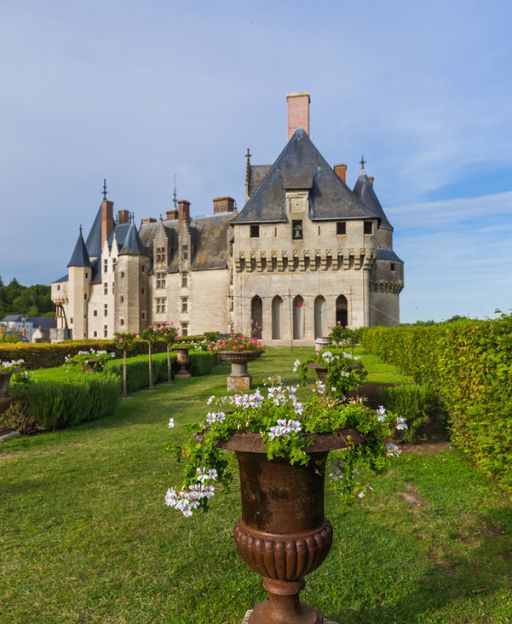
Less visited than its neighbours but arguably more atmospheric, Langeais retains its original 15th-century interiors almost completely intact — a rare thing in the Loire Valley, where later owners stripped or remodelled many of the great châteaux. The tapestries, furniture, and mannequins dressed in period costume give a genuine sense of medieval life. History also singles out Langeais as the site where King Charles VIII married Anne of Brittany in 1491, uniting Brittany with France.
Château Royal d’Amboise
Amboise makes an excellent stopping point on any Loire Valley road trip — the château rises dramatically from a rocky outcrop above the town, and the views from its terraces over the Loire rank among the finest in the region. Leonardo da Vinci spent the last years of his life nearby at the Clos Lucé manor house, which visitors can now explore, and many historians believe his tomb lies in the château’s chapel.
Planning Your Route: A Suggested 5-Day Itinerary
The following itinerary assumes you are based in or near Tours and travelling by hire car. Distances are manageable, and the route follows the Loire from east to west before looping back.
Day 1 — Arrive in Tours: Collect your hire car and check in. Spend the afternoon exploring the old town (Vieux Tours), with its timber-framed medieval buildings and lively market square. The covered market, Les Halles de Tours, is an excellent first taste of regional produce — local goat’s cheese (Sainte-Maure-de-Touraine), rillettes, and the area’s wines.
Day 2 — Chambord and Cheverny: Head east to Chambord first thing. Allow two to three hours for the château and grounds, then continue to Cheverny — a private château that has remained in the same aristocratic family for four centuries and is beautifully maintained. The formal gardens here are immaculate.
Day 3 — Chenonceau and Amboise: Chenonceau opens at 9am; arrive early to see it before the coach parties arrive. Afterwards, follow the Cher eastward to Amboise for lunch and an afternoon at the château and Clos Lucé.
Day 4 — Villandry and Langeais: Head west from Tours to Villandry for the gardens, then continue to Langeais for its remarkably preserved medieval interiors. End the day in Saumur, an attractive town with its own impressive château perched above the river.
Day 5 — Saumur and the wine villages: Use the morning to explore the Saumur area’s cave-dwelling troglodyte villages and mushroom caves (the tuffeau limestone that characterises the local geology is ideal for both). In the afternoon, drive through the Anjou wine villages before returning to Tours for your final night.
Loire Valley Wines: What to Know Before You Go
The Loire Valley is France’s third-largest wine-producing region by volume and one of its most diverse. The range of grape varieties and styles grown along the river’s 1,000-kilometre length is extraordinary, and a Loire Valley road trip offers a genuine education in French wine without requiring any specialist knowledge.
In the central Loire, around Tours, the key appellations are Vouvray (Chenin Blanc, which can be dry, medium, or sparkling) and Bourgueil and Chinon (Cabernet Franc reds that are lighter and more elegant than their Bordeaux equivalents and typically more affordable). Further west, the Muscadet region produces the crisp, mineral white wine that pairs perfectly with the Atlantic shellfish of the nearby coast. At the eastern end of the valley, Sancerre and Pouilly-Fumé produce some of France’s most celebrated Sauvignon Blancs.
Most domaines in the Loire Valley welcome visitors for free or low-cost tastings, and buying direct from the producer is both the best way to learn and consistently the best value. Look out for vignerons indépendants signs on roadside properties — these are independent growers producing their own wine, and they are often far more memorable than the larger commercial caves.
Practical Information for US Visitors
Getting There and Around
Fly into Paris Charles de Gaulle or Orly, then take the TGV from Paris Montparnasse to Tours (approximately 55 minutes). Major car hire companies operate desks at Tours train station. Driving in the Loire Valley is straightforward — the roads are good, GPS navigation works reliably, and the major châteaux all offer clearly marked car parks. US visitors do not need an international driving licence to hire a car in France, though some companies appreciate seeing one alongside your US licence.
Best Time to Visit
Late spring (May to June) and early autumn (September to October) deliver the best combination of pleasant weather, manageable visitor numbers, and seasonal produce. July and August bring the biggest crowds; the major châteaux fill up fast, and accommodation prices climb accordingly. Hot-air balloon operators run their season from April through October — the Loire Valley is one of France’s finest ballooning destinations — with June and September offering the most reliable flying conditions.
Where to Stay
Tours makes the most practical base for a Loire Valley road trip, with strong transport links, a good range of accommodation, and plenty of excellent restaurants. For a more atmospheric stay, explore the cave-hotel options in the Saumur area — local owners have converted several former troglodyte dwellings into characterful chambres d’hôtes that hold a constant cool temperature year-round. The logis de France network also provides reliably good small hotels with a strong emphasis on regional food.
Frequently Asked Questions
How long do you need for a Loire Valley road trip?
Plan for at least four to five days if you want to visit several châteaux and get a proper feel for the region’s wines. A week gives you room to relax, explore the quieter villages, and allow for the inevitable afternoon when you find a perfect terrace and refuse to move. With only two days, prioritise Chambord and Chenonceau, and base yourself in Amboise or Tours.
Is it easy to drive in the Loire Valley as an American visitor?
Yes — the Loire Valley ranks among France’s most straightforward driving destinations. Road maintenance is good, traffic stays light outside peak summer, and the major châteaux all run well-organised car parks. France drives on the right, as in the US, which removes one potential complication. The main adjustments are speed limits (in kilometres per hour) and the priority-to-the-right rule in towns, which occasionally catches out visitors who expect stop signs.
Do you need to book châteaux in advance?
For the major sites — Chambord, Chenonceau, and Villandry particularly — book tickets in advance during July and August. Outside peak season you can walk up on the day at most châteaux, though grabbing the first entry slot is always worthwhile at the most popular sites. Entry costs vary: Chambord charges around €15 for adults, Chenonceau around €18 (each château adjusts prices annually, so check the official website before you travel).
What is the best base for a Loire Valley road trip?
Tours is the most convenient base, offering the best transport connections and the widest range of accommodation and restaurants. Amboise is a strong alternative for visitors who want a smaller, more characterful town — it sits roughly centrally between Chambord to the east and Villandry to the west. Saumur works well if your itinerary is weighted towards the western Loire.
Can I do the Loire Valley as a day trip from Paris?
Technically yes — the TGV makes it possible to reach Tours in under an hour — but a day trip limits you to one or two châteaux and gives almost no time for the wines, food, or villages that make the region genuinely special. If your schedule only allows a day, Chenonceau or Chambord individually are each worthwhile; but if you can extend to two nights, the experience improves dramatically. For full planning guidance, see our France trip planning guide.
Join 7,000+ France Lovers
Every week, get France’s hidden gems, local recipes, and travel inspiration — the kind you won’t find in any guidebook.
Subscribe free — enter your email:
Love more? Join 64,000 Ireland lovers → · Join 43,000 Scotland lovers → · Join 30,000 Italy lovers →
Free forever · One email per week · Unsubscribe anytime
You Might Also Enjoy
- The Alsace Wine Route: A Complete Guide for First-Time Visitors
- Aix-en-Provence Travel Guide: What to See, Do and Eat in Cézanne’s City
- France Travel Budget: How Much Does a Trip to France Actually Cost?
Plan Your France Trip
Ready to start planning? Our complete France travel planning guide covers everything from visas and budgets to the best time to visit and how to get around. Start planning your trip to France →
Tours & experiences you might love


Powered by Viator. Some links are affiliate links — we may earn a small commission at no extra cost to you.

Leave a Reply