
Provence Travel Guide: What to See, Do and Eat in France’s Sunniest Region
A Provence travel guide has to start with a confession: the region is nothing like you imagine — and everything you hoped for. Yes, there are lavender fields turning hilltops purple in July. Yes, there are stone villages perched above valleys where eagles circle overhead. And yes, the rosé is that good. But Provence is also a place of Roman amphitheatres, wild flamingos, market-day chaos, and some of the best food you will eat anywhere in France. This guide covers where to go, when to go, and what not to miss.
Love France? Join 7,000+ readers on our free newsletter → lovetovisitfrance.substack.com
Why Provence Belongs on Your France Itinerary
🇫🇷 Free: The Perfect Provence & South of France Road Trip
A free 10-day itinerary covering Avignon, the Luberon villages (Gordes, Roussillon, Bonnieux), Marseille, Cassis, Aix-en-Provence, and the Camargue — with practical route notes most travel guides leave out.
Get the Free Itinerary →Provence sits in the far south-east of France, bordered by the Rhône to the west, the Alps to the north, and the Mediterranean to the south. That geography explains almost everything about it: long summers, intense light, and a cuisine built on olive oil, garlic, tomatoes, and wild herbs.
People come to Provence for different reasons. Some come for the lavender — which blooms in earnest from late June through August and draws visitors from every corner of the world. Others come for the food, the wine, or the Roman ruins. Many come simply because this is the France they have always wanted to find: slow, warm, and fragrant with thyme and rosemary.
Whatever brings you here, Provence rewards those who slow down. The best experiences — the morning market in Apt, a glass of wine in a village square at dusk, a swim in the Gorges du Verdon — cannot be rushed.
The Best Places to Visit in Provence
Avignon
Avignon is the natural starting point for any Provence trip, particularly if you arrive by TGV from Paris (the journey takes around two hours and forty minutes). The city is famous for its Palais des Papes, the vast Gothic fortress that served as the seat of the papacy during the 14th century when the Church relocated here from Rome.
The Palais des Papes deserves two to three hours of your time — enormous, atmospheric, and largely empty of furniture, which gives it an unusual grandeur. The roof terrace offers some of the best views in the Rhône Valley. After the palace, walk the ramparts, cross the Pont Saint-Bénézet (yes, the bridge from the song), and find a table in the old town for lunch.
Avignon also makes an excellent base for day trips: Orange (with its near-perfect Roman theatre), the Pont du Gard (one of the best-preserved Roman aqueducts in the world), and the wine villages of the Châteauneuf-du-Pape appellation are all within forty minutes by car.
The Luberon
The Luberon is a long ridge of limestone hills running east of Avignon, and the villages that cling to its slopes are among the most beautiful in France. Gordes, Roussillon, Bonnieux, Ménerbes, and Lourmarin are the most visited, each perched on a ridge with views over cherry orchards and lavender fields.
Gordes draws the biggest crowds — its tiered stone houses climbing towards a Renaissance château are genuinely spectacular — but if you want a quieter version of the same experience, try Oppède-le-Vieux or Ansouis. Both are less visited and just as lovely.
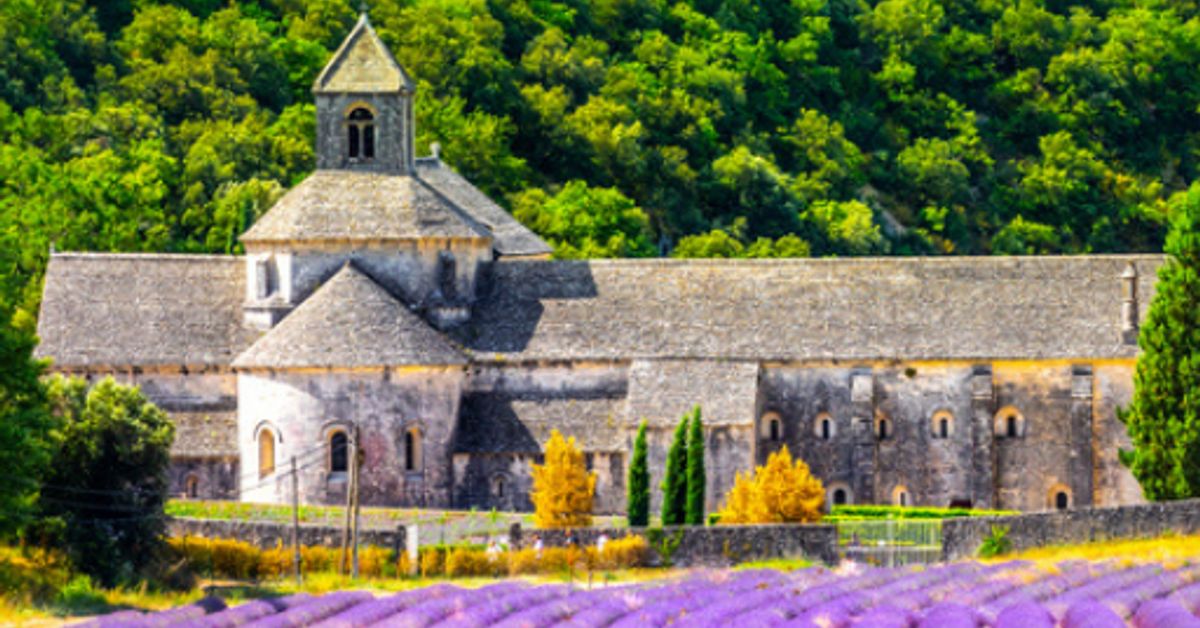
The lavender fields around the Luberon are at their best in late June and the first two weeks of July. The fields at Sénanque Abbey, where rows of purple lavender frame a 12th-century Cistercian monastery, are the most photographed in Provence. Arrive early — by 8am in peak season — to beat the crowds.
Aix-en-Provence
Aix stands as Provence’s most refined city: a university town of grand fountains, tree-lined cours, and handsome 17th-century architecture dating from the era when Aix served as the region’s capital. The painter Paul Cézanne was born here and spent much of his life painting the Montagne Sainte-Victoire, which looms over the city to the east.
You can visit Cézanne’s studio on a quiet street just north of the city centre — preserved largely as he left it, his coat hanging on the door and his easel catching the afternoon light. The old town around the Cours Mirabeau is excellent for a morning walk, particularly on market days (Tuesday, Thursday and Saturday, when the stalls run along the length of the street).
Marseille
Marseille is not the Provence of tourist postcards, but it delivers the most real and vital urban experience in the south of France. Greek sailors founded it around 600 BC, making it France’s oldest city — loud, chaotic, sun-bleached and thrilling. The Vieux-Port is its beating heart: a natural harbour where fishing boats still unload their catch at dawn and the bouillabaisse restaurants line the quays.
The MuCEM (Museum of European and Mediterranean Civilisations) is one of the most striking museum buildings in France, connected to the medieval Fort Saint-Jean by a footbridge over the sea. The Basilique Notre-Dame de la Garde sits perched on a hill above the city, giving panoramic views of the harbour, the islands, and the Alps in the distance.
Beyond Marseille, the fishing village of Cassis — hemmed in by the highest sea cliffs in France — is one of the finest day trips in all of Provence. You can walk the calanques (rocky inlets of vivid turquoise water) between Marseille and Cassis, or explore them by boat.
Provence’s Natural Wonders
Gorges du Verdon
The Gorges du Verdon is Europe’s answer to the Grand Canyon: a dramatic limestone canyon carved by the Verdon river, with walls rising to 700 metres in places and water of an extraordinary blue-green colour far below. The gorge runs for about twenty-five kilometres. You can drive it along the rim roads (the route des Crêtes on the north rim and the corniche Sublime on the south rim), or tackle it by kayak, canoe, or white-water raft from the village of Castellane.
The town of Moustiers-Sainte-Marie, at the western entrance to the gorge, is one of the most striking in Provence: built into the face of a cliff, with a gold star hanging on a chain between two rock pinnacles above it. The story goes that a knight hung the star there on his return from the Crusades. Whether or not it is true, it is worth the short climb to see it up close.
The Camargue
The Camargue stretches across a vast wetland delta where the Rhône meets the Mediterranean — a flat, wind-blasted landscape of salt marshes, rice paddies, and lagoons that feels utterly unlike the rest of Provence. Around 13,000 flamingos breed here alongside white horses, black bulls, and migrating birds in enormous numbers.
The main town is Saintes-Maries-de-la-Mer, a pilgrimage site and a good base for exploring the delta by horseback or bicycle. Bird watchers should head to the Parc Ornithologique de Pont de Gau, where the flamingos gather in the shallows from spring through autumn.
Provence Food and Wine
Provençal cooking is generous, sun-soaked and built on a handful of excellent ingredients. Bouillabaisse — the saffron-scented fish stew that originated in Marseille — is the region’s most famous dish, though a proper version (made with rockfish, rouille, and croutons, in that order) takes time to prepare and is worth spending money on. In Marseille, there are restaurants that have been perfecting the same recipe for generations.
Other dishes to seek out include ratatouille (a Niçoise vegetable stew, always better the next day), tapenade (olive paste, eaten on toast before dinner), socca (a crispy chickpea flatbread from Nice), and daube Provençale (beef stew slow-cooked with olives and red wine). The region’s markets — particularly the Saturday market in Apt and the Tuesday and Saturday markets in Lourmarin — are the best places to eat cheaply and well.
For wine, Provence produces three colours, but it is the rosé that has made the region world-famous. Pale, dry, and crisp, Provence rosé accounts for roughly 40% of France’s total rosé production. The Côtes de Provence appellation covers most of the region, while Bandol (near Toulon) produces some of the finest reds in the south of France, made primarily from the Mourvèdre grape.
If you want to understand Provence wine more deeply before your trip, our guide to why French wine tastes different explains the concept of terroir — and why the same grape variety can taste completely different depending on where it grows.
When to Visit Provence
Provence has one of the most reliable climates in France, with over 300 days of sunshine per year and relatively mild winters. That said, the timing of your visit makes a significant difference to what you experience.
June and July are the peak lavender months, and the region is at its most colourful. Temperatures can reach 35°C or higher, and the main tourist sites (Gordes, Sénanque Abbey, the Pont du Gard) will be busy. Book accommodation well in advance.
May and September offer the best balance: warm enough to swim, quieter than peak summer, and with excellent light for photography. September also brings the grape harvest (vendanges), when the vineyards are alive with activity and many wineries offer tastings.
October and November see the crowds disperse almost entirely. The Luberon villages take on a different quality in autumn — golden light, empty café terraces, and the smell of wood smoke drifting through the streets. Temperatures can be cool, particularly in the evenings.
Winter brings the Mistral — a powerful north wind that can blow for days at a time, stripping the trees and chilling the air sharply. But winter also brings clear skies, empty roads, and a chance to see Provence as its residents actually live it.
How to Get Around Provence
A hire car is almost essential for exploring Provence properly. The Luberon villages, the Gorges du Verdon, the Camargue, and the lavender fields around Valensole are all difficult or impossible to reach by public transport. Pick up a car in Avignon or Marseille and allow yourself to get slightly lost — some of the best discoveries in Provence happen on roads not marked on any map.
If you prefer to travel without a car, Avignon, Aix-en-Provence, and Marseille are all well connected by TGV from Paris and by regional trains between themselves. Avignon is probably the best car-free base: it has a good bus network, a lively centre, and is close to several villages that run tourist minibus services in high summer.
For planning your broader trip to France, our complete France trip planning guide covers everything from the best time to visit different regions to what to expect at border crossings and how to navigate the train system.
Practical Tips for Visiting Provence
A few things worth knowing before you go:
- Markets are the heart of Provençal life. Almost every town has a weekly market — Apt on Saturday, Isle-sur-la-Sorgue on Sunday, Arles on Wednesday and Saturday — and these are far better for food, flowers, and locally made goods than any supermarket or tourist shop.
- Book Sénanque Abbey visits in advance. The abbey only admits visitors at set times during peak season, and slots fill up fast. The lavender typically blooms late June to mid-July.
- The Gorges du Verdon gets extremely busy in August. Visit in May, June, or September for a more comfortable experience, and arrive early at the main viewpoints.
- Dress codes apply at religious sites. The Palais des Papes, Notre-Dame de la Garde, and Sénanque Abbey all require covered shoulders and knees. Pack a light scarf.
- Budget carefully. Provence is not France’s cheapest region. Restaurant prices in the Luberon villages can rival Paris. Markets and picnics are an excellent, cheaper alternative for lunches.
For a fuller picture of what to budget for a French holiday, see our France travel budget guide.
Frequently Asked Questions About Visiting Provence
What is the best time to visit Provence?
May, June and September offer the best conditions — warm weather, manageable crowds, and excellent light. If seeing the lavender fields is your priority, visit between late June and the second week of July, when the blooms are at their fullest.
Do I need a car to explore Provence?
A hire car makes an enormous difference in Provence. The most spectacular landscapes and villages — the Gorges du Verdon, the Luberon hills, the Camargue — are largely inaccessible by public transport. Hire in Avignon or Marseille and plan to drive at least part of your trip.
How many days should I spend in Provence?
A week is the minimum to do Provence justice. Five days allows you to cover Avignon, two or three Luberon villages, Aix-en-Provence, and the coast around Marseille and Cassis. Ten days or more lets you add the Gorges du Verdon, the Camargue, and slower exploration of the markets and villages.
Is Provence worth visiting outside lavender season?
Absolutely. Spring brings wildflowers and cherry blossom, autumn brings the grape harvest and golden light, and winter brings the Mistral and empty roads. The Roman ruins, the food, the markets, and the landscape are worth the journey at any time of year.
You Might Also Enjoy
- Aix-en-Provence Travel Guide: What to See, Do and Eat in Cézanne’s City
- Languedoc France Travel Guide: The Sun-Soaked South Most Visitors Skip
- Valensole’s Lavender Fields: A Practical Guide to Provence in Bloom
Plan Your France Trip
Ready to start planning? Our France trip planning hub covers visas, transport, regions, budgets, and the best time to visit — everything you need to build your perfect France itinerary.
Join 7,000+ France Lovers
Every week, get France’s hidden gems, local recipes, and travel inspiration — the kind you won’t find in any guidebook.
Subscribe free — enter your email:
Love more? Join 64,000 Ireland lovers → · Join 43,000 Scotland lovers → · Join 30,000 Italy lovers →
Free forever · One email per week · Unsubscribe anytime
Tours & experiences you might love


Powered by Viator. Some links are affiliate links — we may earn a small commission at no extra cost to you.

Leave a Reply