
In a field outside the small town of Carnac, 3,000 ancient stones stand in silent rows stretching nearly four kilometres. Their builders raised them more than 6,000 years ago. No written record explains why.
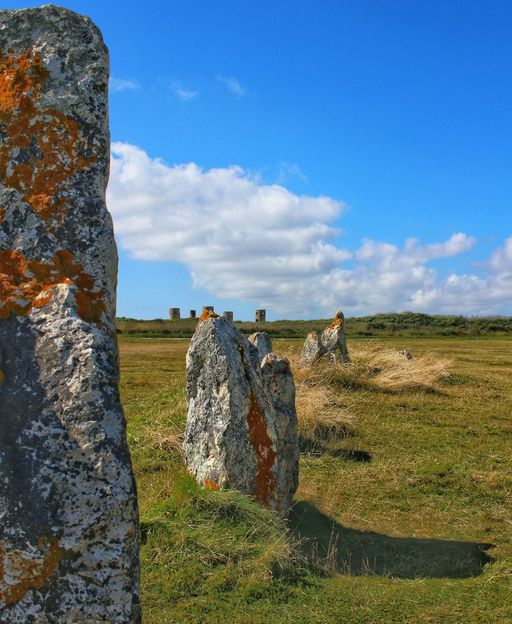
The Carnac alignments sit in the Morbihan department of Brittany, a region more famous for its oysters and coastline than its prehistoric past. Most visitors to Brittany drive past this field without stopping. That is their loss.
What Makes Carnac Extraordinary
Carnac holds the largest collection of prehistoric standing stones in the world. The site predates Stonehenge by at least 1,000 years. Neolithic communities erected the stones between 4,500 and 2,000 BC.
Eleven rows of granite menhirs stretch across the Breton moorland in three separate groupings. The biggest stones stand four metres tall. The smallest barely reach knee height.
Archaeologists count roughly 3,000 stones still upright today. In prehistoric times, the site may have held double that number. Farmers cleared many for fields; others became building materials for local houses.
Why Nobody Can Explain Them
Theories exist. None satisfies everyone.
Some researchers believe the alignments functioned as a vast astronomical calendar. Others argue the site served as a sacred processional route. A third group suggests the stones mark burial grounds below the surface.
The people who built Carnac left no written record. Their culture disappeared long before writing reached western Europe. That gap between what we see and what we understand forms the heart of the site's appeal.
Stand beside a four-metre menhir and consider: someone chose this stone, transported it here, raised it upright alongside 3,000 others, and arranged all of them with clear intention. We still do not know what that intention was.
The Scale a Photo Cannot Capture
Most visitors arrive expecting something like Stonehenge: a circle, a focal point, a dramatic centrepiece. Carnac offers something stranger.
The rows do not circle back. They run in parallel lines, longer than you can see without stopping to turn around. The stones grow taller at one end and shorter at the other. Walking the full site end to end takes 30 minutes.
French authorities have fenced some sections to allow vegetation to recover. Guided access operates for restricted areas between February and September. Walking in formation alongside the stones, with a guide explaining what archaeology can and cannot tell you, sharpens the mystery rather than resolving it.
Enjoying this? 7,000 France lovers get stories like this every week.
Thinking about it seriously? If you’ve started actually planning a move, our complete our complete Moving to France guide walks through every step, every cost, and the paperwork that catches most people out.
The Town Built Around the Stones
Carnac the town sits just south of the alignments. It is a pleasant, low-key Breton settlement with a weekly market, good restaurants serving galettes and fresh seafood, and a pace that suits the landscape.
The Musée de Préhistoire de Carnac holds one of the finest prehistoric collections in Europe. The exhibits explain what research has confirmed and — just as usefully — what remains unknown. Allow at least two hours.
The Tumulus Saint-Michel stands at the town's eastern edge: a giant Neolithic burial mound visitors can climb. From the top, the stone alignments stretch to the west and the scale of the site finally becomes legible.
Brittany rewards slow travel. The Brittany travel guide covers the wider region, from the coast to the interior. And if you want to understand why Breton culture feels so distinct from the rest of France, this piece on Breton identity explains it well.
Planning Your Visit to Carnac
The open sections of the alignments are free year-round. Guided access to restricted areas operates between February and September and carries a small fee. Book ahead in July and August.
From Vannes, Carnac takes around 40 minutes by car. Direct trains do not serve the town, but buses run from Auray station. Accommodation covers all budgets — August fills quickly.
May, June, and early September offer the best balance of warm weather and manageable crowds. Carnac in mist has a different atmosphere — many visitors prefer it. For the full France trip, start with the France planning hub.
What are the Carnac stones in France?
The Carnac stones are roughly 3,000 prehistoric granite menhirs arranged in parallel rows near the town of Carnac in Brittany. Neolithic communities erected them between 4,500 and 2,000 BC — making the site older than Stonehenge by at least 1,000 years.
Is there an entry charge to visit the Carnac stones?
The open sections are free to visit. Guided tours to restricted areas carry a small fee and run from February to September. The Musée de Préhistoire de Carnac charges a separate entry fee and is worth the visit.
How do you get to Carnac from Paris?
The fastest route takes around four hours: TGV from Paris to Auray, then a bus or taxi to Carnac. Many visitors fly into Nantes or Rennes and hire a car, which gives more flexibility around the site and the wider Morbihan area.
When is the best time to visit Carnac?
Visit in May, June, or early September for warm weather and lighter crowds. July and August bring peak visitors and higher accommodation prices. Winter visits offer near-solitude — the stones in mist have an atmosphere of their own.
Carnac does not offer answers. It offers something rarer — the sensation of standing inside a question that has lasted 6,000 years and found no answer yet. That feeling tends to stay with you long after you leave.
Join 7,000+ France Lovers
Three times a week, get France's hidden gems, seasonal guides, local stories, and the art of la vie française — straight to your inbox.
Subscribe free — enter your email:
🇫🇷 Discover the France Most Tourists Never Find
Get our free guide to 25 hidden villages of France — then join 7,000+ readers for weekly stories about places most guidebooks never mention.
Get Your Free Village Guide →📲 Know someone who'd love this? Share on WhatsApp →
Love more? Join 65,000 Ireland lovers → · Join 43,000 Scotland lovers → · Join 29,000+ Italy lovers →
Free forever · · Unsubscribe anytime
🇫🇷 You Might Also Love
Tours & experiences you might love


Powered by Viator. Some links are affiliate links — we may earn a small commission at no extra cost to you.

Leave a Reply