Every language has gaps — words that exist for experiences others cannot quite name. French, more than most, is full of them. These are not obscure literary terms. They are everyday words the French use without thinking twice. And once you know them, you will start to wonder how you ever described your feelings without them.
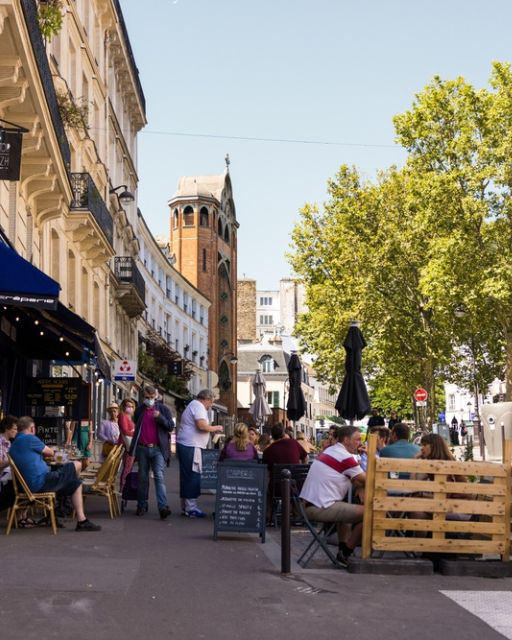
Flâner — To Wander Without a Destination
In English, wandering suggests you have got lost. In French, flâner is an art form.
It means to stroll without a destination. To walk through a city with no plan, no route, no agenda — simply to let the streets take you wherever they go. The flâneur — the wanderer — is a celebrated figure in French culture. Baudelaire wrote about it. Paris was built for it.
Lost for words on a card?
Real French lines for birthdays, sympathy and Christmas, with the English beside each one. Tap what it is for and we will send them to you, free.
Free. We will email you a link to your lines, plus a short note before dates worth a card. Unsubscribe in one click.
The wide boulevards, the covered passages, the riverside paths along the Seine — all of it designed not for getting somewhere, but for being somewhere. When a French person says they spent Sunday afternoon flânant through the Marais, they are not apologising for being aimless. They are describing a deliberately chosen pleasure.
This is why visitors to Paris often feel the city asking them to slow down. Stop checking the map. Put the itinerary away. Turn left for no reason. That is flâner. “Strolling” is too purposeful. “Meandering” is too vague. The French understood the need for a word, and invented one. It captures something essential: that doing nothing in particular can be the most purposeful thing you do all day.
Dépaysement — The Feeling of Being Elsewhere
Dépaysement comes from the word pays, meaning country or homeland. It describes a specific feeling — the slight disorientation of being in a foreign place. Not quite homesickness. Not quite comfort. Something in between.
You feel it the first morning in an unfamiliar French town when everything is slightly off-key. The bread smells different. The shutters open in ways you have never seen. The pigeons behave differently. Nothing is wrong — everything is simply other.
In English, we might say “culture shock,” but that implies something negative. Dépaysement is more neutral, even positive. It is the feeling of noticing that the world is bigger than your own experience of it. The French do not fear this sensation — they seek it.
Many French city-dwellers travel specifically to feel dépaysement. A Parisian who heads to rural Brittany for a week is not just going on holiday. They are deliberately stepping outside their own world to refresh their perspective. It is a word that explains why travel matters — not for the photos, but for that particular feeling of standing in a place where everything is pleasingly, productively strange.
Retrouvailles — The Happiness of Finding Again
English has “reunion.” It covers the logistics — two people who were apart are now together again. Retrouvailles captures something else entirely: the specific happiness of that moment of finding.
It is the emotional weight of coming back to a person, a place, or even a feeling you thought was lost. The French use it for the warmth of seeing a friend who moved away, for returning to a childhood village, for sitting at the same café table where something important once happened.
The word itself has a tenderness that “reunion” lacks. Re-trouve — to find again — implies the finding matters as much as the being together. Something that was missing has been recovered. Travellers returning to France often feel retrouvailles with the country itself: the smell of a boulangerie, the sound of gravel underfoot in a village square, the particular quality of light in late afternoon. If you are planning a trip to France, you may already know this feeling before you arrive.
Enjoying this? 7,000 France lovers get stories like this every week. Subscribe free →
Bon Appétit — Much More Than a Dining Phrase
Bon appétit is one of the few French phrases that English speakers actually use. But most people use it wrong — or at least, without understanding what it really carries.
In France, it is not simply something you say before eating. It acknowledges the act of eating as something worth wishing well. Food in French culture is not fuel — it is a ritual, a pleasure, a social event that deserves the same good wishes as a journey or a project.
Say it to someone eating alone in a park, and you are acknowledging their moment of pleasure. Say it to a chef, and it completes a circle of respect. Used between strangers on a market bench, it is a small act of community — a recognition that we are all, for this moment, sharing in the same human pleasure.
No other phrase in English quite does this. “Enjoy your meal” is close but transactional. Bon appétit is almost ceremonial. It carries the weight of a culture that takes eating seriously — not as luxury, but as one of life’s basic dignities. Understanding this also helps explain why the French treat the hour before dinner as sacred. The meal itself is only part of it.
L’Esprit de l’Escalier — The Comeback That Came Too Late
The philosopher Denis Diderot described this in the 18th century. He wrote of leaving a dinner party, reaching the staircase, and suddenly thinking of the perfect response to an argument he had already lost.
L’esprit de l’escalier — staircase wit — is the brilliant reply that only comes after the moment has passed. You have left the room. The conversation is over. And now you know exactly what you should have said.
English borrows this phrase but rarely uses it. French culture found the experience important enough to name. That naming matters — it transforms a private frustration into a shared human experience. Every French person knows the feeling: the argument replayed on the walk home, the email you wish you had written differently, the conversation that ended before you found the right words.
There is something generous about giving a feeling its own word. It says: this happens to everyone. You are not uniquely slow or inarticulate. You simply had your moment on the staircase. France, as ever, found a way to make even that feel like something worth keeping.
Se Ressourcer — To Fill Yourself Back Up
The closest English translation might be “to recharge” — but that is a mechanical metaphor. Se ressourcer comes from ressource, meaning resource or spring. It carries the image of water: going somewhere to fill back up from the source.
French people se ressourcent by going to the mountains, to the sea, to a grandparent’s garden, to a childhood village. It is not the same as rest. Rest is passive. Se ressourcer is active — a deliberate return to something nourishing. A chosen refilling.
You will hear it in French workplaces without irony. A colleague who takes a long weekend in Normandy might say they are going pour se ressourcer. Nobody laughs. The idea that human beings need to actively seek out the places and experiences that refill them is taken seriously in France in a way it often is not elsewhere.
It is, in many ways, the opposite of burnout culture. It is a built-in permission slip to return to your source — and to take that return seriously. That France offers so many places to do exactly that is, perhaps, no coincidence.
These words are not just vocabulary. They are windows into how a culture thinks. Learn them, and France changes slightly under your feet — from a place you visit to a place you begin to understand. Maybe even feel.
Join 7,000+ France Lovers
Three times a week, get France’s hidden gems, seasonal guides, local stories, and the art of la vie française — straight to your inbox.
Subscribe free — enter your email:
Love more? Join 65,000 Ireland lovers → · Join 43,000 Scotland lovers → · Join 30,000 Italy lovers →
Free forever · Unsubscribe anytime
Love France? So Do We.
Join our free newsletter and get the best of France — travel tips, hidden villages, food traditions, and cultural stories — straight to your inbox every week.
Free. No spam. Unsubscribe anytime.
📥 Free Download: France Travel Planning Guide
Itineraries, insider tips, and the places you must not miss on your next trip to France.
🇫🇷 You Might Also Love
Tours & experiences you might love


Powered by Viator. Some links are affiliate links — we may earn a small commission at no extra cost to you.

Leave a Reply