
The Loire Valley holds a special place in French history. Kings built their grandest châteaux here. Artists crossed the Alps to work here. Explorers set sail from port towns along the river. For centuries, ordinary families lived, worked, and raised children along this great waterway — leaving behind surnames that still carry their stories today.
What’s your name in French? 🇫🇷
Your French Name — type any first name for the French equivalent, with meaning and regional notes.
If your family tree connects you to the Loire Valley, you share roots with one of the most historically significant regions in all of France. This guide explores the most common Loire Valley surnames, their meanings, and the journeys they made — from French villages to the shores of New France.
Why the Loire Valley Matters for French Heritage
The Loire is France’s longest river. It stretches 1,006 kilometres from the Massif Central to the Atlantic coast. For centuries, it marked a cultural and linguistic boundary — the divide between langue d’oïl in the north and langue d’oc in the south.
The Loire Valley itself sits firmly in the northern tradition. The dialect spoken around Tours — Tourangeau — became the foundation of standard French. When you hear that Touraine speaks “the purest French,” that reputation comes from centuries of royal courts, cathedral schools, and trade along the river shaping the language.
Saint Martin of Tours lived here in the 4th century. He served as Bishop of Tours, and his feast day on 11 November became one of the most important dates in the French calendar. The surname Martin is the most common in France today. Historians partly credit the widespread custom of naming children after this beloved saint.
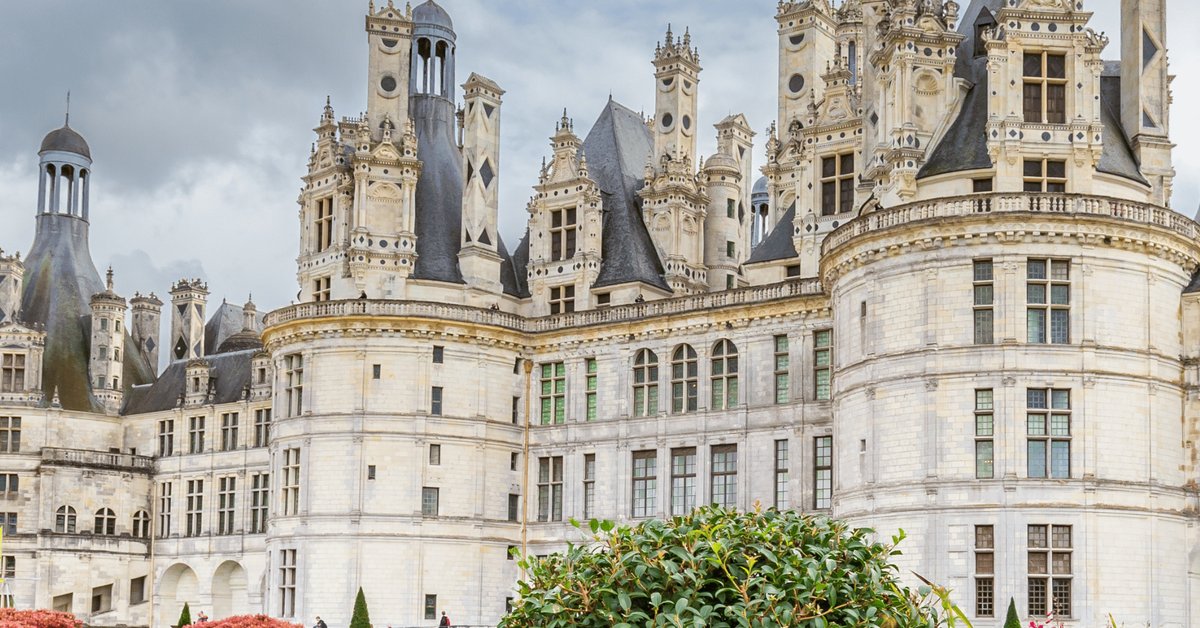
François I held court at Château de Chambord and Château d’Amboise. He brought Leonardo da Vinci across the Alps to spend his final years at Clos Lucé, near Amboise. The king’s presence drew craftsmen, artists, lawyers, merchants, and soldiers — and many of their descendants carry Loire Valley surnames today.
Surnames from the Land
Many Loire Valley surnames began as descriptions of where a family lived. The landscape gave people their names long before official registers existed.
Dubois (also Du Bois) comes from the French word for wood or forest. The Loire Valley’s dense forests — particularly in Sologne, south of the river — made this surname common throughout the region. Families living at the woodland edge were simply “of the wood.”
Dupont means “of the bridge.” River crossings mattered enormously in medieval France. A family living near a bridge over the Loire or one of its tributaries often took this name. It became one of the most widespread surnames in all of France.
Fontaine means “spring” or “fountain.” Clean water sources were vital in medieval communities. A family whose home stood near a natural spring often took this name. Variants include Lafontaine and Delafontaine.
Voisin means “neighbour.” It may seem an unusual surname, but a well-known neighbour — someone helpful, prominent, or simply memorable — could earn this name in medieval French communities.
Surnames from the Trades
The Loire Valley was a centre of skilled trades. Craftsmen built the great châteaux. Weavers, smiths, and carpenters supplied growing towns. Their occupations became surnames carried for generations.
Lefebvre (also Lefèvre, Fèvre) comes from the Latin faber, meaning craftsman or smith. It originally described a blacksmith but later applied to skilled metalworkers broadly. The surname ranks among the most common in northern and central France.
Charpentier means “carpenter.” Château construction boomed across the Loire Valley in the 15th and 16th centuries. Carpenters were in constant demand. Many families who worked on these great buildings passed the trade name to their children.
Chartier means “carter” — someone who drove a cart or wagon. Moving goods along the Loire Valley’s roads and waterways was essential work. Chartier families appeared throughout this trading corridor.
Couturier means “tailor.” Textile production thrived in towns like Tours, which was famous for its silk weaving. A family running a tailoring business might carry this surname across several generations.
Tessier comes from the Latin texarius, meaning “weaver.” Tours was a centre for silk and linen production. Weaving families carried this name through centuries of trade. If your French-Canadian family carries the name Tessier, there is a good chance your ancestors left the Loire Valley.
🇫🇷 Enjoying this? 7,000 France lovers get stories like this every week.
Thinking about it for retirement? If you’ve started thinking seriously about retiring there, our complete our full Retire in France guide covers the visa, healthcare, cost-of-living, and the regions worth shortlisting.
Surnames of Status and Faith
The Loire Valley produced many noble families and powerful churchmen. Some surnames reflect this history directly. Others show how the Church shaped everyday naming customs.
Chevalier means “knight” or “horseman.” It was originally a status title — someone who held knightly rank. As surnames spread through French society in the 13th and 14th centuries, Chevalier attached itself to families with knight ancestors, and later to those who served in mounted roles.
Martin is the most common surname in France and one of the most common in the Loire Valley. Its roots lie with Saint Martin of Tours, the 4th-century bishop who became France’s patron saint. Children baptised on 11 November (Saint Martin’s Day) or named in his honour carried this surname across generations. Variants include Martineau and Martinet.
Girard comes from Germanic roots: ger (spear) and hard (brave or hardy). It was a prestigious Frankish personal name before it became a surname. The Loire Valley’s Frankish heritage runs deep — the Franks controlled this territory from the 5th century onwards.
Gautier also comes from Germanic roots: wald (rule) and hari (army). In English, this name became Walter. It entered France with the Franks and remained common throughout the Loire Valley and northern France. Spelling variants include Gauthier and Gaultier.
Allard comes from the Germanic personal name Adalhard — adal (noble) and hard (brave). Old Frankish families in the Loire region carried this name, and it spread through the area’s noble and merchant classes over centuries.
Surnames with Older Origins
Some Loire Valley surnames reach back even further — to Latin, older Gaulish roots, or the aftermath of the Hundred Years’ War.
Bodin may derive from the Germanic Bodo, meaning messenger or herald. It appears frequently in Anjou and Touraine. Some researchers link it to Old French bod, meaning news or message. Others trace it to a personal name popular among the Loire Valley’s Frankish settlers.
Renard means “fox” in modern French, but as a surname it comes from the Germanic personal name Reginhard — regin (counsel) and hard (brave). The cunning fox became so associated with this name through medieval stories that renard became the standard French word for fox.
Touchard is a surname found specifically in Anjou. Its origins are debated. Some scholars link it to a Germanic personal name. Others suggest a nickname origin. What is certain is that Touchard families appear consistently in Angevin records from the medieval period onwards.
Langlois means “the Englishman.” It was given to families of English origin or those with strong English connections. The Hundred Years’ War (1337–1453) brought English soldiers and administrators deep into the Loire Valley — including Tours, Orléans, and Chinon. Some English settlers stayed and raised French families. Their descendants carried the name Langlois for generations.
Blanchet comes from blanc, meaning “white” or “fair.” It was a descriptive surname applied to someone with light hair or a pale complexion. Variants include Blanc, Leblanc, and Blanchard.
Bonhomme means “good man.” It served as a complimentary nickname — someone known for honesty or good character in their community. The name appears across the Loire Valley in both rural and town records.
Loire Valley Families in New France
Thousands of Loire Valley families crossed the Atlantic to New France during the 17th and 18th centuries. If you have French-Canadian roots, your ancestors may have come from this region.
Colonisation efforts concentrated in three main periods. First came the early settlement phase (1608–1660), when explorers and traders established Québec and the St Lawrence corridor. Then came the great migration of the 1660s and 1670s, when Louis XIV and his administrator Jean Talon actively recruited colonists. Finally came steady emigration throughout the 18th century.
The Loire Valley contributed heavily to each phase. The Touraine region (around Tours) and Anjou (around Angers) sent proportionally large numbers of colonists. Parish records in Québec show Martin, Dubois, Fontaine, Girard, Chartier, Tessier, and Gautier families arriving throughout this period.
The filles du roi programme (1663–1673) brought over 800 women to New France, many from the Loire Valley. King Louis XIV funded their passage to help stabilise the colony’s population. Today, millions of French-Canadians descend from these women. If your French-Canadian maternal line traces to the 1660s or 1670s, your ancestor may well have grown up in Touraine or Anjou.
Louisiana also received Loire Valley families — particularly those who arrived via New France and moved south along the Mississippi. Cajun and Creole communities in Louisiana carry many of these surnames today. Franco-Americans in New England — especially in Maine, New Hampshire, and Massachusetts — also trace their roots to these original Loire Valley emigrants.
Similar migration patterns shaped Huguenot communities worldwide. Many Huguenots — France’s Protestant minority — came from the Loire Valley before the Revocation of the Edict of Nantes in 1685 forced them to flee. You can read more about this in our guide to the Huguenots and their global legacy.
Tracing Your Loire Valley Ancestry
The Loire Valley divides into several modern departments. Each has its own departmental archives (archives départementales) with records going back to the 16th century — and some earlier.
Key archives to search:
- Archives d’Indre-et-Loire (Tours) — covers Touraine. Many records are digitised and free to access online.
- Archives de Maine-et-Loire (Angers) — covers Anjou. Strong digitisation programme available online.
- Archives du Loiret (Orléans) — covers the Orléanais region.
- Archives de Loir-et-Cher (Blois) — covers the Blois and Vendôme areas.
Parish records (registres paroissiaux) before 1792 sit alongside civil records in most Loire Valley archives. These are the key source for pre-Revolutionary ancestry research. FamilySearch holds significant Loire Valley collections that you can search for free.
For a complete walkthrough of the research process, read our step-by-step guide to tracing French ancestry. It covers state civil records, pre-1792 parish registers, departmental archives, and the best online databases for Canadians and Americans.
If you plan to visit the Loire Valley in person to research your ancestors, our French heritage trip planning guide walks you through every step — from identifying your ancestral commune to visiting the local church, the mairie, and the cemetery. The Loire Valley is easy to reach from Paris by high-speed TGV train and makes an extraordinary base for heritage travel. Start planning at our France travel planning hub.
Loire Valley Surnames at a Glance
| Surname | Meaning / Origin | Notes |
|---|---|---|
| Dubois | “Of the woods” | Topographic; common in Sologne |
| Dupont | “Of the bridge” | Topographic; river crossings |
| Martin | Saint Martin of Tours | Most common French surname |
| Chevalier | “Knight/horseman” | Status name |
| Lefebvre / Lefèvre | “The smith” (Latin faber) | Occupational |
| Renard | Reginhard (counsel + brave) | Nickname; medieval fox stories |
| Fontaine | “Spring/fountain” | Topographic |
| Girard | Ger (spear) + hard (brave) | Germanic Frankish origin |
| Chartier | “Cart driver” | Occupational; trade routes |
| Blanchet | “White/fair” | Descriptive nickname |
| Charpentier | “Carpenter” | Château builders |
| Touchard | Germanic personal name | Specific to Anjou |
| Bonhomme | “Good man” | Character nickname |
| Langlois | “The Englishman” | Ethnic; Hundred Years’ War |
| Gautier | Wald (rule) + hari (army) | Germanic Frankish origin |
| Couturier | “Tailor” | Tours silk trade |
| Voisin | “Neighbour” | Descriptive |
| Tessier | “Weaver” (Latin texarius) | Occupational; Tours textiles |
| Bodin | Germanic Bodo (messenger) | Anjou and Touraine |
| Allard | Adalhard (noble + brave) | Old Frankish noble name |
Frequently Asked Questions
What are the most common French surnames from the Loire Valley?
Martin, Dubois, Dupont, and Lefebvre are among the most common surnames associated with the Loire Valley. Martin is the single most common surname in all of France, with strong local roots through Saint Martin of Tours. Dubois and Dupont reflect the region’s landscape, while Lefebvre and Tessier reflect its craft and textile traditions.
Why do so many French-Canadian surnames come from the Loire Valley?
The Loire Valley — particularly Touraine and Anjou — sent large numbers of colonists to New France during the 17th and 18th centuries. Royal recruitment programmes actively sought settlers from this central French region. As a result, surnames like Martin, Dubois, Girard, and Chartier appear frequently in Québec parish records. The filles du roi programme further concentrated Loire Valley ancestry in French-Canadian family trees.
Where can I find Loire Valley family records online?
The departmental archives of Indre-et-Loire (Tours), Maine-et-Loire (Angers), Loiret (Orléans), and Loir-et-Cher (Blois) all offer digitised parish and civil records through their online portals. FamilySearch also holds significant Loire Valley collections free of charge. Our guide to tracing French ancestry covers each database in detail.
Is the Loire Valley easy to visit for a heritage research trip?
Yes. Tours is accessible by high-speed TGV train from Paris in about one hour. Most departmental archives sit in city centres. The region’s extraordinary château circuit — Chambord, Chenonceau, Amboise, Chaumont — makes combining heritage research with sightseeing easy and deeply rewarding.
Did Loire Valley families emigrate to the United States as well?
Yes. Many Loire Valley families reached the US via New France, moving south through the Mississippi Valley to Louisiana, where Cajun and Creole communities carry many of these surnames today. Franco-American communities in New England — particularly Maine, New Hampshire, and Massachusetts — also trace significant portions of their heritage to Loire Valley emigrants who came through Québec.
You Might Also Enjoy
- French Surnames of Normandy: Origins, Meanings and Family Heritage
- French Surnames of Brittany: Origins, Meanings and Family Heritage
- How to Trace Your French Ancestry: Step-by-Step Guide
Plan Your France Trip
Ready to visit the Loire Valley and discover your ancestral roots? Our France travel planning hub covers everything from getting there to finding the best time to visit.
Join 7,000+ France Lovers
Three times a week, get France’s hidden gems, seasonal guides, local stories, and the art of la vie française — straight to your inbox.
Subscribe free — enter your email:
🇫🇷 Tracing Your French Ancestry?
Get our free step-by-step guide to French genealogy research — from departmental archives to parish records. Plus join 7,000+ France lovers for weekly stories.
Get the Free Ancestry Guide →Love more? Join 65,000 Ireland lovers → · Join 43,000 Scotland lovers → · Join 30,000 Italy lovers →
Free forever · · Unsubscribe anytime
🇫🇷 You Might Also Love
Tours & experiences you might love


Powered by Viator. Some links are affiliate links — we may earn a small commission at no extra cost to you.

Leave a Reply