
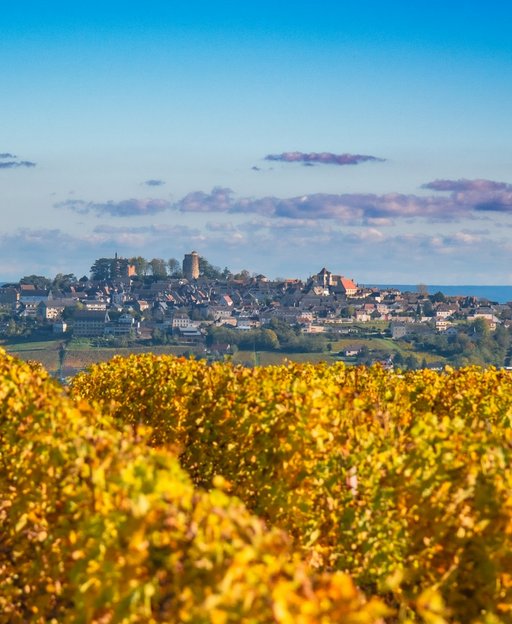
Stand on the hill at Sancerre on a clear morning and you understand immediately why wine lovers make the journey. The Loire Valley opens up below you, pale and wide. Vineyards fall away on every side in neat, unhurried rows. At the top of the hill, this small medieval village sits quietly, largely unconcerned with its own fame.
A Village That Earns Its Reputation
The Loire Valley stretches for over a thousand kilometres. It offers no shortage of beautiful places. But Sancerre occupies a position unlike anything else on the route — a hilltop village with views across the Berry countryside, surrounded by the vines that produce one of France’s most admired white wines.
The town itself is small. A few thousand people call it home. Narrow streets climb between stone houses, and the medieval Tour des Fiefs — a lone cylindrical tower, all that survives of the old castle — still rises above the rooftops. Most visitors arrive for the wine. They stay because of the village.
The Sauvignon Blanc That Rewrote the Rules
Before Sancerre, most wine drinkers associated Sauvignon Blanc with New Zealand or California. Sancerre changed that conversation permanently.
The appellation covers around 2,800 hectares of hillside vineyards. The soil here varies dramatically across three distinct types: silex (flint), terres blanches (clay and limestone), and caillottes (small limestone pebbles). Each soil type gives the wine a different character — from the mineral, gunflint style grown on flint to the rounder, more floral wines that clay produces.
Local vignerons — many running operations that have stayed in the same family for generations — take these distinctions seriously. They discuss their individual plots the way Burgundy winemakers talk about their lieux-dits. Soil matters here more than almost anywhere else in France.
The wine is bone dry, high in acid, and carries a distinctive mineral edge that the French describe as pierre à fusil — gunflint. One cold glass paired with something simple transforms a riverside lunch into a memory.
Enjoying this? 7,000 France lovers get stories like this every week.
Thinking about it for retirement? If you’ve started thinking seriously about retiring there, our complete our full Retire in France guide covers the visa, healthcare, cost-of-living, and the regions worth shortlisting.
Crottin de Chavignol — The Cheese Nobody Warned You About
Five kilometres from Sancerre, the village of Chavignol produces a small round goat’s cheese that makers here have produced for centuries. Crottin de Chavignol earned AOC protected status in 1976.
Young Crottin is soft and mild, with a thin white rind. As it ages, it hardens and develops a sharper, earthier flavour. Local restaurants serve it warm on a bed of salad leaves, grilled until the outside colours and the inside softens.
The pairing with Sancerre Blanc is one of those food and wine combinations that makes perfect sense. The acid in the wine cuts through the richness of the cheese. The minerality mirrors the earthiness in the rind. It sounds like a simple lesson. It tastes like one of the best things France offers.
Walking the Village Before the Tourists Arrive
Most visitors to the Sancerre region do not spend enough time in the village itself. They taste wine, buy a bottle or two, and drive on. That is their loss.
Sancerre’s streets reward slow walking. On market days, the Place de la Halle — a quiet square lined with cafés — fills with locals buying bread, cheese, and early vegetables. Rising above everything else, the Tour des Fiefs offers a panoramic view across the vineyards that no tasting room can match.
The surrounding hamlets carry their own character. Sury-en-Vaux and Bué both sit within the appellation, and vignerons in these smaller villages sometimes welcome visitors without appointments — though calling ahead always helps.
For planning the wider Loire Valley, the Loire Valley travel guide covers the full region from Nantes to Orléans, including where to stay and which châteaux to visit. And if you want help organising your whole France trip, the France travel planning hub is the best place to start.
When to Go and How to Reach Sancerre
Late spring and early autumn offer the best conditions. June brings long days and the vineyards at their most lush and green. September and October mark the harvest — a quieter, more intimate time when you can sometimes watch pickers begin their work at dawn. Avoid mid-August if you prefer uncrowded roads and tables without waiting times.
From Paris, the fastest route runs via train to Cosne-sur-Loire, roughly two hours from Gare de Bercy, followed by a local bus or taxi to Sancerre. The road from the valley floor up into the village winds steeply. First-time visitors often pull over halfway up simply to look back at the view.
Frequently Asked Questions About Visiting Sancerre
What is Sancerre wine, and what does it taste like?
Sancerre is a Loire Valley AOC wine. The white — made entirely from Sauvignon Blanc — tastes dry, crisp, and mineral, with aromas of citrus, white flowers, and sometimes flint or gunsmoke. The appellation also produces red and rosé from Pinot Noir, but the white wine built Sancerre’s worldwide reputation.
What is the best time of year to visit Sancerre?
Late September to mid-October during harvest gives the most atmospheric visit, with pickers in the vineyards and vignerons at full pace. Late spring (May to June) offers beautiful green vines and uncrowded roads. Avoid the second and third weeks of August, when the village fills with summer visitors.
Can you visit wine producers in Sancerre without booking ahead?
Smaller vignerons in hamlets like Bué and Sury-en-Vaux often welcome drop-in visitors, but booking is always safer. The better-known producers in Sancerre itself usually require appointments, especially during harvest. Many offer tastings in English.
Is Sancerre worth visiting if you don’t drink wine?
Yes. The hilltop village — with its medieval tower, narrow streets, and panoramic views across the Loire Valley — justifies the detour on its own. The local Crottin de Chavignol goat’s cheese gives food lovers another reason entirely. Sancerre rewards every kind of visitor who makes the climb.
Sancerre sits at its hilltop and waits. It has done this since the Middle Ages. The vineyards change with every season — green in spring, golden in autumn, bare and quiet in winter. The wine in your glass carries all of that history and some of the most beautiful countryside in France with it. Go once, and you will understand why people keep coming back.
Join 7,000+ France Lovers
Three times a week, get France’s hidden gems, seasonal guides, local stories, and the art of la vie française — straight to your inbox.
Subscribe free — enter your email:
📲 Know someone who’d love this? Share on WhatsApp →
Love more? Join 65,000 Ireland lovers → · Join 43,000 Scotland lovers → · Join 29,000+ Italy lovers →
Free forever · Unsubscribe anytime
🇫🇷 You Might Also Love
Tours & experiences you might love


Powered by Viator. Some links are affiliate links — we may earn a small commission at no extra cost to you.

Leave a Reply