
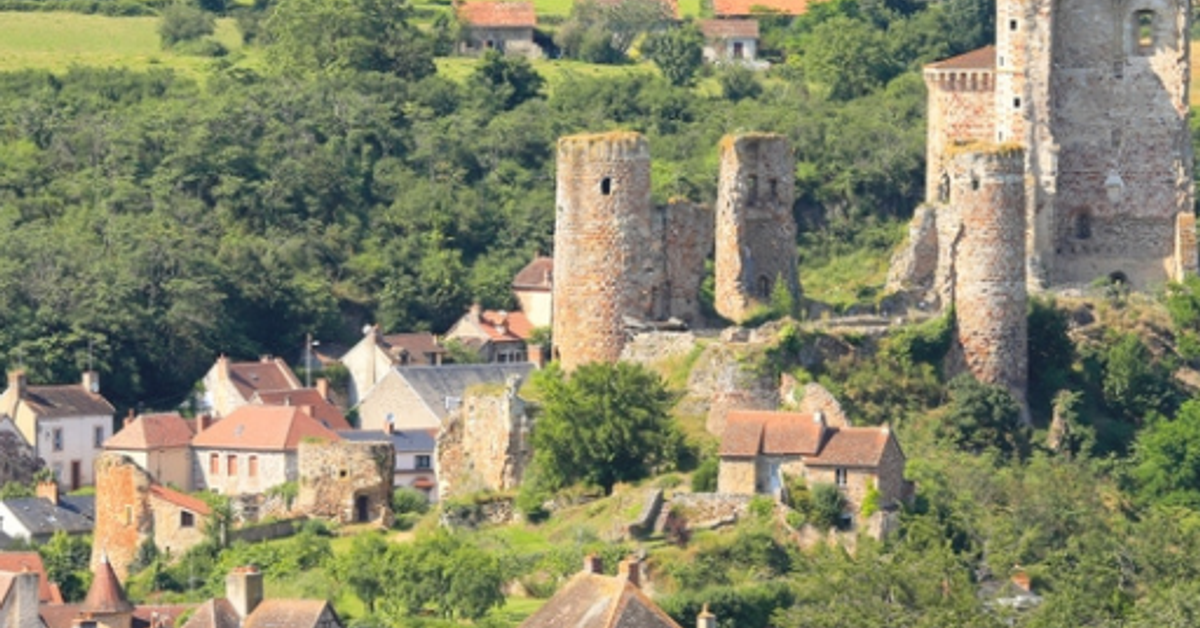
Millions of people in Canada and the United States carry French surnames. Truchon. Beaumont. Laforge. Thibodeau. Gauthier. The name on your family tree goes back to a village in Normandy, a farm in Brittany, a church in Provence — or perhaps to the tragic Acadian exile of 1755. If you want to trace your French ancestry, you are not alone, and the good news is this: France has some of the best-preserved historical records in the world. Many of them are free to access online, right now, from wherever you are.
This guide walks you through every step of French genealogy research. Whether your family left France three centuries ago or three generations ago, you can find them. This is where your journey begins.
Why French Ancestry Research Is Uniquely Rewarding
France kept records earlier and more systematically than almost any other country. The French state required civil registration of births, marriages, and deaths from 1792 — decades before most other nations. Before that, the Catholic Church recorded baptisms, marriages, and burials going back to the 1500s in many parishes.
What this means for you: in many cases, you can trace a French family line back 400 to 500 years. That is not common anywhere in the world. France makes this possible because the Archives Départementales — France’s 96 regional archive centres — have digitised enormous collections and put them online for free.
There is also an emotional reward. France is not just a country you visit. It is a place with deep cultural meaning — the land of bread and wine, of stone farmhouses and cathedral bells, of family meals that stretch for hours. When you find your ancestors there, you are not just finding names. You are finding a way of life that shaped who your family became.
Step 1 — Know Where Your Family Came From
Before you open a single archive, gather everything your own family already holds. This is the single most important step in French genealogy research, because France is divided into 96 departments and thousands of communes. Without knowing which region your ancestors came from, you are searching in the dark.
What to collect:
- Birth, marriage, and death certificates of your oldest known relatives
- Church baptismal records and confirmation documents
- Old letters, diaries, and family Bibles
- Naturalisation papers and immigration records
- Ship manifests (especially for 19th century arrivals)
- Census records from Canada or the United States listing a French birthplace
Even a partial place name is useful. “Born in Normandy” narrows the search to one region. “Born in the department of Seine-Inférieure” takes you straight to a specific archive. Your surname itself can also be a clue — many French surnames indicate a regional or occupational origin.
Step 2 — Start With What You Know, Work Backwards
French genealogy works exactly like any other: start with yourself and work backwards, one generation at a time. Do not skip generations. Do not guess. Each record you find should confirm what you already know and reveal the generation before it.
The most common mistake beginners make is jumping straight to France before confirming the immigrant generation. Find your ancestor who arrived in Canada or the United States first. Their naturalisation record, census entry, or death certificate often lists their exact place of birth in France.
Once you have a commune name, you are ready to search the French archives.
Step 3 — Access French Civil Records (État Civil)
On 20 September 1792, the Revolutionary government of France transferred responsibility for recording births, marriages, and deaths from the Church to the state. These records are called the état civil — civil status records — and they are among the most complete genealogical documents in the world.
From 1792 onwards, every birth, marriage, and death in France was recorded by a local civil registrar (officier d’état civil). The records are standardised, legible, and include full names, dates, and the names of parents or witnesses.
Where to find état civil records:
- Archives Départementales — most departments have digitised records up to the late 1800s (some to 1902). Access is free at archives.fr.
- FamilySearch.org — free. Has extensive French civil record collections, searchable by name and department.
- Ancestry.com / Ancestry.ca — subscription required, but has strong French civil record databases particularly useful for French-Canadian researchers tracing back to France.
French civil records are written in French, but they follow a predictable format. Even if your French is limited, you will quickly recognise the key words: né (born), décédé (died), marié (married), fils de (son of), fille de (daughter of).
🇫🇷 Enjoying this? 7,000 France lovers get stories like this every week. Subscribe free →
Step 4 — Go Further Back With Parish Records
Before 1792, it was the Catholic Church that kept records. These are called registres paroissiaux — parish registers — and the best of them date to the 16th century. They recorded baptisms, marriages, and burials in Latin (and later French).
Parish records vary enormously in quality and completeness. Wars, fires, floods, and the upheaval of the Revolution destroyed many. But a great number survive and have been digitised by the Archives Départementales.
If you can trace your family back to the early 1700s using civil records, parish records can often take you further — sometimes to the 1550s or 1600s in well-documented areas like Normandy, Brittany, or the Loire Valley.
For Huguenot ancestors — French Protestants who fled persecution before and after the Revocation of the Edict of Nantes in 1685 — records are kept separately. Their registers were maintained by Protestant communities and many survive, though they are scattered across different archives in France and abroad. If your ancestors were Huguenots, regions like Languedoc, the Cévennes, Normandy, and Saintonge are particularly relevant.
Step 5 — Use the Archives Départementales Online
This is where French genealogy research pulls far ahead of other countries: most of it is free.
France’s 96 departments each have their own archive, and the majority have invested heavily in digitising records and making them freely available online. You do not need to be physically in France to access them.
How to find your department’s archive:
- Go to the national portal: archives.fr/annuaire-des-archives
- Find your ancestor’s department (e.g., Seine-Maritime for Normandy, Finistère for Brittany, Bas-Rhin for Alsace)
- Visit that department’s archive website directly — most have their own search interface
Some departments are fully indexed, meaning you can search by name. Others require you to browse image by image. Either way, the records are there, and they are free to view.
If your ancestors came from Normandy, the Archives Départementales for Seine-Maritime and Calvados are well-digitised. Brittany‘s archives (particularly Finistère and Côtes-d’Armor) are also strong. And if your family came from Alsace-Lorraine, the Bas-Rhin and Haut-Rhin archives hold records going back centuries — though note that Alsace changed hands between France and Germany multiple times, so some records were kept in German.
Step 6 — Essential Databases for French Ancestry Research
Beyond the departmental archives, several major databases are essential tools for French genealogy research:
- FamilySearch.org (free) — the largest genealogy database in the world. Has millions of French records including civil registers, parish records, and military conscription lists.
- Généanet (geneanet.org) — a French-language genealogy platform with both free and premium tiers. Strong for French family trees and sharing research with other researchers who may have found your family already.
- Filae (filae.com) — French genealogy database with a strong état civil collection. Subscription required.
- Ancestry.com / Ancestry.ca — particularly strong for French-Canadian and Acadian collections. Subscription required.
- GeneaBank — collaborative genealogy project with millions of French vital records contributed by volunteers.
If Your Ancestors Were Acadian or French-Canadian
If your French roots run through Canada — particularly Quebec, Nova Scotia, New Brunswick, or Louisiana — you have additional resources available to you.
French colonists began arriving in Canada in the early 1600s. The Catholic Church kept meticulous records of baptisms, marriages, and burials throughout New France. These records are remarkably well-preserved and widely digitised.
Key resources for French-Canadian ancestry:
- PRDH (Programme de recherche en démographie historique) — the definitive database of New France inhabitants from 1621 to 1765. Available at prdh-igi.org.
- The Drouin Collection on Ancestry.ca — Quebec church records spanning 1621–1968. Millions of records.
- BAnQ (Bibliothèque et Archives nationales du Québec) — free online access to Quebec vital records at numerique.banq.qc.ca.
- FamilySearch Quebec collections — free, extensive, including Acadian records.
If your ancestors were Acadian — the French settlers of Acadia (modern-day Nova Scotia, New Brunswick, and Prince Edward Island) — their story is one of the most heartbreaking in North American history. The Grand Dérangement of 1755 saw British forces expel approximately 10,000 Acadians from their homeland, scattering them to Louisiana, France, Quebec, and beyond. Many Acadian families are extraordinarily well-documented as a result of extensive genealogical research conducted since the 19th century.
For Louisiana Creole and Cajun ancestry (Acadians who settled in Louisiana after the expulsion), the Centre d’études acadiennes Anselme-Chiasson at the Université de Moncton is an excellent starting point.
If Your Ancestors Were Huguenots
Huguenots were French Protestants who faced severe persecution from the 16th to the 18th centuries. After the Revocation of the Edict of Nantes in 1685, hundreds of thousands fled France — to England, Ireland, the Netherlands, Prussia, South Africa, and the American colonies.
If your family has surnames of French origin but your ancestors are recorded as arriving in England, Ireland, or South Africa in the late 1600s or early 1700s, there is a strong chance they were Huguenot refugees. Common Huguenot surnames that spread widely include Dupont, Fontaine, Lefebvre, Mallet, Perrin, and Rousseau.
Key resources:
- The Huguenot Society of Great Britain and Ireland — holds registers of Huguenot churches in England and Ireland
- The Huguenot Heritage website (huguenotsofspitalfields.org) — excellent introductory resource
- French Protestant records in the Archives Nationales, Paris — pre-Revocation records for many congregations
Many Huguenot families anglicised or germanised their names upon settling in a new country. Forêt became Forest. Dupré became Dupree. Tracing Huguenot ancestry often involves working backwards from the anglicised name to the original French form.
Can You Claim French Citizenship Through Ancestry?
This is one of the most common questions for people tracing their French roots. The short answer is: it depends on how recently your French ancestors lived in France.
France does offer citizenship through descent (jus sanguinis), but the rules are more restrictive than countries like Ireland. In general, you can claim French citizenship if you have a French parent or grandparent — but the further back you go, the more complicated it becomes. If your French ancestor emigrated before the 20th century, citizenship by descent is unlikely to be an option without additional qualifying circumstances.
France does not offer a broad ancestral citizenship programme like Ireland does. The research you do will help you understand your heritage deeply, but consulting a French consulate or a specialist French immigration lawyer is the right route if citizenship is your goal.
What French heritage research does give you, always and without question, is something far richer: the story of where your family came from, and a reason to go back.
Planning a Heritage Trip to Your Ancestral Region
Once you have found your ancestral commune, a heritage trip to France takes on a completely different meaning. You are not just visiting a beautiful country. You are walking the same streets your great-great-grandparents walked. You are looking at the same church spire they saw every morning.
When you arrive in your ancestral commune, here is what to visit:
- The Mairie (Town Hall) — holds local civil records and can sometimes help with genealogy enquiries
- The Parish Church — even if records have moved to the archives, the physical church itself often has historical plaques, family pews, and burial grounds
- The local cemetery — French cemeteries are meticulously maintained. Finding a family grave with your surname is a powerful moment
- The Archives Départementales — if you want to research on-site, most welcome visitors and have reading rooms with staff who can help
To plan the wider trip around your heritage research, the history of France’s regions provides essential context — particularly if your ancestors came from contested border territories like Alsace-Lorraine. And for visitors to Provence with Provençal or Languedoc ancestry, understanding the region’s deep history makes every visit richer.
Frequently Asked Questions
Where do I start to trace my French ancestry?
Start with documents your own family already holds — birth certificates, immigration papers, old letters, naturalisation records. Once you have confirmed the name and approximate region of your French ancestors, move to the Archives Départementales online or FamilySearch.org. Always work backwards generation by generation.
Are French genealogy records free to access?
Many of them are, yes. FamilySearch.org is completely free. The Archives Départementales offer free online access to digitised civil records and many parish records. Some platforms like Généanet and Filae have both free and subscription tiers. Ancestry.com requires a subscription but has strong French-Canadian collections.
How far back can I trace French ancestry?
In many regions, French parish records go back to the mid-1500s. Civil records begin in 1792. For French-Canadian families, the PRDH database covers all of New France from 1621 onwards. With persistence, tracing a French family line back 10 to 15 generations is entirely possible in well-documented regions like Normandy or Brittany.
Can I visit French archives in person?
Yes. All 96 Archives Départementales in France have reading rooms open to the public, typically by appointment. Staff are generally helpful, though most communication will be in French. Many researchers find that hiring a local genealogist or généalogiste professionnel to search on their behalf saves considerable time, particularly for older handwritten records.
What if my French ancestor changed their name after emigrating?
This is very common, particularly for families who emigrated to English-speaking countries. Names were anglicised, simplified, or phonetically respelled by immigration officials. Searching for spelling variants is essential. The surname Beauchamp, for example, might appear as Beacham or Beecham in English records. Working with the original French spelling often unlocks records that phonetic searches miss.
You Might Also Enjoy
- Normandy Travel Guide – D-Day Sites and Beyond — if your ancestors came from France’s most historic northern coast
- Brittany Travel Guide – France’s Wild Atlantic Coast — Celtic, proud, and uniquely French: Brittany has some of the deepest ancestral roots in all of France
- The Forgotten Crusade France Launched Against Its Own People — the Cathar story that shaped southern France for centuries
Plan Your France Trip
Ready to plan your heritage journey to France? Our complete France travel planning guide covers everything from the best regions to visit, how to get around, where to stay, and how to make the most of your time in the country your ancestors called home.
Join 7,000+ France Lovers
Three times a week, get France’s hidden gems, seasonal guides, local stories, and the art of la vie française — straight to your inbox.
Subscribe free — enter your email:
Love more? Join 65,000 Ireland lovers → · Join 43,000 Scotland lovers → · Join 30,000 Italy lovers →
Free forever · Unsubscribe anytime
🇫🇷 Want More Hidden France?
Join 7,000+ subscribers who discover France’s best-kept secrets every week.
Thinking about it seriously?
If you’ve started actually planning a move, our complete our complete Moving to France guide walks through every step, every cost, and the paperwork that catches most people out.
Free forever · Unsubscribe anytime · No spam
📥 Free Download: France Travel Planning Guide
Itineraries, insider tips, and the places you must not miss on your next trip to France.
🇫🇷 You Might Also Love
Tours & experiences you might love


Powered by Viator. Some links are affiliate links — we may earn a small commission at no extra cost to you.

Leave a Reply