
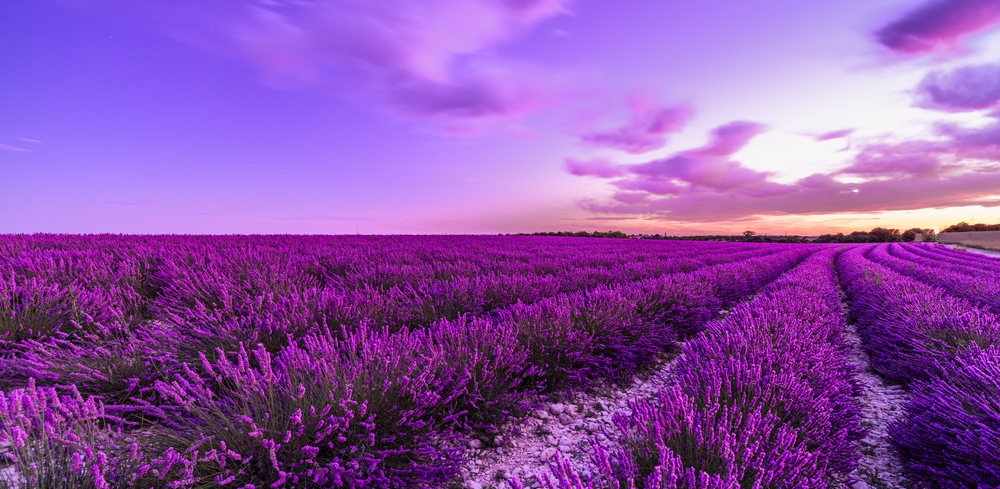
Every summer, a plateau in the south of France turns purple. The lavender fields of Valensole in Provence are not a well-kept secret — millions of people have seen the photographs. But the experience of actually being there, in July heat with the scent in the air and rows of flowers running to the horizon, is something a photograph cannot fully capture. This guide covers everything you need to plan a real visit.
Want more guides to the best of France? Subscribe to our free France newsletter — practical travel inspiration delivered to your inbox.
Where Is Valensole?
Valensole is a small commune on the Valensole Plateau in the Alpes-de-Haute-Provence department, roughly 80 kilometres north-east of Marseille and 30 kilometres south of Manosque. The plateau sits at around 560 metres above sea level, which gives it a dry, warm climate — ideal for growing lavender.
The nearest large town is Digne-les-Bains, about 40 kilometres to the north. Aix-en-Provence is roughly an hour’s drive to the south-west. If you’re flying in, Marseille-Provence Airport is the most convenient international gateway. Alternatively, Nice Côte d’Azur Airport is about 1 hour 45 minutes by car.
When to Visit: Bloom Timing
The lavender bloom at Valensole typically runs from mid-June to mid-August, with peak colour in early-to-mid July. The exact timing shifts by a week or two depending on the year’s weather — a wet, cool spring can delay things, while a dry, warm one pulls the bloom forward.
The harvest usually begins in late July or early August, when farmers bring in their mechanical harvesters and the fields are cut. After harvest, the colour is gone quickly. If you’re planning a visit specifically for the flowers, aim for the first two weeks of July as a safe target, and check local Facebook groups or Valensole tourism pages in the week before you travel for real-time reports.
Morning light, typically between 6am and 9am, is the best time of day to visit. The fields are quieter, the light is soft and golden, and the heat has not yet set in. Sunset is also excellent for photography. Midday in July can exceed 35°C on the plateau — bring water and sun protection if you’re visiting then.
What Grows There and Why
Most of what you see at Valensole is not true lavender (Lavandula angustifolia) but lavandin (Lavandula × intermedia), a hardier hybrid that grows better at lower altitudes and produces a higher yield of essential oil. Lavandin has slightly longer, more open flower spikes than true lavender, and its scent is a little sharper.
True lavender grows above 800 metres and is found more commonly on the plateaus around Sault, another lavender destination about 60 kilometres to the west. Valensole’s lavandin is the commercial backbone of the region’s essential oil industry. France produces around 80% of the world’s natural lavender and lavandin essential oil, and the Valensole Plateau is a major contributor.
The fields are working farms — not tourist attractions created for visitors. Please stay on the edges and paths rather than walking between the rows, which compacts the soil and damages the plants.
Getting There
A hire car is by far the most practical option. There is no direct train to Valensole village, and buses are infrequent and slow. Having a car also allows you to explore the wider plateau at your own pace, stopping at different fields and viewpoints.
From Marseille, take the A51 motorway north towards Sisteron, exit at Manosque, then head south-east on the D6 towards Valensole — about 1 hour 15 minutes in total. From Aix-en-Provence, the drive is around 1 hour via the D4085 and D6.
If you do not want to drive, some operators in Marseille, Aix-en-Provence, and Avignon run day tours to the Valensole area in July. These are worth comparing in terms of itinerary — some include additional stops at Moustiers-Sainte-Marie or the Gorges du Verdon.
Where to Stay
The village of Valensole itself is small, with a handful of gîtes, chambres d’hôtes, and a campsite. Staying in the village puts you closest to the plateau and allows you to be out in the fields at sunrise without a long drive.
Nearby Manosque (30 minutes) has more hotel options and better amenities. Riez, a small town to the south-east with a Roman temple and Saturday market, is another pleasant base and is surrounded by lavender fields of its own.
For a higher-end stay, Moustiers-Sainte-Marie — a village with cliff-side architecture, a waterfall, and several Michelin-starred or well-regarded restaurants — is about 25 kilometres away and acts as a good base for exploring both the plateau and the Gorges du Verdon.
Planning a trip to Provence? Our newsletter goes deeper on France’s best destinations. Sign up free here.
What Else to See Nearby
The Valensole area sits within reach of several of Provence’s most impressive landscapes and villages.
Gorges du Verdon: About 30 kilometres to the east, this is one of Europe’s deepest river canyons — up to 700 metres deep and 25 kilometres long. The Route des Crêtes around the canyon is a spectacular drive. Swimming, kayaking, and hiking are all available in the gorge itself.
Moustiers-Sainte-Marie: A village built into a cliff, famous for its faïence pottery tradition since the 17th century. A star hangs on a chain between the two cliff faces above the village — local legend says it was placed there by a knight returning from the Crusades. The hike up to the chapel of Notre-Dame de Beauvoir takes about 20 minutes and gives excellent views.
Riez: A quiet market town with four Roman columns from a 1st-century temple still standing in a field on the edge of town — a surprisingly low-key archaeological site that many visitors miss entirely. The old town has medieval architecture and a baptistery from the 5th or 6th century.
Gréoux-les-Bains: A spa town about 20 kilometres west of Valensole, known for its thermal baths since Roman times. If you want a rest day between walking and driving, the thermal spa here is a practical option.
Practical Tips for Visiting the Fields
Dress sensibly. Sandals look good in photographs but the fields are dusty, uneven, and full of bees. Wear closed-toe shoes and light, long clothing in high summer to protect against the sun.
Bees are abundant. The fields attract large numbers of bees during bloom season — which is entirely normal and a sign of a healthy ecosystem. Walk calmly and do not swat at them. If you have a serious allergy, carry your medication.
Stay on the edges. The rows between lavender plants are narrow and the ground is cultivated. Walking through the fields damages the crop. The best photography angles are available from the field edges and from small rises in the surrounding landscape.
Bring cash. Small farm shops and markets in the area often prefer cash or have card minimums. Many farms sell dried lavender, sachets, honey, and essential oil directly — prices are generally lower than in tourist shops in larger towns.
Petrol stations are sparse. Fill up before leaving Manosque or another larger town. Rural Provence can go long stretches without services.
Photography: Getting Useful Shots
The classic Valensole image shows rows of lavender converging to a point, often with a stone farmhouse or lone tree in the mid-ground and a clear blue sky above. To get this kind of shot, look for elevated positions — small hills or rises in the plateau — that let you look along the rows rather than across them.
Golden hour (the hour after sunrise and before sunset) gives the purple a warmer tone and creates longer shadows between the rows, adding depth. Midday light is harsh and washes out colour.
A polarising filter helps reduce glare and saturate the sky on a smartphone or camera. If you are shooting on a phone, avoid over-saturation in editing — the natural colour of lavandin is a blue-purple, not the vivid electric purple that heavily processed images often show.
The Lavender Economy
Lavender and lavandin growing have been central to the economy of the Alpes-de-Haute-Provence for over a century. At its peak in the mid-20th century, true lavender grew across more than 25,000 hectares in France. Disease, cheaper synthetic alternatives, and changing agricultural economics cut that figure drastically through the latter half of the century.
Since the 1990s, the industry has partially recovered, partly because consumer demand for natural essential oils in cosmetics and aromatherapy products increased. The Valensole area benefits from an AOC (Appellation d’Origine Contrôlée) designation for essential oil of true lavender from Haute-Provence, which sets quality and geographic standards for the product.
Tourism has also become a meaningful part of the local economy. Farmers and local businesses have adapted to the annual influx of summer visitors, with farm shops, lavender museums (notably the Musée de la Lavande near Coustellet), and guided tours all part of the offering.
From Provence to Paris, our France newsletter covers the places worth visiting. Subscribe free and join thousands of France lovers.
Is It Worth the Visit?
Valensole in bloom is genuinely impressive in person in a way that photographs — for all their ubiquity — do not quite prepare you for. The scale of the plateau, the density of the colour across the landscape, and the scent on a warm July morning combine into something that feels specific to that place and time of year.
It is also, increasingly, a busy destination. Peak weeks in early July will see coach parties, hire cars parked along the edges of fields, and crowds at the most photographed spots. If this bothers you, visiting on a weekday rather than a weekend, arriving before 8am, or exploring the northern end of the plateau away from the main tourist routes will all help.
The surrounding area — the gorges, the villages, the markets — means there is easily enough to fill three or four days without rushing. Valensole is a worthwhile destination in its own right, and a practical base for exploring some of the best countryside in southern France.
Image Credit: Shutterstock
Thinking about it for retirement?
If you’ve started thinking seriously about retiring there, our complete our full Retire in France guide covers the visa, healthcare, cost-of-living, and the regions worth shortlisting.
🇫🇷 Discover the France Most Tourists Never Find
Get our free guide to 25 hidden villages of France — then join 7,000+ readers for weekly stories about places most guidebooks never mention.
Get Your Free Village Guide →Tours & experiences you might love


Powered by Viator. Some links are affiliate links — we may earn a small commission at no extra cost to you.

Leave a Reply