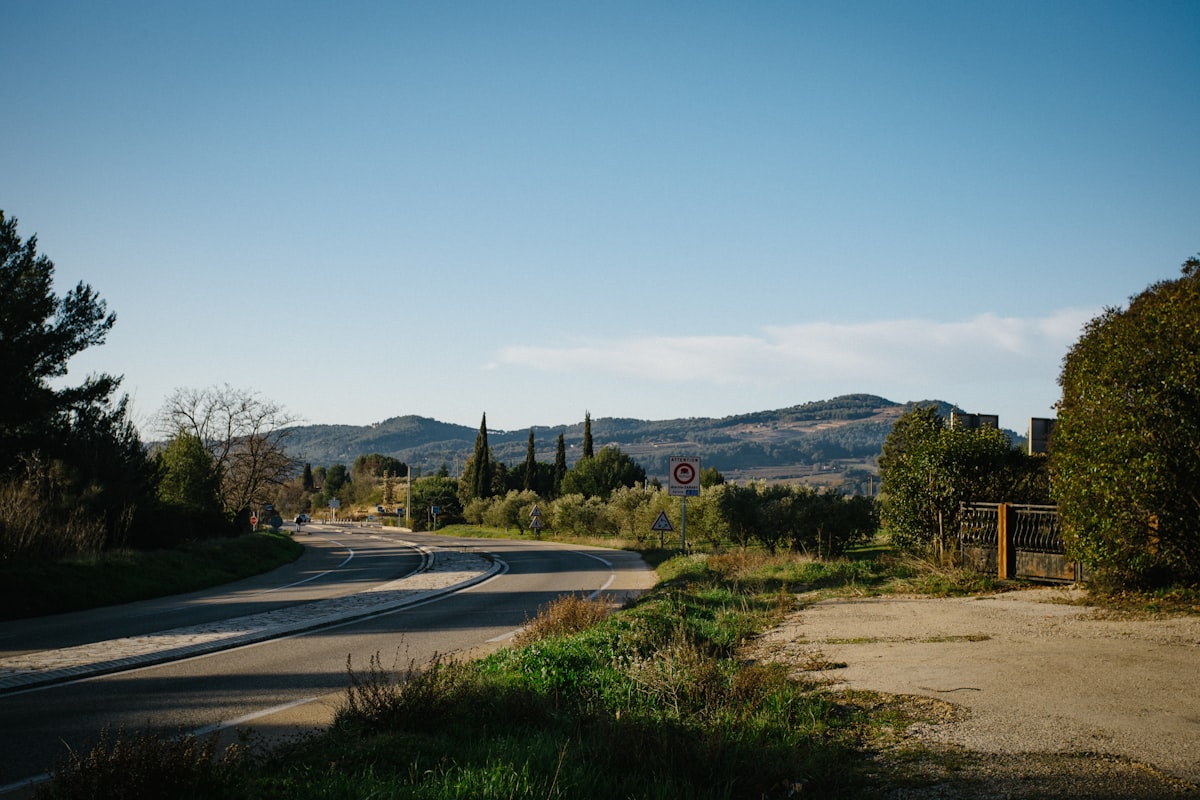
Corsica sits in this sea, roughly 170 km from the French mainland. It is now French. But its surnames tell a different story. Most French surnames of Corsica carry Italian, Genoese, and ancient Ligurian roots. They sound more like Venetian names than Parisian ones. That difference is the key to knowing Corsican roots — and, if you have Corsican ancestry, to knowing your own family.
What’s your name in French? 🇫🇷
Your French Name — type any first name for the French equivalent, with meaning and regional notes.
Corsica did not become French until 1768, when the Republic of Genoa sold the island to France. For nearly five centuries before that, Genoese merchants and officials shaped the island’s culture, language, and surnames. One year after the transfer, Napoleon Bonaparte was born in Ajaccio — by birth the first famous French Corsican, though his family was thoroughly Italian in origin.
This guide explores the most common Corsican surnames, their meanings, their language roots, and where Corsican families migrated over the centuries.
Why Corsican Surnames Sound Italian
Most Corsicans today speak French. But their surnames reveal the island’s deeper history. For centuries, Corsicans spoke Corsu — a Romance language closely related to Tuscan Italian. Genoese rulers recorded births, marriages, and deaths in Italian. The surnames they wrote down reflected that language world.
Many Corsican surnames end in -i, -ini, -acci, -etti, or -ani. These suffixes are Italian, not French. You will find them in Tuscany and Sardinia too. Some surnames also carry Ligurian influence — the Genoese spoke a Ligurian dialect. A smaller number show traces of an older Corsican substrate that predates both Italian and French.
When France took control in 1768, some families Frenchified their names. A Mattei might have become Mathieu. An Agostini might have adopted Augustin. But many families kept their Italian-style names intact. Today, those names are among the most unique in all of France.
If you are searching records in Corsican archives, expect Italian spelling in older documents. A record from 1720 will look very different from one written in 1850.
The Most Common Corsican Surnames: Origins and Meanings
Here are twenty of the most often found French surnames of Corsican origin, with their meanings and language roots.
Bonaparte
The most famous Corsican surname in history. It comes from the Italian bona (good) and parte (part or fate), meaning “good fortune.” The family moved to Corsica from Tuscany in the 16th century. Napoleon’s first name was Napoleone di Buonaparte.
Colombani
From the Latin columba (dove). This surname began as a Christian name — Saint Columban was an Irish monk who spread the church across early medieval Europe. It became a naming surname across northern Corsica and parts of Sardinia. Colombani is mainly common in the Haute-Corse department.
Paoli
The naming form of Paolo (Paul). The most important Corsican to carry this name was Pasquale Paoli (1725–1807). He wrote one of Europe’s earliest civic laws in 1755 and became the island’s founding father. Corsicans still consider him a national hero.
Marchetti
From the Italian marchetto, a small unit of measure, or possibly from the given name Marco. It is an trade or nickname surname. Marchetti families appear across the Italian coast, Sardinia, and Corsica.
Rossi
From the Italian rosso (red). This surname described a person with red hair or a ruddy complexion. Rossi is one of the most common surnames in Italy, and it has a strong presence in Corsica too.
Santini
A short form of santo (saint). This is a devotional surname, often given to children born near a major saint’s day. The suffix -ini marks it as distinctly Italian. Santini families appear across Corsica and mainland Italy.
Luciani
From Luciano, which derives from Latin lux (light). Pope John Paul I was born Albino Luciani, from a family with Italian roots. Luciani is widespread across Corsica and the Italian coast.
Ferrandi
A variant of Ferrand, from the Frankish Ferdinand (bold journey) or from Italian ferro (iron). In some cases it is trade — a blacksmith or ironworker. Ferrandi families appear often in the Balagne region of northwestern Corsica.
Lanfranchi
From Lanfranc, a Germanic name combining land and franc (the Frankish people). Lanfranchi named families of Frankish descent in medieval northern Italy. The Archbishop of Canterbury, Lanfranc (1005–1089), came from Pavia. The surname is mainly common in Bastia and the coastal towns of northeastern Corsica.
Giacomoni
A naming form of Giacomo (James), with the augmentative suffix -oni. It means “son of a prominent James.” The name James comes from the Hebrew Ya’akov (supplanter). Giacomoni families are concentrated in Cap Corse, the rugged northern coast.
Battesti
From Baptiste, meaning “one who baptises.” This is a religious surname, referring to John the Baptist. Battesti is one of the most distinctly Corsican names on this list. You will rarely find it outside the island.
Vincensini
From Vincenzo (Vincent), meaning “to conquer” in Latin. The suffix -ini is a Corsican-Italian short form. This surname is highly trait of Corsican naming patterns and signals clear island origin.
Mattei
A Genoese naming from Matteo (Matthew), meaning “gift of God” in Hebrew. Mattei families were important in Genoese commerce. Corsican records mention the Mattei name from the 13th century onwards.
Agostini
From Agostino (Augustine), itself from the Latin Augustus (great, venerable). The name passed through Saint Augustine of Hippo, one of the church’s most influential early thinkers. Agostini is common across Corsica, Sardinia, and Tuscany.
Natali
From Natale (Christmas), given to children born at Christmas. Catholic Mediterranean families often took this practise seriously. Natali families are found throughout southern Corsica (Corse-du-Sud).
Casanova
A place surname from Italian casa (house) and nova (new) — literally “new house.” Families used it to identify those who had recently built or moved into a new home. The most famous bearer of this name, Giacomo Casanova, was Venetian. But the name also has a strong Corsican presence.
Geronimi
From Geronimo (Jerome), which comes from the Greek Hieronymos (sacred name). Saint Jerome translated the Bible into Latin — the Vulgate — in the 4th century. Geronimi is one of the most clearly Corsican surnames and rarely appears elsewhere in France.
Grimaldi
A Frankish name combining grim (mask or helmet) and wald (rule). The Grimaldi family were Genoese nobles who later founded the principality of Monaco. Corsican Grimaldis are descendants of a branch that settled on the island during the Genoese period.
Poggi
From Italian poggio (hill or knoll). This place surname named families who lived on or near a hillside. Corsica’s terrain is overwhelmingly mountainous, making Poggi a perfectly fitting name for the island.
Tomasini
A naming from Tommaso (Thomas), which comes from the Aramaic Ta’oma (twin). Saint Thomas the Apostle brought this name into widespread European use. The Corsican suffix -ini marks it as a local variant of a much older name.
🇫🇷 Enjoying this? 7,000 France lovers get stories like this every week.
Thinking about it seriously? If you’ve started actually planning a move, our complete our complete Moving to France guide walks through every step, every cost, and the paperwork that catches most people out.
Where Corsican Families Went: move Patterns
Corsica has always been a small island. Its people has never exceeded 350,000. Throughout history, Corsicans left to seek wider opportunities — and they carried their surnames with them.
France (Paris and Marseille) received the largest number of migrants. Corsicans became disproportionately present in the French civil service, the police, and the military. This pattern was so strong that the phrase la piste corse (the Corsican network) entered French civic vocabulary. If you have a Corsican-origin surname in mainland France, your ancestor likely left the island in the 19th or early 20th century.
Algeria and French North Africa drew many Corsicans during the colonial period (1830–1962). Corsican settlers farmed land in the Mitidja Plain near Algiers. Some of the most clearly Corsican surnames in France today belong to pieds-noirs families who repatriated from Algeria after freedom.
Venezuela received a wave of Corsican immigrants in the 19th century. Families settled in the Caracas and Valencia regions. Corsican-Venezuelan towns maintained their heritage well into the 20th century.
Louisiana and the Caribbean received smaller but notable Corsican migrations in the 18th century. French colonial records in Louisiana at times list Corsicans among early settlers.
How to Research Your Corsican Heritage
If you have a Corsican surname, the records are more accessible than you might expect.
Civil records (état civil) begin in 1792, following the French Revolution. The island divides into two departments. Births, marriages, and deaths from the south go to the Archives Territoriales de la Corse-du-Sud in Ajaccio. Northern records go to the Archives de la Haute-Corse in Bastia. Both archive websites host many scanned records online.
Parish records (registres paroissiaux) predate 1792 and carry the Catholic Church’s power. Expect Italian or Latin in older documents. Many records survive and are accessible online.
FamilySearch holds a growing collection of Corsican vital records, searchable for free at familysearch.org. Search under “France, Corse” to find the relevant collections.
If your family emigrated to Algeria, search the Archives Nationales d’Outre-Mer in Aix-en-Provence. These hold exceptional records of French colonial populations.
The full guide to tracing your French ancestry covers the national French archive network in detail. For Corsica, the process is similar — but older records add an Italian-language layer. Knowing the first Genoese or Italian spelling of your surname will help considerably.
Planning a Heritage Visit to Corsica
Corsica is one of the most beautiful islands in this sea. It is also deeply rooted in history. A heritage visit here is unlike anything else in France.
Ajaccio is the obvious starting point. Napoleon’s birthplace opens to visitors as the Maison Bonaparte. The town’s streets still carry names from the Genoese and Napoleonic eras. The southern archives are based here.
Bastia is the island’s largest city, with a well-preserved Genoese citadel overlooking the sea. The Terra Vecchia (Old Quarter) contains some of the oldest surviving architecture on the island, including the Baroque Eglise Saint-Jean-Baptiste. The northern archives are held in Bastia.
Corte is the historical capital, set deep in the mountains. Pasquale Paoli made it the seat of Corsican freedom in the 18th century. The Musée de la Corse covers the island’s history from prehistoric times to the present.
Cap Corse — the finger-shaped northern coast — contains dozens of small villages where families like Giacomoni, Colombani, and Battesti have lived for centuries. Narrow roads connect them. They reward the patient traveller.
Before you travel, read the guide on how to plan a French heritage trip. It covers archive visits, village research, and the emotional experience of standing on ancestral soil. You can also explore the best regions to visit in France to build a wider French journey around your Corsica visit.
The story of how France shaped its diverse towns runs through many other heritage stories. The Huguenot exodus shows how religious and civic upheaval drove French families across the world — a pattern that echoes in Corsican history too.
often Asked Questions
What are the most common French surnames from Corsica?
The most common Corsican surnames include Colombani, Paoli, Marchetti, Rossi, Santini, Battesti, Geronimi, and Agostini. Most carry Italian or Genoese roots, reflecting five centuries of Genoese rule before France acquired the island in 1768.
Why do Corsican surnames sound Italian rather than French?
Corsica was part of the Genoese Republic from 1282 until 1768. During those five centuries, Genoese rulers kept all official records in Italian. Corsicans also spoke Corsu, a Romance language close to Tuscan Italian. These centuries of Italian influence shaped the island’s surnames long before France took control.
Is Bonaparte a Corsican surname?
Yes. The Bonaparte family moved to Corsica from Tuscany in the 16th century. When France acquired the island in 1768, the family became French subjects. Napoleon was born in Ajaccio in 1769 — one year after the transfer. His birth name was Napoleone di Buonaparte.
Where can I find Corsican parish and civil records?
Civil records from 1792 onwards are held at the Archives Territoriales de la Corse-du-Sud in Ajaccio (southern Corsica) and the Archives de la Haute-Corse in Bastia (northern Corsica). Both archive websites have scanned many records. FamilySearch also holds a growing Corsican collection, searchable for free at familysearch.org.
Are there Corsican diaspora towns outside France?
Yes. Corsicans settled in mainland France (mainly Paris and Marseille), Algeria during the French colonial period, Venezuela in the 19th century, and parts of Louisiana and the Caribbean in the 18th century. Families who left for Algeria often returned to France after 1962.
What is the difference between Corse-du-Sud and Haute-Corse?
Corsica divides into two official departments. Corse-du-Sud covers the southern half of the island, with Ajaccio as its capital. Haute-Corse covers the north, with Bastia as its main city. Each department holds its own archive records. Knowing which part of the island your family came from will determine which archive to contact first.
You Might Also Enjoy
- French Surnames of Provence: Origins, Meanings and Family Heritage
- French Surnames of Alsace-Lorraine: Origins, Meanings and Family Heritage
- The Acadians: Expelled from Nova Scotia, Forever French
Plan Your France Trip
Ready to travel? Start with the France Trip Planning Hub — itinerary ideas, regional guides, and everything you need to plan your journey to France.
Join 7,000+ France Lovers
Every week, get France’s hidden gems, seasonal guides, local stories, and the art of la vie française — straight to your inbox.
Subscribe free — enter your email:
Love more? Join 64,000 Ireland lovers → · Join 43,000 Scotland lovers → · Join 30,000 Italy lovers →
Free forever · One email per week · Unsubscribe anytime
Tours & experiences you might love


Powered by Viator. Some links are affiliate links — we may earn a small commission at no extra cost to you.

Leave a Reply