
Every January, French bakeries do something unusual. A golden pastry appears in the window. A paper crown sits on top. And somewhere inside the buttery layers — hidden from view — is a tiny figurine no bigger than a thumbnail.
Find it, and you are king or queen for the day. That’s the galette des rois. And if you’ve never experienced it, you’re missing one of France’s most joyful traditions.
A Tradition Older Than France Itself
The galette des rois goes back to the Roman festival of Saturnalia. Romans baked a cake with a dried bean inside. Whoever found it became “king” for the feast — a temporary ruler who could give orders all day.
Christianity spread across Europe. The church adapted the celebration. It became Épiphanie — the Feast of the Epiphany on 6th January, marking the arrival of the Three Kings in Bethlehem. The cake stayed. The king stayed. The bean stayed.
By the Middle Ages, the galette was woven into French life. The tradition has survived revolutions, republics, and two world wars. It has never once stopped.
The Rules That Make It Interesting
There are rules. France being France, there are always rules.
The youngest person at the table sits underneath it during the cutting. They can’t see the cake. When each slice is cut, someone points to it and the child calls out a name — deciding who receives it.
This prevents cheating. Because yes — French adults have been known to angle for the slice with the fève inside. The tradition needed a referee.
Whoever bites into the fève gets the crown. They become king or queen. They then choose a royal consort. Toasts are raised in their honour for the rest of the meal.
And one more rule, this one encoded in French law: every galette sold in a bakery must come with a paper crown. It’s no surprise — French bakers take their craft more seriously than almost anyone in the world.
The Fève Is the Real Prize
The fève started as a dried bean. Practical. Simple. Impossible to swallow without noticing.
Then in the 19th century, the bean gave way to porcelain. Tiny figurines appeared. Eiffel Towers. Royal faces. Characters from fairy tales. Every bakery designs its own.
Fève collecting has its own name: favophilie. Serious collectors own thousands. Rare designs from famous Paris pâtisseries have sold at auction. What began as a safety measure became a miniature collecting universe.
Ladurée, Pierre Hermé, and Stohrer all release limited-edition fèves each January. Queues form before the doors open.
Enjoying this? 7,000 France lovers get stories like this every week.
Thinking about it seriously? If you’ve started actually planning a move, our complete our complete Moving to France guide walks through every step, every cost, and the paperwork that catches most people out.
North versus South
France cannot agree on one version of anything. The galette is no exception.
In northern France, the classic galette uses rich, laminated puff pastry filled with frangipane — a dense, fragrant almond cream. It smells of almonds and butter. It tastes like something close to celebration.
In Provence and the south, it’s entirely different. The galette provençale is a brioche ring — soft, dusted with sugar, studded with candied fruit. Lighter. More perfumed. Still with a fève inside.
Both are correct. Both are French. Both will cause arguments about which is better. The French have strong opinions about food — as their rules around eating make very clear.
When and Where to Find One
The galette appears on 1st January and disappears by the end of the month. Some boulangeries stretch it into early February. After that, you wait until next year.
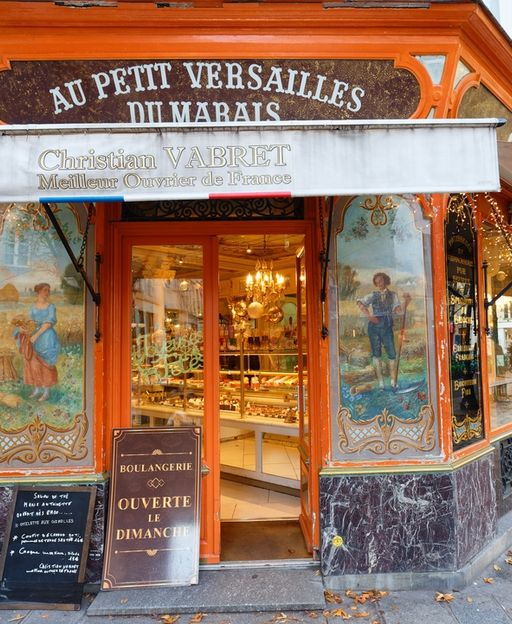
If you’re visiting France in January, walk into any boulangerie or pâtisserie. Ask for une galette des rois pour quatre personnes. They come in sizes for two, four, six, and eight. They’re not expensive. They’re extraordinary.
Avoid the supermarket versions. Find a baker who makes their own frangipane, who selects their fève with care, who places the crown in the box like it matters. That’s the one worth having.
For everything you need to time your visit around France’s seasonal traditions — from January galettes to summer harvest festivals — our complete guide to planning your trip to France is the best place to start.
France has always understood this: a small thing, shared at a table, is rarely small at all. The galette des rois is not just a cake. It’s a reminder that once a year, anyone can be king.
Join 7,000+ France Lovers
Three times a week, get France’s hidden gems, seasonal guides, local stories, and the art of la vie française — straight to your inbox.
Subscribe free — enter your email:
Love more? Join 65,000 Ireland lovers → · Join 43,000 Scotland lovers → · Join 30,000 Italy lovers →
Free forever · Unsubscribe anytime
🇫🇷 You Might Also Love
Tours & experiences you might love


Powered by Viator. Some links are affiliate links — we may earn a small commission at no extra cost to you.

Leave a Reply