
In the summer of 1957, an American screenwriter arrived on the Basque coast of France carrying something nobody there had ever seen: a surfboard. He paddled out into the Atlantic at Biarritz, caught a wave, and stood up. The crowd on the beach had no idea they were watching history.
A Playground Built for Emperors
Biarritz had already lived one extraordinary life before surfing arrived. In the 1850s, Empress Eugénie fell in love with this stretch of the Basque coast and persuaded Napoleon III to build a summer palace here. The European aristocracy followed, turning what had been a small whaling village into one of France’s most elegant resorts.
Grand villas rose along the cliffs. British royalty and Russian nobility joined the seasonal migration south to the Atlantic coast. The Casino Bellevue opened its doors. The town dressed itself in Belle Époque stone and tile and invited the world to admire it.
The sea was the backdrop. The thing you admired from the promenade. Nobody had thought of riding it.
The Hollywood Moment That Changed Everything
Peter Viertel was an American screenwriter working on a film adaptation of Hemingway’s The Sun Also Rises, which was shooting nearby in Spain. In his luggage was a surfboard — something he had picked up in California and decided, on a whim, to bring along.
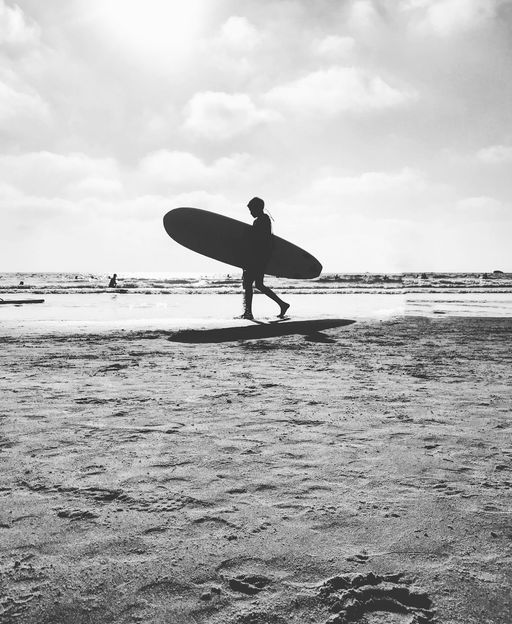
He paddled out at the Grande Plage in 1957 and stood up on a wave. Locals gathered along the shore to watch. Young Basque men waded in to have a closer look. Within days, a handful of them were attempting to stand up on borrowed boards in the Atlantic rollers.
France’s first surf club, the Waikiki Surf Club, was founded in Biarritz in 1959. The sport had arrived. It never left.
The Waves That Made It Possible
Biarritz sits on the Bay of Biscay, where Atlantic swells travel thousands of kilometres before arriving on the Basque coast. The waves are not enormous, but they are consistent. They break cleanly along sandy beaches. They are forgiving enough for beginners and fast enough to challenge experienced surfers.
This is why surfing took hold here and not somewhere else along the French coast. The Basque coast turned out to be, almost by accident, perfectly suited to the sport. Today it hosts competitions that draw surfers from across Europe, and a surf community that has grown steadily for over sixty years without ever needing to be manufactured.
Enjoying this? 7,000 France lovers get stories like this every week.
Thinking about it for retirement? If you’ve started thinking seriously about retiring there, our complete our full Retire in France guide covers the visa, healthcare, cost-of-living, and the regions worth shortlisting.
What a Surfing Morning in Biarritz Looks Like
Arrive at the Grande Plage before 8am and the beach belongs almost entirely to surfers. Boards are propped in the sand. Instructors in wetsuits gather small groups at the water’s edge. The air smells of salt and neoprene.
The waves roll in patiently, steadily. Beginners wobble and fall and try again. Further out, more confident surfers sit and wait, watching the horizon for the right set to arrive.
By 9am, the old town’s boulangeries are full. Surfers in wetsuits — still damp — queue for pastries alongside pensioners in pressed linen shirts. This is Biarritz on any ordinary morning: elegant and scruffy, ancient and completely alive.
The Basque Soul Beneath the Waves
What makes Biarritz different from other European surf towns is the culture it rests on. This is Basque country — a place with its own language, its own cuisine, and a sense of identity that long predates France itself.
The surfers here are Basque first. They eat pintxos after coming out of the water. They speak Euskara to each other on the beach. The surf culture has not replaced the local identity — it has grown out of it, absorbed it, become inseparable from it.
Biarritz does not try to be California. It never has. It is something richer and older: a place that found an unexpected new way to love the sea it had always lived beside. If you are planning a trip to France and the Atlantic coast calls to you, this town is worth every detour it takes to reach.
Every morning the Atlantic rolls in, indifferent to emperors and filmmakers and everything that came after. The surfers paddle out as they always have. Somewhere on the beach, someone watches a wave and wants to try. It has been that way since 1957. It will be that way for a long time yet.
Join 7,000+ France Lovers
Three times a week, get France’s hidden gems, seasonal guides, local stories, and the art of la vie française — straight to your inbox.
Subscribe free — enter your email:
Love more? Join 65,000 Ireland lovers → · Join 43,000 Scotland lovers → · Join 30,000 Italy lovers →
Free forever · Unsubscribe anytime
🇫🇷 You Might Also Love
Tours & experiences you might love


Powered by Viator. Some links are affiliate links — we may earn a small commission at no extra cost to you.

Leave a Reply