
Cannes is famous for its film festival, its red carpet, and its money. But arrive outside of May and you’ll find something quieter: a working harbour backed by an old stone hill, with yachts at anchor and a sea that barely moves.
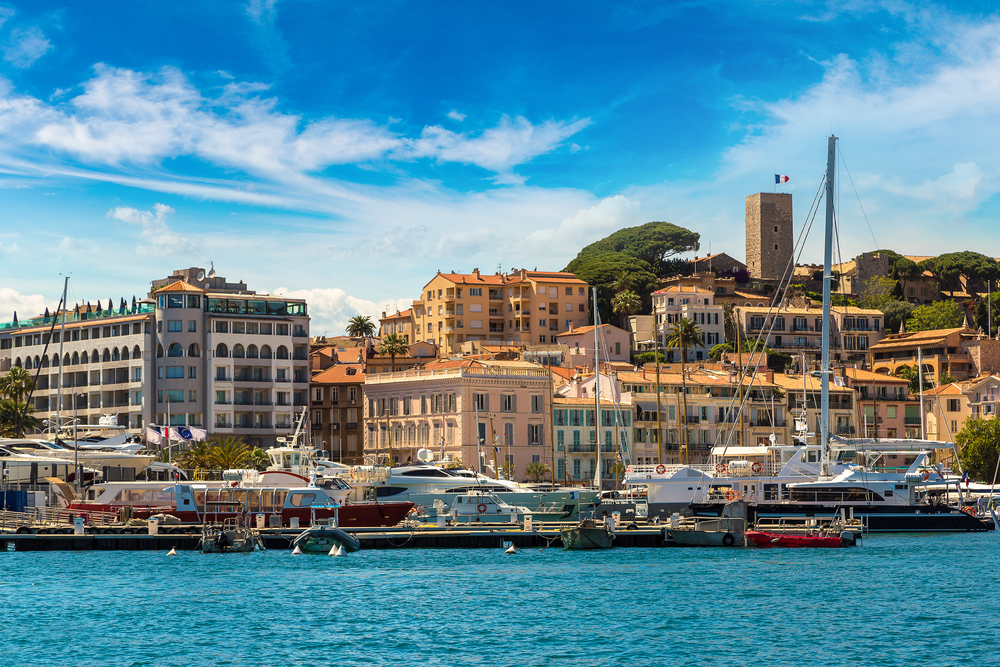
The Côte d’Azur is easy to misread. The glamour is real, but so is the history. The Vieux Port — the old harbour — is where both sit side by side. One half belongs to superyachts and film industry money. The other half still belongs to fishing boats, morning markets, and a medieval hill town that most visitors walk past without looking up.
Love France? Get our free weekly newsletter — real travel tips, hidden gems, and the best of French culture delivered straight to your inbox. Subscribe here →
The Vieux Port: What You Are Looking At
The old port of Cannes sits at the western end of the Croisette, the broad seafront boulevard that most people associate with the city. The harbour basin is divided in character if not in geography. The eastern side is where the fishing fleet moors — smaller boats, working gear, men sorting nets in the early morning. The western and central sections are given over to pleasure craft, and further along, to superyachts.
The Quai Saint-Pierre runs along the northern edge of the basin. It is lined with restaurants and cafés, and the seating faces outward across the water. The view from any table is the same: masts, blue water, and behind it all, the hill of Le Suquet rising sharply above the quayside. The pale stone towers at the top are visible from most of the harbour.
The Mediterranean here is almost entirely tideless. The difference between high and low water in Cannes is typically less than 30 centimetres — compared to several metres in parts of the Atlantic. The result is a harbour that sits almost perfectly still. On calm mornings, the mast reflections are near-perfect. The water does not smell of seaweed or salt mud the way Atlantic ports do. It is clean and blue and barely moves.
During the Cannes Film Festival in May, and again during the Cannes Lions advertising festival in June, the superyacht count rises sharply. Vessels chartered by production companies and distributors line the Quai Laubeuf. Outside these events, the boats are still there — just with slightly less press coverage. Several of the larger yachts here are in the 60-to-90-metre range. A few are larger.
Le Suquet: The Old Town Above the Port
Cannes was not always a resort. For most of its history it was a modest fishing village, and the evidence of that past survives on the hill directly behind the harbour. Le Suquet — the old town — occupies a steep limestone promontory, and its character is genuinely different from the seafront below.
The climb takes about fifteen minutes from the base. The streets narrow quickly and the buildings press close. Most of what you see is old. The limestone walls, the arched doorways, the irregular stone steps — they predate the film festival by several centuries. Bougainvillea grows across the walls in summer, but it does not disguise the age of the place.
At the summit stands the Église Saint-Anne, which now houses the Musée de la Castre. Admission is modest and the collection covers Mediterranean archaeology and ethnography from the nineteenth century. Next to it stands the Tour du Suquet — a twelfth-century watchtower that once served as a lookout against Saracen raids from the sea. On a clear day from the top, the Lérins Islands are visible in the bay.
Le Suquet is not crowded. It sits high enough above the Croisette that most visitors skip the climb. The neighbourhood is quieter for it. The views across the harbour and out over the open bay are among the best free viewpoints on this stretch of coast.
Love France? Get our free weekly newsletter — real travel tips, hidden gems, and the best of French culture delivered straight to your inbox. Subscribe here →
The Lérins Islands: Day Trips from the Harbour
Two islands lie roughly two kilometres off the Cannes waterfront, and both reward a visit. Ferries depart from the Quai des Îles at the Vieux Port throughout the day.
Île Sainte-Marguerite is the larger and closer of the two. The crossing takes approximately fifteen minutes. The island is mostly covered in pine and eucalyptus forest, with paths running along the coastline and through the interior. The main historical site is the Fort Royal, a seventeenth-century fortress built under Richelieu and later modified by Vauban. It is best known for housing a prisoner who wore an iron mask — a historical mystery that Alexandre Dumas dramatised, though the real identity of the prisoner remains disputed. The fort museum covers this history and the island’s broader story.
Île Saint-Honorat is smaller, quieter, and has been home to a monastic community since the fifth century. The Abbaye de Lérins still functions today. The monks cultivate lavender, herbs, and a vineyard. Their wine is sold on the island and is genuinely good — the estate produces both red and white under the Îles de Lérins appellation. The fortified medieval tower at the water’s edge dates to the twelfth century and is the oldest surviving structure on the island.
Neither island has hotels. The last ferries return to Cannes in the late afternoon. Check the schedule at the quay before boarding — it changes by season.
When to Visit Cannes
May during the film festival is spectacular to observe and very difficult to navigate. Hotels book up a year in advance. Prices across the board — accommodation, restaurants, boat hire — increase substantially. If you have no particular reason to be there during the festival, it is simpler to avoid it.
June is a strong choice. The festival has cleared, the sea is warm enough to swim in, and the tourist density has not yet reached its summer peak. September carries much the same advantages.
July and August are the busiest months. The Croisette becomes heavily crowded, accommodation is expensive, and traffic through the town slows considerably. The beach and the sea are excellent. Everything else requires more patience.
Winter is underrated. Cannes has a genuinely mild climate. December through February typically brings clear days with temperatures in the low-to-mid teens. The harbour is calm, the restaurants have space, and the afternoon light across the bay is noticeably softer than in summer. It is a good time to understand what the town is like when it is not performing for visitors.
Getting to Cannes and Getting Around
Nice Côte d’Azur Airport is approximately 26 kilometres east of Cannes. The simplest connection is the train from Nice-Saint-Augustin station (a short bus or taxi ride from the terminal) to Cannes. The journey takes 35 to 45 minutes and runs frequently throughout the day. It is inexpensive.
From Paris, TGV high-speed trains connect Paris Gare de Lyon with Cannes in approximately five and a half hours. There are overnight sleeper services as well. Cannes station sits a short walk from the Vieux Port — the harbour is reachable on foot in under ten minutes from the platform.
Within Cannes itself, most of the main points of interest are walkable. The Croisette runs east from the harbour for about two kilometres. Le Suquet is directly above the port. The Marché Forville — the main covered market — is a few minutes’ walk from the quay. A car is not necessary if you are based in the centre.
Where to Eat Near the Harbour
The restaurants directly on the Quai Saint-Pierre are a mixed proposition. Some are good. Others depend on the location rather than the cooking. A few practical alternatives:
Rue Meynadier runs parallel to the Croisette about three blocks inland. This is where Cannes residents actually shop and eat. The prices are noticeably lower than the waterfront. Boulangeries, fromageries, and casual restaurants line the street.
Le Marché Forville opens Tuesday to Sunday and closes at lunchtime. It sells fresh fish from the local fleet, regional vegetables, olives, cheese, and charcuterie. It is the best food market in Cannes.
La Mère Besson on Rue des Frères Pradignac has been serving traditional Provençal cooking since 1939. The bouillabaisse is the thing to order. It is not cheap, but the cooking is genuine.
For simpler meals, the streets of Le Suquet have a number of small restaurants that are considerably more reasonable than anything on the seafront.
Love France? Get our free weekly newsletter — real travel tips, hidden gems, and the best of French culture delivered straight to your inbox. Subscribe here →
What the Harbour Is Actually For
Cannes harbour exists at the intersection of two realities that do not always acknowledge each other. On one side: superyachts, film industry money, €30 cocktails, and a seafront designed to be seen in. On the other: the fishing boats that still go out before dawn, the Marché Forville filling up with local produce each morning, the narrow streets of Le Suquet unchanged in their basic structure for centuries.
The French Riviera has a reputation it has spent a long time earning. Cannes fits that reputation in certain seasons and in certain postcodes. But the harbour at seven in the morning, before the restaurants open and the tourist coaches park up, is simply a working waterfront. Seagulls on the mooring posts. Fishermen sorting catch. The Suquet hill quiet above the water. The Mediterranean sitting still and blue and entirely unhurried.
That version of Cannes does not make the film festival coverage. It is there, though, if you go early enough.
Thinking about it for retirement?
If you’ve started thinking seriously about retiring there, our complete our full Retire in France guide covers the visa, healthcare, cost-of-living, and the regions worth shortlisting.
🇫🇷 Discover the France Most Tourists Never Find
Get our free guide to 25 hidden villages of France — then join 7,000+ readers for weekly stories about places most guidebooks never mention.
Get Your Free Village Guide →Tours & experiences you might love


Powered by Viator. Some links are affiliate links — we may earn a small commission at no extra cost to you.

Leave a Reply