
The port of Cannes at night is one of the most recognisable views on the French Riviera. It draws millions of visitors each year — yet the scene still surprises people when they see it in person.
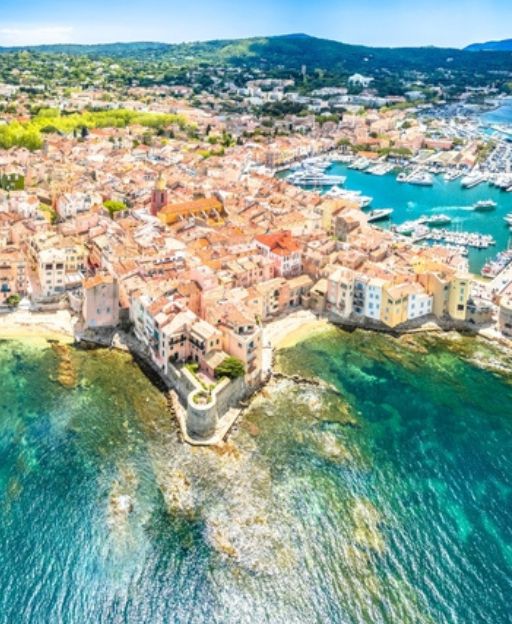
This is not by accident. Cannes has spent decades cultivating exactly this image: luxury yachts, reflective water, the curve of the Croisette lit against a dark sky. There is craft behind the spectacle. Understanding what you are looking at makes the experience more interesting.
Here is what you need to know before you visit.
What You Are Actually Looking At
The port of Cannes — officially the Vieux Port — sits at the western end of the bay. It is divided into two sections. The Vieux Port (Old Port) handles the public ferries to the Îles de Lérins and berths many of the smaller fishing and pleasure boats. The Port Canto, further east along the Croisette, is where the largest yachts moor.
At night, both areas are well lit. The restaurants and bars along the Quai Saint-Pierre run continuous light along the waterfront. The yachts have their own deck lighting. The cumulative effect, reflected in the calm water of the bay, creates the image familiar from hundreds of photographs.
Cannes bay faces south, which matters. The panoramic views from the port look across open water toward the Îles de Lérins — two islands visible in daylight and picked out by lights at night. This orientation gives Cannes its characteristic evening light: you are watching the sun set roughly to your right (west), not directly ahead.
The Croisette at Night
The Boulevard de la Croisette is the seafront boulevard that runs from the Palais des Festivals in the west to the Palm Beach casino in the east. It is 2.5 kilometres long. At night it is one of the most-walked streets in the south of France.
The pavement is wide and pedestrian-friendly. On the sea side, a palm-lined promenade separates walkers from the beach below. On the hotel side, the grand façades of the Carlton, the Martinez, and the Majestic are lit from below, giving them the theatrical presence they are designed to project.
The Carlton InterContinental is worth pausing at. Its two grey domes were reportedly modelled on the breasts of a famous courtesan — the story may be apocryphal, but the symmetry is real. It opened in 1913 and has been a reference point on the Croisette ever since.
Walking the Croisette at night costs nothing. Most people combine it with dinner in the old port area and finish with a walk east toward the Palm Beach end, where the crowds thin out and the view back toward the illuminated bay is often the best of the evening.
Love France in your inbox every week.
Our newsletter covers the French Riviera, Provence, Paris, and beyond — the places, the stories, and the practical details that help you travel better.
Subscribe free to the Love France newsletter
The Palais des Festivals
The Palais des Festivals et des Congrès stands at the western end of the Croisette, directly at the port entrance. It is the permanent home of the Cannes Film Festival, held every May, but it operates as a conference centre for the rest of the year.
At night it is lit in varying colours depending on what event is running. During non-festival periods it reverts to basic building illumination. It is not especially beautiful architecturally — critics have called it a bunker — but its position at the junction of the port and the Croisette makes it a natural focal point.
The handprints of film stars are preserved in concrete in the Allée des Stars, the wide pavement that runs alongside the building. You can walk along it at any hour. Look for the prints of Isabelle Adjani, Catherine Deneuve, and Clint Eastwood, among many others.
The Islands in the Bay
From the port, the Îles de Lérins are visible on the horizon. There are two: the Île Sainte-Marguerite and the Île Saint-Honorat. They sit roughly 1.5 kilometres offshore.
Sainte-Marguerite is the larger island and is known primarily for the Fort Royal, where the Man in the Iron Mask was imprisoned — or at least where French authorities held a famous anonymous prisoner in the 17th century. The identity question remains unresolved. The fort is now a museum and worth a half-day visit during daylight hours.
Saint-Honorat is smaller and has been home to a working monastery since the 5th century. The monks produce wine, lavender products, and a honey liqueur. The monastery is open to visitors.
Ferries to both islands run from the Vieux Port throughout the day. At night the islands are lit only faintly, but their silhouettes against the open water add depth to the bay view from the port.
Where to Watch the Night View
The best elevated view of the port and bay at night is from the Colline du Château — the hill at the eastern end of the Vieux Port. Despite the name, the castle itself was demolished in 1707. The hill now holds a park, a waterfall, and panoramic terraces.
You can reach the top by stairs (155 steps from the Quai Saint-Pierre) or by a free lift tucked into the cliff face. The lift runs until approximately 21:00 in summer — check current hours before you plan your evening around it. The stairs remain accessible after dark.
From the terraces, the full sweep of the bay is visible: the Vieux Port directly below, the curve of the Croisette extending east, the hotels lit along its length, and the Îles de Lérins beyond. This is the view that appears in most professional photographs of Cannes by night. It is not a secret, but it remains the best angle in the city.
Discover more of France every week.
The Love France newsletter delivers the stories, the places, and the travel details you won’t find in a guidebook — direct to your inbox, every week, for free.
Join thousands of France lovers here
Practical Details for Visiting Cannes
Getting there: Cannes is on the main coastal rail line between Nice and Marseille. Trains from Nice take 30–40 minutes and run throughout the day and evening. The station is a 10-minute walk from the port.
Parking: If you are driving, the Palais des Festivals car park operates 24 hours and is the most convenient option for the port area. Evening rates are generally lower than daytime rates.
When to visit: July and August are peak season. The port fills with larger yachts, the Croisette is at maximum capacity, and hotel rates reflect this. May brings the Film Festival, which concentrates celebrities and cameras but also makes central Cannes difficult to navigate for regular tourists. For the night views with fewer crowds, April, June, September, and October are more comfortable.
Where to eat: The restaurants on the Quai Saint-Pierre overlook the Vieux Port directly. Prices are high relative to most of France — this is the Côte d’Azur. For better value, walk two streets back from the waterfront into the Marché Forville area, where the prices drop noticeably and the quality is comparable.
Weather: The French Riviera averages 300 days of sunshine per year. Evening temperatures in summer rarely drop below 20°C. Carry a light layer for late evenings, particularly in spring and autumn.
What Makes the Night View Work
The port view at night is not simply a matter of lights on water. Several specific features produce the effect.
The geometry of the bay matters: it curves gently, which means from any point on the waterfront you can see further along the coast than on a straight seafront. The Croisette’s lights form a continuous arc rather than a straight line.
The yacht masts contribute more than you might expect. The individual lights on mast tops, combined with the deck lighting of larger vessels, create a vertical dimension to the port view that flat shoreline lighting alone cannot produce.
The water in the bay is typically calm. The Mediterranean is almost tideless — tidal variation in Cannes is roughly 25 centimetres. This means reflections remain intact for most of the evening without the distortion that tidal movement creates in Atlantic ports.
The mountains behind Cannes — the Préalpes d’Azur — are visible in daylight but form a dark backdrop at night, which pushes attention toward the illuminated waterfront rather than dispersing it across a lit landscape.
These are the elements that make the panorama what it is. Knowing them does not diminish the view. It tends to sharpen it.
Get the best of France in your inbox.
From the Riviera to the Pyrenees, our weekly newsletter covers the France that makes people return again and again — practical information, good stories, and the places worth knowing about.
Subscribe to Love France — it’s free
Image credit: Shutterstock
Thinking about it seriously?
If you’ve started actually planning a move, our complete our complete Moving to France guide walks through every step, every cost, and the paperwork that catches most people out.
Tours & experiences you might love


Powered by Viator. Some links are affiliate links — we may earn a small commission at no extra cost to you.

Leave a Reply