
Every October, something strange happens in a small village in southwest France. The white houses turn red. Not from paint — but from thousands of scarlet peppers hung out to dry in the autumn sun. Visitors slow their cars. They reach for cameras. Nobody quite believes what they are seeing.
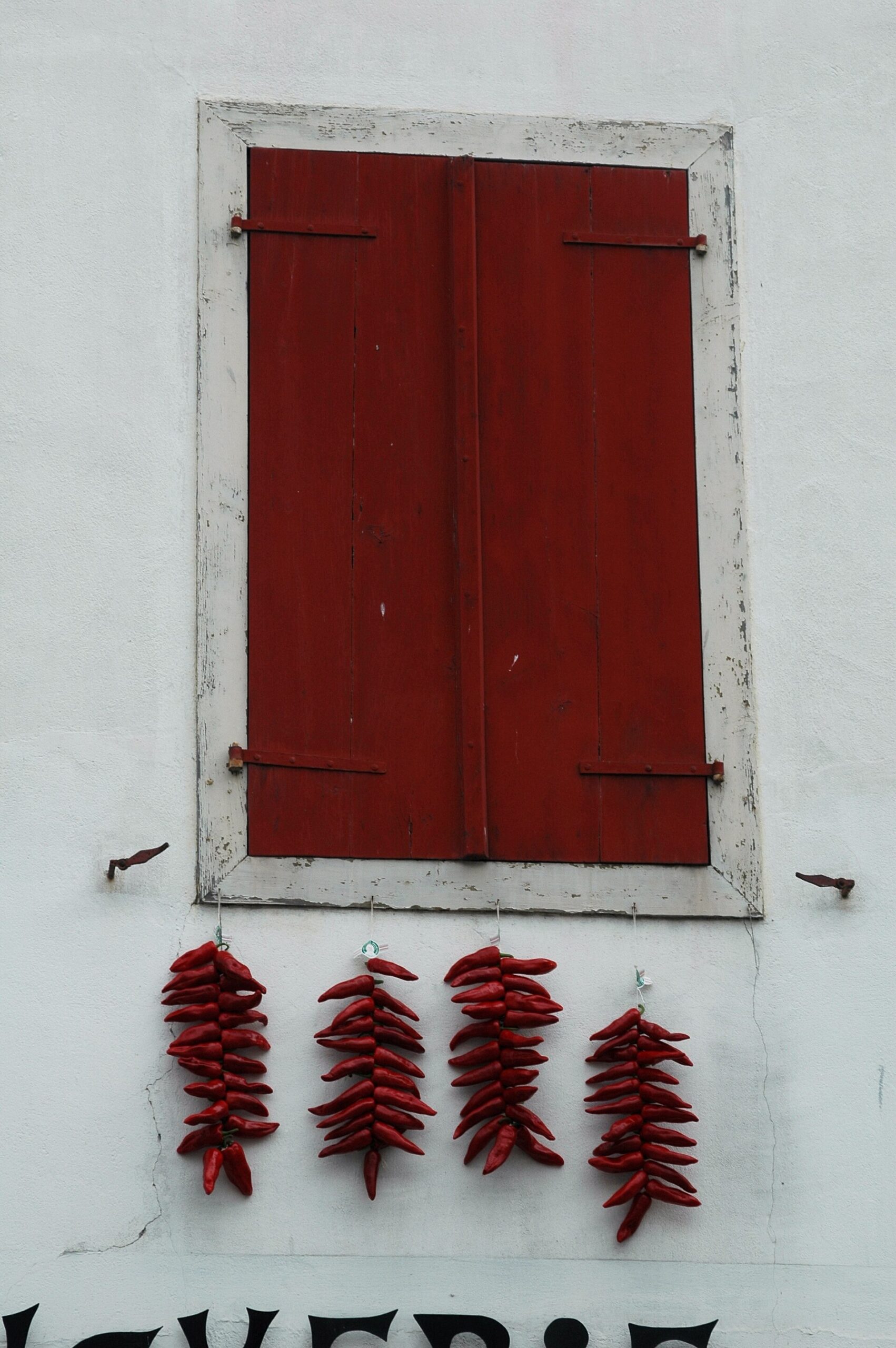
The place is Espelette. And the pepper — the piment d’Espelette — is at the heart of one of France’s most distinctive regional identities.
A Village That Wears Its Harvest
In Espelette, drying peppers is not decoration — it is tradition. Every September and October, long scarlet chillies are strung into braids called manogues and hung from balconies, window frames, and the white-and-red half-timbered façades of almost every building in the village.
The effect is extraordinary. A quiet Basque village — population barely 2,000 — looks as though it has been draped in crimson bunting for a celebration that never ends.
But this is not theatre. The peppers need sun and open air to dry properly before being ground into the powder used in Basque cooking all year round. What looks like decoration is actually the final stage of the harvest.
The Pepper France Took Seriously Enough to Protect
In 2000, piment d’Espelette received its AOP — Appellation d’Origine Protégée — the same protected designation that governs Champagne and Roquefort. Only peppers grown in ten specific Basque villages can legally carry the name.
This was not bureaucracy for its own sake. It was recognition that this pepper, with its mild heat and faintly smoky sweetness, was irreplaceable — tied to specific soil, a specific climate, and centuries of local knowledge that cannot simply be moved elsewhere.
You will find it in the spice racks of serious kitchens across France. But the real thing — freshly ground, deeply red — only comes from here.
A Place That Has Always Been Different
Espelette sits in the Pays Basque — the French Basque Country — a corner of southwest France that has never been quite like the rest of the country.
The half-timbered houses painted in red and white are Basque in style, not French. The language spoken here — Euskara — has no known relatives in any other language family on Earth. It predates the Romans, the Celts, and possibly recorded history.
The Basque people call themselves Euskaldunak: those who speak Basque. France is the backdrop, not the identity. If you are planning a longer trip to this part of the country, the France travel planning guide is a good place to begin.
Enjoying this? 7,000 France lovers get stories like this every week.
Thinking about it seriously? If you’ve started actually planning a move, our complete our complete Moving to France guide walks through every step, every cost, and the paperwork that catches most people out.
What You Actually Taste Here
Basque food is its own universe. In Espelette and the surrounding villages, you will find pintxos — the Basque version of tapas — alongside piperade, a dish of eggs scrambled with sweet peppers and tomatoes, and ttoro, the dense fisherman’s stew brought inland from the Atlantic coast.
And everywhere: piment d’Espelette. Sprinkled over soft cheese. Stirred into sauces. Dusted over grilled fish. The heat is gentle — more warmth than fire — and the flavour adds a depth that ordinary black pepper simply cannot replicate.
The village’s producers all offer tastings and sell directly from their farms and shops. Buy a ceramic pot of the powder before you leave. It will not stay in the cupboard long.
The Festival That Most of France Has Never Heard Of
Every year on the last weekend of October, Espelette holds the Fête du Piment — the Pepper Festival. The main street fills with producers, chefs, and visitors from across France and beyond.
The peppers are blessed in a ceremony at the village church. Red berets come out. There is Basque dancing, traditional music, and more piment d’Espelette in every form than any reasonable person could work through in a single visit.
Forty minutes along the coast, Biarritz was already hooked on surfing long before the rest of Europe caught on. The whole Basque coast rewards those who slow down to look.
It is, by any measure, one of the most joyful small-town celebrations in France — and almost nobody outside the region knows it exists.
France has its grand châteaux and its famous coastlines. But Espelette is something different: a place that has stayed fiercely, unapologetically itself for a very long time. Come in October if you can. The village will be red, the air will smell of dried peppers, and you will not want to leave.
Join 7,000+ France Lovers
Three times a week, get France’s hidden gems, seasonal guides, local stories, and the art of la vie française — straight to your inbox.
Subscribe free — enter your email:
Love more? Join 65,000 Ireland lovers → · Join 43,000 Scotland lovers → · Join 30,000 Italy lovers →
Free forever · · Unsubscribe anytime
🇫🇷 You Might Also Love
Tours & experiences you might love


Powered by Viator. Some links are affiliate links — we may earn a small commission at no extra cost to you.

Leave a Reply