
Paris is extraordinary. But some of France’s most memorable moments happen just beyond the city limits. The best day trips from Paris cover everything from palace gardens to cathedral towns, chalk cellars to clifftop abbeys — most of them reachable in under two hours by train. This guide covers eight destinations worth leaving the city for, with practical advice on getting there and how long to spend.
Love France? Join 7,000+ readers on our free newsletter → lovetovisitfrance.substack.com
Versailles — The Palace Everyone Should See Once
Versailles sits 35 minutes from Paris on the RER C line, and it earns its reputation. The Hall of Mirrors alone is worth the trip — 357 mirrors reflecting the gilded chandeliers above, the gardens stretching out behind the glass. But the part most visitors miss is the Grand Trianon, Marie Antoinette’s private estate at the far end of the grounds. Quieter, more intimate, and far less crowded than the main palace.
Buy your tickets online before you travel — queues at the door can add an hour to your morning. Give yourself a full day if you want to see the main palace, the gardens, and the Trianon estate. Arrive by 9am for the best light in the garden fountains.
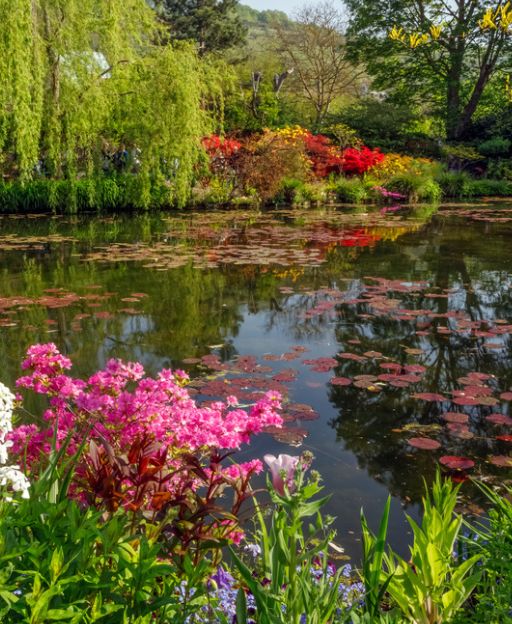
Giverny — Step Inside Monet’s Garden
Giverny is one of the most beautiful day trips from Paris and one of the most personal. Claude Monet lived here for 43 years, and the water garden he created — all lily pads, weeping willows, and that famous arched bridge — became the subject of over 250 paintings. Standing beside it, you understand why.
The village is 90 minutes from Paris by train to Vernon, then a short taxi or bike ride. Visit in May or June when the irises and wisteria are at their peak. The house itself is open too — small but fascinating, with Monet’s blue-and-yellow kitchen exactly as he left it. Book ahead in summer. Numbers are limited and it sells out.
Reims — Cathedrals and Champagne Cellars
Reims is a 45-minute TGV ride from Paris Gare de l’Est, and it offers something you won’t find anywhere else: a Gothic cathedral where French kings were crowned, and miles of chalk tunnels beneath the city holding millions of bottles of ageing Champagne. The two things are connected — the same chalk carved out for the cathedral foundations became the ideal storage for the region’s most famous export.
Moët & Chandon, Taittinger, and Pommery all offer cellar tours. Book in advance. The cathedral itself, with its original stained glass by Marc Chagall, is extraordinary even if you’ve seen a dozen Gothic churches before. For the full picture on the region, see our Champagne region travel guide.
The Loire Valley — Châteaux by the River
The Loire Valley is France’s château country: a 300-kilometre valley with over a thousand castles, many of them open to visitors. Chambord is the largest — an extraordinary Renaissance palace with a double-helix staircase said to have been designed by Leonardo da Vinci. Chenonceau spans the river itself, its arches reflected in the water below. Amboise has both a château and the tomb of Leonardo, who spent his final years nearby.
Tours, the main city in the valley, is an hour from Paris on the TGV. From there, you can hire a car, join a day tour, or cycle between the closer châteaux. Most people see two or three in a day. For more detail, our Loire Valley travel guide covers the best bases and which châteaux to prioritise.
Exploring France?
Get hidden gems, local tips, and travel ideas every week — straight to your inbox.
Thinking about it for retirement? If you’ve started thinking seriously about retiring there, our complete our full Retire in France guide covers the visa, healthcare, cost-of-living, and the regions worth shortlisting.
Normandy — D-Day Beaches and Coastal Cliffs
Normandy takes longer — plan on at least two hours each way from Paris — but it rewards the effort. The D-Day landing beaches stretch for miles along the coast, each with its own memorials, cemeteries, and museums. Omaha Beach, with its American military cemetery overlooking the sea, is among the most moving sites in France.
The Normandy coast also offers the cliffs at Étretat, the harbour town of Honfleur, and the medieval city of Rouen, where Joan of Arc was burned at the stake in 1431. Most people combine two or three of these on a single trip. A rental car from Caen (reachable by high-speed train from Paris in about 2 hours) is the most flexible option. Our Normandy travel guide covers the beaches, towns, and the best ways to get around.
Fontainebleau — The Forest the Kings Preferred
Fontainebleau is 40 minutes by train from Paris Gare de Lyon and far less visited than Versailles, despite being one of the most significant royal residences in France. Kings from Francis I to Napoleon used it as their preferred retreat. The forest surrounding it — 25,000 hectares of ancient woodland — draws hikers, rock climbers, and day-trippers looking for somewhere genuinely peaceful.
The château itself is free on the first Sunday of each month. The forest has marked trails ranging from 2km to 20km. It’s an easy half-day if you want the château only, or a full day if you plan to walk. Particularly beautiful in autumn when the leaves turn.
Chartres — A Cathedral That Changes How You See Gothic Architecture
Chartres Cathedral, an hour south-west of Paris by train, is widely considered the finest Gothic cathedral in existence. The original 12th-century stained glass — over 170 windows — has never been replaced or significantly restored. The blues, in particular, have never been replicated by modern craftsmen. The town around it is quiet and easy to walk in an afternoon.
The cathedral is freely open to visitors. Visit on a sunny morning when the light passes through the rose windows. Even if you have visited many Gothic cathedrals in France, Chartres stands apart.
Practical Tips for Day Trips from Paris
Most day trips from Paris work best on weekdays, when the major sites are less crowded. Weekends at Versailles, in particular, can be very busy from late spring through summer.
Train passes: A Eurail or Interrail pass covers many of these routes, but TGV seats often require a reservation even with a pass. Book the seat reservation online. For slower regional trains (RER to Versailles, direct train to Chartres), no reservation is needed — just tap your pass.
SNCF Connect is the main French rail app. You can book all train tickets through it in advance. Most routes listed here are under €30 return at standard prices, and cheaper when booked early.
How many to combine: Resist the urge to combine too many in one day. Two châteaux in the Loire Valley work well together. Versailles and Giverny on the same day is difficult — they’re in different directions from Paris. One destination done well is better than three rushed.
What to bring: Comfortable shoes, a water bottle, and your museum card if you have one. The Paris Museum Pass covers Versailles, Fontainebleau, and Chartres (partial entry). Check current coverage before buying.
You Might Also Enjoy
If these day trips have sparked a longer trip, these guides will help you plan:
- One Week in Paris: The Perfect Itinerary
- Champagne Region France: A Complete Travel Guide
- Normandy Travel Guide: D-Day Sites and Beyond
Plan Your France Trip
Ready to go beyond the day trips and plan the full journey? Our France trip planning hub covers visas, budgets, the best regions to combine, when to go, and how to get around — everything you need before you book.
Join 7,000+ France Lovers
Three times a week, get France’s hidden gems, local recipes, and travel inspiration — the kind you won’t find in any guidebook.
Subscribe free — enter your email:
🇫🇷 Discover the France Most Tourists Never Find
Get our free guide to 25 hidden villages of France — then join 7,000+ readers for weekly stories about places most guidebooks never mention.
Get Your Free Village Guide →Free forever · · Unsubscribe anytime
🇫🇷 You Might Also Love
Tours & experiences you might love


Powered by Viator. Some links are affiliate links — we may earn a small commission at no extra cost to you.

Leave a Reply