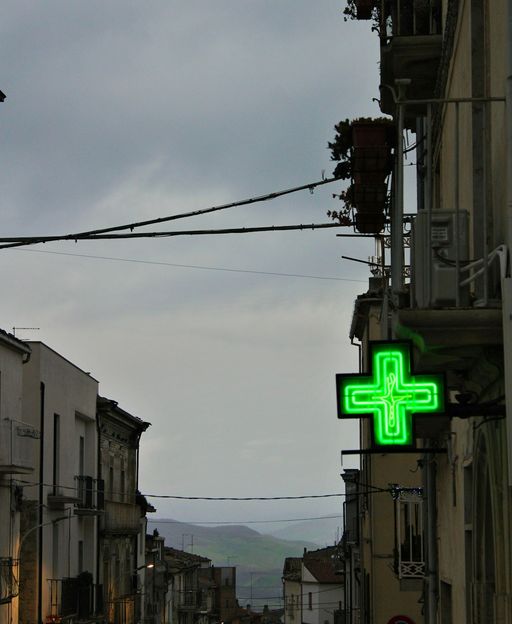
The moment you step into almost any French town, you notice something. A green cross glowing above a shopfront. Sometimes flashing. Often the brightest thing on the street. In France, the pharmacie isn’t just a place to pick up tablets. It’s one of the most trusted institutions in the country — and once you understand why, you start to see France a little differently.
The Rule That Stops Every Visitor Cold
In France, you cannot buy paracetamol, ibuprofen, or even a basic cough medicine at a supermarket. These medicines are sold only in pharmacies — licensed, regulated, and staffed by trained professionals.
The first time a tourist discovers this — usually mid-trip with a headache — it comes as a genuine shock. You scan the shelves at Carrefour. You find nothing. You ask a member of staff. They point you to the street outside.
But this isn’t bureaucracy for its own sake. It’s rooted in a belief that medicine should be dispensed with care — not dropped into a trolley alongside yoghurt and washing powder. That belief runs deep in France, and the pharmacy is where you feel it most clearly.
More Than a Dispensary
French pharmacists train for six years. They study pharmacology, chemistry, and clinical science alongside hands-on patient care. They are qualified, in a way that most countries don’t recognise, to consult.
Walk in with a cough, a rash, or a bee sting, and the pharmacist won’t simply hand you a box and ring it through. They’ll ask about your symptoms, your history, any medication you’re already taking. They’ll often identify the problem and treat it on the spot — and refer you to a doctor only if something warrants it.
In rural France, where a GP surgery might be an hour’s drive away, the pharmacist is frequently the first — and most trusted — point of contact for anything health-related. Families rely on them. Older residents build relationships with them over decades.
The Green Cross Is Sacred
There are more than 22,000 pharmacies in France. That’s one of the highest ratios in Europe — roughly one for every 2,700 people. And every single one carries the same green cross.
Unlike in the UK or the United States, where large chains dominate, most French pharmacies are independently owned. The person behind the counter is often the owner. They know their regulars. They remember your allergies. They ask after your mother’s knee.
This isn’t a coincidence of history. French law restricts pharmacy ownership to qualified pharmacists — corporations cannot simply buy them up. The result is a network of small, personal health shops embedded in every village, every suburb, every narrow city street.
Enjoying this? 7,000 France lovers get stories like this every week.
Thinking about it for retirement? If you’ve started thinking seriously about retiring there, our complete our full Retire in France guide covers the visa, healthcare, cost-of-living, and the regions worth shortlisting.
What Happens When You Walk In
For a first-time visitor, the experience can feel unexpectedly formal. You queue at the counter. You explain your symptoms in whatever French you can manage, perhaps with a bit of mime. The pharmacist listens carefully and responds — often in English, especially in tourist areas, but in French first.
There’s no self-service shelf for anything medicinal. No grab-and-go. Every transaction involves a brief conversation. Even buying sun cream or vitamins might prompt a question about your skin type or your child’s age. This isn’t inefficiency. It’s the system working exactly as it was designed.
If you’re visiting France for the first time, this is one of the small cultural adjustments worth making early. Pack a basic medical kit, but don’t be afraid to use the pharmacie. The staff are there to help — genuinely and knowledgeably.
A Quiet Cultural Statement
The way the French relate to their pharmacies reflects something broader about French life. A preference for depth over convenience. A belief that certain things — health, food, time — shouldn’t be rushed or reduced.
It’s the same logic that sits behind the two-hour lunch, the Sunday market, the unhurried conversation with a baker at 7am. France does not hurry its rituals. The pharmacie is no different.
There’s also a quiet pride in it. The green cross above the door signals that someone inside genuinely knows their craft. That you will be seen, not merely processed. In a world that increasingly runs on self-service and algorithms, a French pharmacist who remembers your name feels almost radical.
Planning your first visit? The France planning hub covers everything you need before you go — from transport and accommodation to the small cultural habits that make the difference between a tourist trip and a real French experience.
Next time you’re walking a French street and spot that green glow above a doorway — pause for a moment. It’s not just a shop sign. It’s a small, stubborn expression of a country that still believes some things are worth doing properly.
Join 7,000+ France Lovers
Three times a week, get France’s hidden gems, seasonal guides, local stories, and the art of la vie française — straight to your inbox.
Subscribe free — enter your email:
Love more? Join 65,000 Ireland lovers → · Join 43,000 Scotland lovers → · Join 30,000 Italy lovers →
Free forever · Unsubscribe anytime
🇫🇷 You Might Also Love
Tours & experiences you might love


Powered by Viator. Some links are affiliate links — we may earn a small commission at no extra cost to you.

Leave a Reply