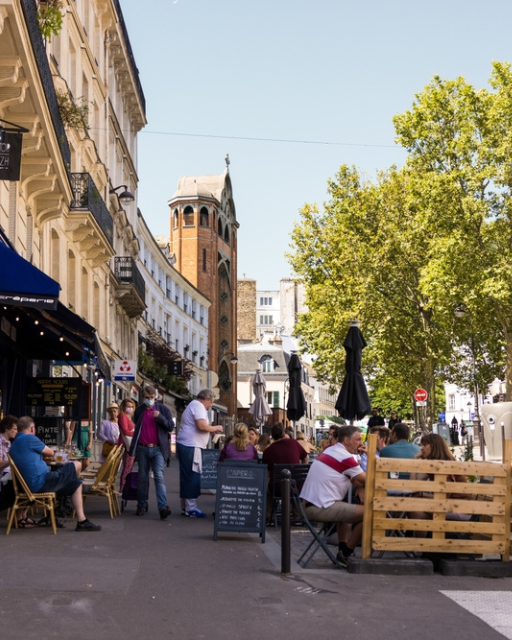
Walk into a French supermarket and you’ll find butter, cream, cheese, bread, and wine in quantities that would alarm most nutritionists. Sit down for lunch in a Lyon brasserie and you might find a three-course meal that runs for ninety minutes. Watch a French family eat dinner and you won’t see anyone scrolling on their phone, eating standing up, or rushing back to work.
Yet according to OECD data, France’s obesity rate sits at around 17%, compared to 26% in the UK and 36% in the United States. This gap has puzzled researchers, journalists, and diet book authors for decades.
The answer isn’t about what the French eat. It’s about how they eat.
Love France? Get more every week.
Our free newsletter delivers the best of French food, travel, and everyday life straight to your inbox.
Subscribe Free →Meals Are Treated as Events, Not Interruptions
In most countries, eating has become something you do while doing something else. At your desk, in the car, in front of the television, or standing over the sink. Meals are squeezed into gaps between other tasks.
In France, this approach is almost unheard of. The midday meal is treated as a proper break. Shops close. Offices empty. People sit down, at a table, with others, and eat without distraction.
This isn’t cultural stubbornness. There’s growing evidence that eating without distraction makes a real difference. Research published in the American Journal of Clinical Nutrition found that distracted eating leads to greater calorie intake — not just during that meal, but throughout the rest of the day. When you’re not paying attention to what you’re eating, your brain doesn’t register fullness as reliably.
The French habit of sitting down and giving the meal your full attention isn’t a quaint tradition. It’s a practical system that works.
Snacking Is Not the Norm
One of the first things visitors notice when spending time in France is the absence of constant snacking. There’s no trail mix at the meeting, no biscuits in the break room, no mid-afternoon packet of crisps. Children have a designated snack time in the late afternoon — called the goûter — but adults largely wait for meals.
This stands in sharp contrast to habits in the UK, the US, and much of Northern Europe, where snacking throughout the day is standard and food is available continuously.
The structure matters. When you know the next meal is coming and snacking isn’t expected, your relationship with hunger changes. Mild hunger before a meal becomes normal rather than alarming. You eat more mindfully when you sit down because the meal has context and purpose.
This doesn’t mean the French are hungry all day. It means meals carry more significance, and the time between them is simply time between meals — not an opportunity to graze.
Fresh Ingredients, Bought Often
French shopping habits differ from what you find in most Anglophone countries. The large weekly supermarket shop — with a trolley full of frozen meals and long-life products to last the week — is far less common. Instead, many French households shop more frequently, buying what they need for the next day or two.
Farmer’s markets are a feature of almost every French town, from Lyon to Bordeaux to small Provençal villages. They’re not tourist attractions. They’re busy, practical, and used regularly by locals who know what’s in season and what’s good value.
A meal built around a fresh baguette, a piece of cheese bought that morning, tomatoes from the market, and a simple vinaigrette doesn’t need to be complicated to be satisfying. Freshness does the work that sauces and seasoning often try to compensate for.
None of this requires expensive ingredients. The principle is freshness and simplicity. A salad made with fresh leaves, a boiled egg, a few anchovies, and a proper dressing costs very little and takes ten minutes. It’s also genuinely filling in a way that processed food often isn’t.
Join thousands of France lovers.
Get tips, guides, and stories about France delivered free each week — from markets to hidden villages.
Get the Newsletter →Portion Control Through Habit, Not Calculation
The French don’t count calories. Most would find the concept mildly baffling. Yet portion sizes in France tend to be smaller and more consistent than in comparable countries.
This isn’t because the French are naturally disciplined. It’s because the structure of the meal does the work. A three-course meal of smaller portions — starter, main, dessert — feels complete. You’ve had variety, you’ve sat at the table long enough for satiety signals to reach your brain, and the meal has a clear beginning and end.
Contrast this with eating a large single dish while distracted, and it becomes easier to see why the outcome might be different. The dessert, incidentally, is not treated as a guilty pleasure in France. It’s a normal part of the meal. A small portion of something sweet eaten slowly and with attention is quite different from snacking on biscuits throughout the afternoon.
The Social Dimension of Eating
Food in France is rarely eaten alone. Even a simple lunch becomes an occasion for conversation when shared. This slows things down naturally.
Research into eating behaviour consistently notes that conversation forces you to pace yourself. You put the fork down between bites. You engage with the people around you. The meal takes longer, and the experience is more satisfying, even if the portion is the same size.
The French also tend to drink wine with meals rather than in addition to them. A glass of wine with dinner is normal; drinking between meals is much less common. Food and drink are structured into the rhythm of the day rather than being available on demand at all hours.
What This Looks Like in Practice
None of what makes French eating habits distinctive is expensive or particularly difficult. The principles are straightforward:
- Sit down for every meal, at a table, without screens.
- Eat with someone else when possible.
- Don’t eat between meals — let hunger build before you sit down.
- Use fresh ingredients and keep meals simple.
- Serve smaller portions across more courses — starter, main, something small and sweet to finish.
- Give the meal your full attention.
These habits aren’t about restriction. They’re about structure and attention. The French don’t necessarily eat less because they’re trying to. They eat in a way that naturally regulates intake, because the experience of the meal itself — the time, the company, the attention — is part of what makes it satisfying.
Why Visitors Notice It Immediately
Ask anyone who has spent time in France — especially outside Paris — and they’ll mention the pace of meals. Lunch that takes an hour and a half. Dinner that begins at 7:30 and runs well past 9. A market where the vendor wants to tell you about the tomatoes rather than just scan your items and move you along.
This slower relationship with food is noticeable precisely because it’s different. In countries where eating has been compressed into the smallest possible time window and treated as fuel rather than experience, the French way stands out.
It also helps explain why eating in France tends to feel more satisfying. The experience of a meal — sitting down, eating with others, paying attention — adds something that a rushed lunch at a desk simply doesn’t provide.
Whether you’re planning a trip to France or simply looking to eat a little better at home, the French model is worth examining. Not as a diet. Not as a set of rules. But as a way of relating to food that is, in practice, more sustainable than most of what gets sold as a solution.
Start your week with France.
Our free newsletter is read by over 168,000 subscribers who love everything about France. Join them.
Subscribe Now →Thinking about it seriously?
If you’ve started actually planning a move, our complete our complete Moving to France guide walks through every step, every cost, and the paperwork that catches most people out.
Tours & experiences you might love


Powered by Viator. Some links are affiliate links — we may earn a small commission at no extra cost to you.

Leave a Reply