
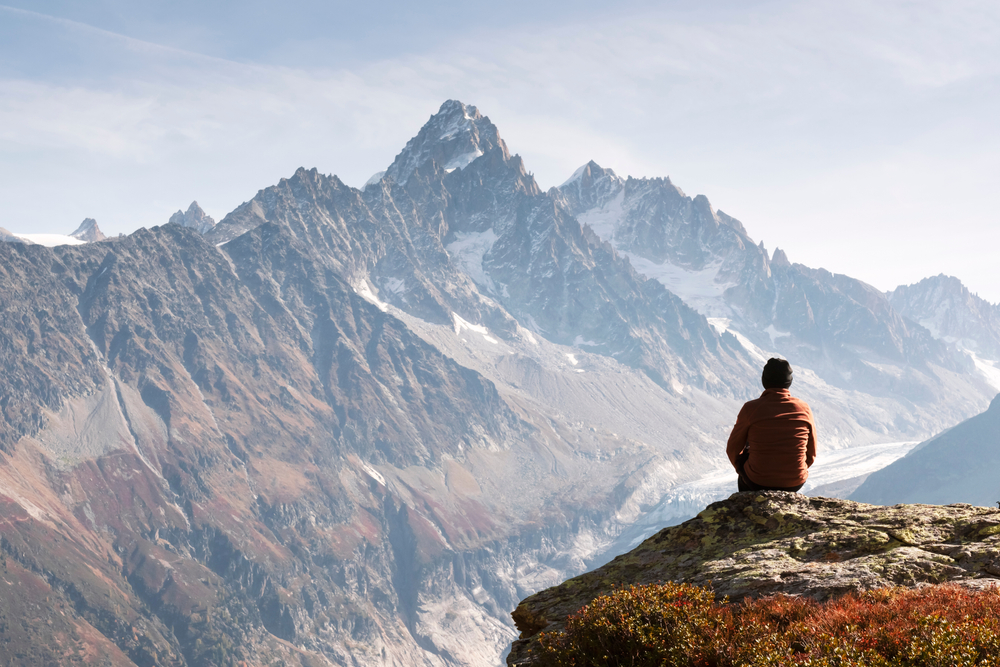
The view from the Vallon de Berard Nature Reserve above Chamonix is one of the most photographed mountain scenes in France. Standing at altitude with the Mont Blanc massif spread across the horizon, it is easy to understand why this corner of the French Alps draws visitors from every country in the world.
But the view does not happen by accident. Getting there takes planning, a reasonable level of fitness, and the right information. This guide covers everything you need to know before you go.
Where Exactly Is the Vallon de Berard?
The Vallon de Berard is a glacial valley located above the town of Argentière, which sits around 10 kilometres north of Chamonix in the Haute-Savoie department. The valley sits within the Aiguilles Rouges Nature Reserve and offers direct, unobstructed views across to the Mont Blanc massif and the Graian Alps beyond.
The area is sometimes grouped under the wider Chamonix umbrella, and most visitors base themselves in Chamonix town. From there, Argentière is a short drive or a 20-minute train ride on the Mont Blanc Express.
The specific viewpoint featured in many photographs — with a lone hiker silhouetted against the mountains — is reached via the Lac Blanc trail system. The Vallon de Berard itself is a broad valley floor that opens up after around an hour of walking from the trailhead at the Charamillon cable car station.
The Mont Blanc Massif: What You Are Looking At
Mont Blanc stands at 4,808 metres above sea level, making it the highest peak in the Alps and in Western Europe. The massif is shared between France and Italy, with the Italian side known as Monte Bianco — which translates simply to White Mountain.
The panorama from the Vallon de Berard is unusual because it gives you a wide-angle view of the entire massif rather than a single close-up peak. On a clear day you can pick out the Aiguille du Midi, the Dôme du Goûter, the Grandes Jorasses, and numerous other peaks stretching across the skyline.
The Graian Alps, which form part of the border range between France and Italy, appear in the background. The contrast between the foreground valley — green in summer, white in winter — and the permanent snow line above 2,500 metres makes for the kind of scene that stops people mid-stride.
How to Get to the Vallon de Berard
There are two main approaches, and the one you choose depends on your fitness level and how much time you have.
Via the Charamillon cable car — This is the most popular starting point. Take the cable car from Le Tour (the village at the end of the Chamonix valley) up to Charamillon at around 1,850 metres. From there, a well-marked trail leads south through the Col de Balme area and into the upper Vallon de Berard. The walk from Charamillon to the main viewpoint takes roughly 1.5 to 2 hours one way.
From the valley floor — A longer route starts from Argentière village and climbs the full 900 metres to reach the valley. This takes around 3 to 4 hours uphill and is suited to experienced hikers. The advantage is that you cover a greater range of terrain and see the valley open up gradually as you climb.
Both routes are well-marked and appear on the standard IGN maps for the area (Map 3630 OT Chamonix). The trails are graded as moderate difficulty in summer. In early season (June) or late season (October), snow can cover sections of the upper path, so check conditions locally before setting out.
When to Visit
The Vallon de Berard is accessible on foot from late June through to mid-October in a typical year. Outside these months, snow and ice make the upper sections difficult and potentially dangerous without specialist equipment.
July and August are the busiest months. The trails are clear, the cable cars are running at full capacity, and the weather is warmest at altitude. Expect company on the popular viewpoint paths, particularly at weekends.
September and early October offer a different experience. The crowds thin out significantly, the light is softer for photography, and the first autumn colours appear on the lower slopes. Temperatures drop quickly above 2,000 metres once the sun goes behind a cloud, so layers are essential.
Winter visits to the valley are possible for experienced ski tourers and snowshoers, but the access conditions are serious and require local knowledge. The area around Chamonix sees significant avalanche risk in winter, and the nature reserve itself has restricted access in some zones to protect wildlife.
Practical Information for Visitors
Getting to Chamonix: Chamonix is served by Geneva Airport, around 90 minutes away by road. Direct bus services run year-round from the airport to Chamonix town centre. By rail, the closest mainline station is Sallanches, with a connecting service to Chamonix. By car, take the A40 motorway from Lyon or Geneva towards Mont Blanc.
Cable car costs: The Le Tour–Charamillon cable car costs around €18–22 return for adults in summer, with reduced fares for children and holders of the Carte d’Hôte (a free pass available to all guests staying in Chamonix valley accommodation). Check the current prices on the Compagnie du Mont Blanc website before your visit, as fares are updated each season.
What to wear and carry: Even in summer, temperatures at 2,000 metres can be 10–12°C cooler than in the valley. A wind-proof layer, a fleece, and waterproofs are sensible regardless of the forecast. The trail surface is rocky in places, so walking boots with ankle support are recommended over trainers. Carry water — there are no refreshment facilities on the upper trail — and sun protection, as UV levels are significantly higher at altitude.
Photography: The classic view of the Mont Blanc massif from the Vallon de Berard is best photographed in the morning, when the light hits the glaciers from the east and the sky is typically clearer. By afternoon, cloud often builds around the summits. A telephoto lens allows you to pull in the detail of the snow ridges, while a wide angle captures the scale of the valley and the massif together.
The Aiguilles Rouges Nature Reserve
The Vallon de Berard sits within the Réserve Naturelle des Aiguilles Rouges, one of 169 national nature reserves in France. The reserve was created in 1974 and covers around 3,300 hectares of high-altitude terrain. Its purpose is to protect alpine flora and fauna, and access to some zones is restricted, particularly during the nesting season for birds of prey.
The reserve is home to chamois, ibex, golden eagles, and ptarmigan. In summer, the valley floor supports a rich variety of alpine flowers, including edelweiss, gentian, and alpine rose. A small information centre at the Col des Montets, at the entrance to the reserve on the valley floor, provides background on the ecology and has details of where wildlife sightings have been recorded recently.
Visitors are asked to keep to marked trails, not to pick plants, and to take all litter away. Dogs must be kept on a lead in the reserve at all times.
Is It Worth Adding to Your France Itinerary?
The honest answer is yes, but only if you are prepared for a half-day or full-day commitment. This is not a view you can see from a car window or a town square. It requires effort to reach, and the effort is directly proportional to the reward.
For anyone spending time in the Chamonix valley — whether for skiing in winter or walking in summer — the Vallon de Berard is among the most accessible of the high-altitude experiences on offer. It does not require a guide, specialist equipment, or a particularly high level of fitness, yet it delivers a genuine sense of being in the high mountains with one of the most recognisable panoramas in Europe in front of you.
Chamonix itself has a well-developed tourist infrastructure, with accommodation at every price point, a wide range of restaurants, and good public transport connections. A two or three-night stay gives you enough time to reach the Vallon de Berard, explore the town, and perhaps take the Aiguille du Midi cable car for a different perspective on the same massif.
The view that stopped people on Facebook — the wide shot across the valley to Monte Bianco with a single figure in the foreground — is real and reachable. It is one of France’s genuinely great viewpoints, and it belongs on any serious France bucket list.
Thinking about it seriously?
If you’ve started actually planning a move, our complete our complete Moving to France guide walks through every step, every cost, and the paperwork that catches most people out.
Tours & experiences you might love


Powered by Viator. Some links are affiliate links — we may earn a small commission at no extra cost to you.

Leave a Reply