
The Loire Valley is one of France’s most spectacular travel destinations. This loire valley travel guide covers everything you need for a well-planned trip — the best châteaux, the finest wines, the right time to visit, and how to move between it all without stress.
Love France? Join 7,000+ readers on our free newsletter → lovetovisitfrance.substack.com
Why the Loire Valley Belongs on Your France Itinerary
The Loire is France’s longest river. It stretches for more than 1,000 kilometres from the Massif Central to the Atlantic coast. The central section — from Gien to Angers — forms the Loire Valley UNESCO World Heritage Site. This stretch contains over 300 châteaux, built mainly between the 15th and 17th centuries.
French royalty loved the Loire Valley. After the Hundred Years’ War, the royal court moved here from Paris. Kings, queens and courtiers filled the region with grand castles and elegant gardens. Today, those buildings are open to visitors. The Loire Valley remains one of the most beautiful parts of France to explore slowly.
Unlike Paris, the Loire Valley rewards wandering. You can lose an afternoon at a quiet vineyard, cycle along the riverbank, or find a 15th-century chapel with no queue and no entry fee. If you want to understand France beyond the capital, start here.
Getting to the Loire Valley from Paris
The Loire Valley is easy to reach from Paris. TGV trains from Paris Montparnasse reach Tours in just over one hour. Trains from Paris Austerlitz reach Blois in about 1 hour 20 minutes. Both are comfortable and affordable. Booking in advance gives you the best fares.
If you prefer to drive, the A10 motorway runs south-west from Paris. In roughly two hours, you are in the heart of the Loire Valley. Driving gives you the freedom to stop at roadside markets and lesser-known vineyards along the way.
Once you arrive, hiring a car is the most practical option. Many of the finest châteaux sit well away from the main towns. A car lets you set your own pace. Cycling is also excellent — the La Loire à Vélo route follows the river for over 900 kilometres, and bikes are available to hire in most towns.
→ See our full guide to travelling France by train for timetables, booking tips and the best rail routes across the country.
Loire Valley Châteaux: The Ones You Cannot Miss
With over 300 châteaux in the region, knowing where to start can feel overwhelming. These four are the best beginning — each offers something different, and together they give you a complete picture of what the Loire Valley is about.
Château de Chambord
Chambord is the largest château in the Loire Valley. Construction began for King François I in 1519. The building has 365 chimneys — one for every day of the year, according to tradition. The scale of it is genuinely astonishing when you first see it emerge from the surrounding forest.
The interior centrepiece is the famous double-helix staircase. Two people can climb and descend at the same time without ever crossing paths. The design is often linked to Leonardo da Vinci, who lived nearby in his final years. Allow at least two to three hours. The vast hunting estate surrounding the château is also worth exploring on foot or by bike.
Château de Chenonceau
Chenonceau is the most visited château in France outside of Versailles. Its defining feature is a long gallery built across the River Cher. The château was shaped by two powerful women — Diane de Poitiers and Catherine de’ Medici — whose rivalry is written into the gardens that each claimed as her own.
The rose garden contains over 80 varieties. The view from the riverbank, with the château reflected in the water, is one of the most photographed scenes in France. Go early in the morning to avoid the peak crowds.
Château de Villandry
Villandry stands apart from other Loire châteaux because its gardens are the main attraction. They cover six hectares and include a water garden, ornamental parterres, a sun garden and an extraordinary kitchen garden. The kitchen garden arranges vegetables and herbs in geometric patterns that are part art, part agriculture.
Villandry receives fewer visitors than Chambord or Chenonceau. That makes it one of the most relaxed châteaux to explore. Spring and early summer are the best seasons for the gardens.
Château de Sully-sur-Loire
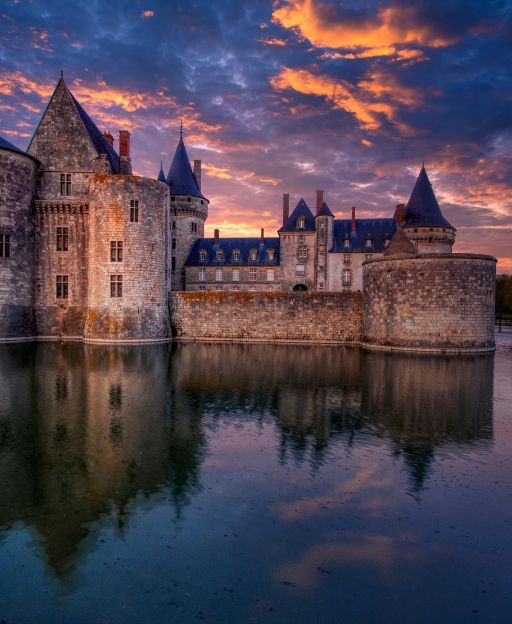
Sully-sur-Loire is less famous than the châteaux above, but it rewards those who make the effort. This 14th-century fortress sits on the banks of the Loire with a wide moat that mirrors its towers. At sunset, the reflection in the water is exceptional.
Joan of Arc met King Charles VII here in 1429 — a meeting that helped turn the tide of the Hundred Years’ War. History and atmosphere combine at Sully-sur-Loire in a way that the more crowded sites sometimes lose.
Dreaming of France? Join 7,000+ travellers who get weekly France travel inspiration, hidden gems and practical tips — free. Subscribe free →
Wine, Food and Markets in the Loire Valley
The Loire Valley produces some of France’s most underrated wines. Muscadet, from the western end of the valley, is crisp and mineral — a natural match for seafood and oysters. Vouvray, made from the Chenin Blanc grape, comes in dry, off-dry and sweet styles. At the eastern end, Sancerre and Pouilly-Fumé produce some of France’s finest Sauvignon Blancs.
Many châteaux offer wine tastings in their caves — underground cellars carved into the soft tufa stone that lines the riverbank. Spending an afternoon in a cave, tasting through a domaine’s range, is one of the most enjoyable things you can do in the Loire Valley.
For food, look for these Loire Valley specialities:
- Rillons and rillettes — slow-cooked pork that you will find in almost every charcuterie and market
- Tarte Tatin — the classic upside-down apple tart, which originated in the Sologne region south of the Loire
- Fresh asparagus — in season from April to June and sold at every market in the valley
- Goat’s cheeses — Crottin de Chavignol and Selles-sur-Cher are the most celebrated varieties
Weekly markets in Amboise, Blois and Tours offer the best access to local produce. The Tuesday and Sunday markets in Amboise are particularly worth visiting. Arrive before 9am for the best selection.
→ For another outstanding French wine region, see our Médoc Wine Route guide — a natural addition if you continue south to Bordeaux after the Loire.
The Best Time to Visit the Loire Valley
May and June are the best months for most visitors. The château gardens are in full bloom, the weather is warm but not oppressive, and the crowds are far lighter than in peak summer.
September and October are also excellent. Harvest begins in the vineyards. The light turns golden and atmospheric. Tourist numbers fall sharply once school terms resume in September.
July and August bring the largest crowds. The major châteaux can feel overcrowded, particularly at weekends. If you must visit in summer, arrive early in the morning and choose weekdays over weekends.
Winter (November to February) is quiet and cold. Some châteaux reduce their hours, but you will often have entire sites almost to yourself. Son-et-lumière sound-and-light shows run at several châteaux throughout the year, including winter evenings.
How Long to Spend in the Loire Valley
Most visitors spend three to five days. Three days gives you enough time to see the headline châteaux without rushing. Five days lets you add smaller sites, a vineyard visit and time to simply walk along the riverbanks without a schedule.
The Loire Valley also works well as a route stop. If you are travelling between Paris and Bordeaux, or Paris and the Atlantic coast, passing through the Loire means you see more of France without doubling back to the capital.
→ If you are combining the Loire with other Paris-area excursions, our guide to the best day trips from Paris covers other regions worth adding to your itinerary.
Where to Stay: The Best Bases in the Loire Valley
Three towns make the best bases for exploring the region.
Tours is the largest city in the valley. It has excellent rail connections, a wide range of accommodation, a lively restaurant scene and a central position that puts most major châteaux within easy reach. The old town is worth an evening walk along the pedestrianised streets.
Blois is smaller and quieter. The old town rises steeply from the riverbank and has its own impressive château. Blois sits within 20 minutes of Chambord — a strong advantage if Chambord is your first priority.
Amboise is the most charming of the three. The Château Royal d’Amboise sits directly above the town. Leonardo da Vinci spent his final years here, and the Clos Lucé — his last home — is open to visitors and worth an hour of your time.
Frequently Asked Questions
What is the best time of year to visit the Loire Valley?
May, June, September and October offer the best combination of weather and manageable visitor numbers. Late spring brings the château gardens to full bloom. Autumn delivers harvest season, golden light and far fewer tourists than the summer peak.
How do I travel from Paris to the Loire Valley?
The TGV train from Paris Montparnasse to Tours takes just over one hour and is the quickest option. Driving south-west on the A10 motorway takes roughly two hours and gives you much more freedom once you arrive. Both work well depending on your preference for flexibility versus speed.
How many Loire Valley châteaux can I visit in three days?
Three days comfortably covers four to five châteaux — for example, Chambord, Chenonceau, Villandry, Cheverny and Amboise. Allow two to three hours per château to see both the interiors and the gardens properly. Starting early each morning helps you avoid the busiest visitor periods.
You Might Also Enjoy
Planning a longer France trip? These guides cover other regions and routes that pair well with a Loire Valley visit:
- How to Travel France by Train — timetables, booking tips and the best rail routes
- Best Day Trips from Paris — other destinations within easy reach of the capital
- The Médoc Wine Route, Bordeaux — for wine lovers continuing south after the Loire
Plan Your France Trip
Ready to start planning? Our complete France travel planning hub covers visa requirements, packing lists, regional highlights and practical travel tips. → Start Here: Planning Your Trip to France
Join 7,000+ France Lovers
Every week, get France’s hidden gems, local recipes, and travel inspiration — the kind you won’t find in any guidebook.
Subscribe free — enter your email:
Love more? Join 64,000 Ireland lovers → · Join 43,000 Scotland lovers → · Join 30,000 Italy lovers →
Free forever · One email per week · Unsubscribe anytime
Ready to explore the Loire Valley?
Thinking about it seriously?
If you’ve started actually planning a move, our complete our complete Moving to France guide walks through every step, every cost, and the paperwork that catches most people out.
Tours & experiences you might love


Powered by Viator. Some links are affiliate links — we may earn a small commission at no extra cost to you.

Leave a Reply