
Before 6am, the quay at Barfleur smells of salt, engine oil, and something less easy to name — the ancient business of pulling food from the sea. A handful of boats are already back. The men unloading them don’t look up. This isn’t a performance. It’s a Tuesday.
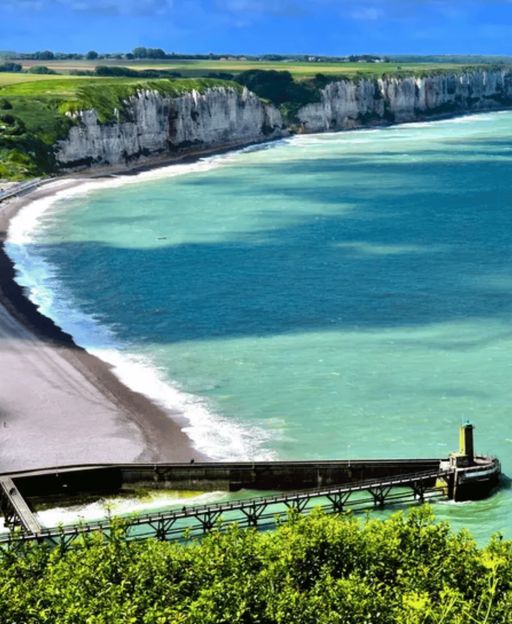
The Ports That Never Made the Posters
Normandy’s famous coastline — the white cliffs at Étretat, the abbey at Mont-Saint-Michel — fills every travel magazine in France. But a few hours’ drive along the same coast, there are ports that tourists simply haven’t found yet. Or rather, haven’t changed.
Barfleur, on the Cotentin peninsula, was once one of the most important ports in medieval Europe. William the Conqueror’s fleet launched from these waters. Today it has a granite quay, a scattering of stone houses, and around 600 residents. The main sound in the evening is seagulls.
Saint-Valéry-en-Caux sits between Fécamp and Dieppe, on a stretch of coast known for its sheer chalk cliffs. Joan of Arc’s ashes were carried through this town in 1431. Today it has a small marina and a Tuesday morning market selling fish brought in the same day.
The Timetable of a Working Port
There’s a rhythm to these places that has almost nothing to do with tourists. It runs on tides and market days and the schedule of the morning catch.
At Port-en-Bessin-Huppain, east of Bayeux, boats go out at night and return before dawn. The fish auction — la criée — starts early, and by the time most visitors are having breakfast, half the day’s business is done. The quayside smells strongly of the sea. There are no trinket shops on the waterfront.
The fishermen here are not playing a role. They have callused hands and rubber boots and no interest in being photographed. Watching them work, even briefly, is a reminder that the French coast has been producing food for a thousand years and has no need to explain itself.
Fécamp: Where the Sea and the Monastery Met
Not every working port has stayed entirely undiscovered. Fécamp, set into a narrow valley between two chalk cliffs, is known for two things: fishing and Bénédictine liqueur.
The liqueur was created in the nineteenth century by a merchant who claimed to have recovered a lost monastic recipe. The abbey-like distillery still stands in the town centre, surrounded by stained glass and carved wood and the quiet confidence of something that has been here for a very long time.
But the real Fécamp is on the quay. The town has one of the largest trawler fleets on the Normandy coast. Fishing trawlers, not pleasure craft, are moored along the harbour wall. In winter, the wind comes off the sea and there is nowhere to hide from it.
Enjoying this? 7,000 France lovers get stories like this every week.
Thinking about it seriously? If you’ve started actually planning a move, our complete our complete Moving to France guide walks through every step, every cost, and the paperwork that catches most people out.
How to Find the Real Normandy Coast
These towns are easy to miss because they don’t advertise themselves. There are no heritage trails or Instagram-friendly signposts pointing to “authentic fishing village.” You simply drive along the D79 or the D925 coast road and stop when something looks real.
The tell-tale signs: a car park that smells of the sea, a tabac open at 7am, a café with fishing nets hung on the wall as decoration rather than concept. Fish on the menu that arrived this morning and needs to be eaten today.
This is worth making a trip for. Normandy’s coastline shaped French history in ways still visible today — Monet painted these cliffs because they felt ancient and untameable. They still do.
The sea also runs deeper into French culture than most visitors realise. France’s ancient salt-harvesting tradition gives some sense of how long this coast has fed and sustained the country. The fishing ports are part of the same story.
If you’re planning a broader trip through the region, you’ll find practical help at the France trip planning hub.
The tide goes out twice a day in Barfleur. The boats go out and come back. There is very little fuss about any of it — and that, in the end, is exactly the point.
Join 7,000+ France Lovers
Three times a week, get France’s hidden gems, seasonal guides, local stories, and the art of la vie française — straight to your inbox.
Subscribe free — enter your email:
🇫🇷 Discover the France Most Tourists Never Find
Get our free guide to 25 hidden villages of France — then join 7,000+ readers for weekly stories about places most guidebooks never mention.
Get Your Free Village Guide →Love more? Join 65,000 Ireland lovers → · Join 43,000 Scotland lovers → · Join 30,000 Italy lovers →
Free forever · Unsubscribe anytime
🇫🇷 You Might Also Love
Tours & experiences you might love


Powered by Viator. Some links are affiliate links — we may earn a small commission at no extra cost to you.

Leave a Reply