
That question — the one your most spontaneous friend drops at dinner — has a way of sticking around. “If you actually did it. Packed up. Moved to France. Which part?” You laugh it off. Then you spend the next three days looking up property prices in the Dordogne.
So let’s take it seriously. Here is a practical look at the main regions of France and what actually living there would mean — costs, climate, transport, and daily life included. No rose-tinted promises. Just the facts that help you decide.
🇫🇷 Discover the France Most Tourists Never Find
Get our free guide to 25 hidden villages of France — then join 7,000+ readers for weekly stories about places most guidebooks never mention.
Get Your Free Village Guide →Before You Pick: What Kind of Life Are You After?
France is roughly the size of Texas but contains at least six distinct climates and dozens of recognisably different cultures. The south is not the north. Normandy is not Alsace. The Dordogne is not the Riviera. The region you choose will shape your daily life far more than the language classes, the visa paperwork, or the exchange rate.
So start here: what matters most to you? Sunshine, space, access to a city, lower costs, an existing expat community, outdoor life, or something else? Your honest answer to that question will do more work than any property listing.
With that in mind, here are the regions that come up most often when people start seriously considering the move.
Provence: Sunshine, Markets, and High Property Prices
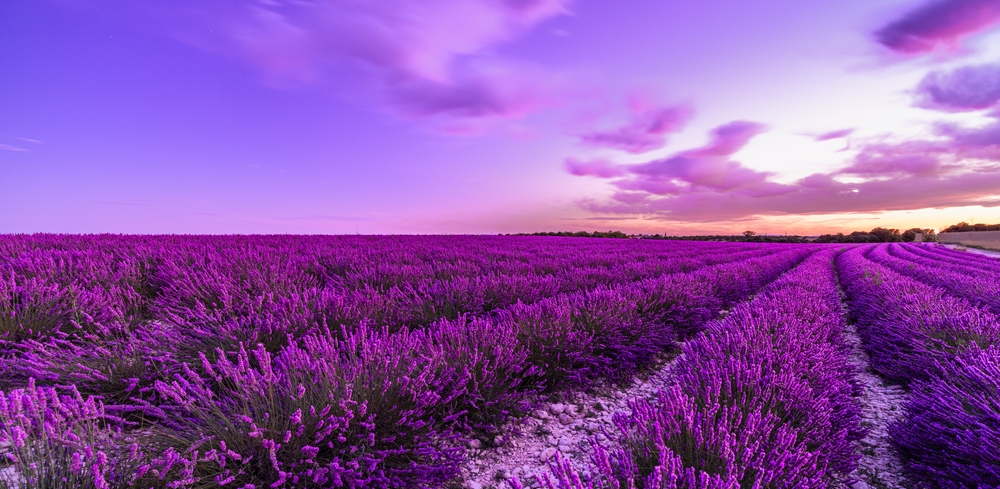
Provence is probably the first region that comes to mind, and there are real reasons for that. Around 300 days of sunshine per year, lavender fields, olive groves, weekly markets spilling over with produce, and hilltop villages with views that stretch for miles. The Luberon, the Alpilles, and the areas around Aix-en-Provence and Avignon all draw a large expatriate community — British, American, Dutch, and Scandinavian in particular.
The downside is cost. Property in popular parts of Provence rivals parts of southern England. A village house in the Luberon can easily reach €500,000 for something modest. Rental costs in Aix-en-Provence are high by French standards. Summers bring extreme heat and tourists in equal measure — some hilltop villages that feel quiet in February become very crowded from July to August.
The mistral wind also surprises many arrivals. It blows cold and with force through the Rhône corridor in winter and spring, sometimes for days without stopping. It is a feature of the region, not an occasional nuisance.
That said, the infrastructure is solid, English is widely spoken in expat-heavy towns, and the food, wine, and farmers’ markets genuinely deliver. For retirees or remote workers with a reasonable budget, Provence remains one of the more straightforward parts of France in which to settle.
The Dordogne: Affordable, Rural, and Genuinely Beautiful
The Dordogne — often called Périgord, which is its historical name — sits in south-western France and is something of a classic destination for British expats in particular. The reason is simple: it is comparatively affordable, the landscape is dramatic (medieval châteaux, limestone cliffs, the Vézère river valley, walnut orchards), and there is an established English-speaking community if you want it — and enough French-speaking neighbours if you do not.
Property prices are significantly lower than Provence. A three-bedroom stone farmhouse with land can be found for under €300,000 in many parts, and sometimes considerably less in villages further from the main tourist circuit. The market towns of Sarlat and Périgueux are among the best in France for weekly markets.
The trade-off is isolation. Public transport is minimal and the railway network is limited. You need a car. The nearest airport with regular UK connections is Bergerac, and flight schedules have fluctuated over the years depending on the operator. In peak summer, tourist towns get very crowded. In winter, the region empties noticeably and some businesses close for months.
If you are drawn to rural life, have a car, and are comfortable with genuine quiet in the off-season, the Dordogne is hard to beat. If you want reliable public transport, regular town amenities, or easy rail access, it is a harder sell.
Planning a move — or just dreaming of one? Our newsletter covers the real France: property, culture, food, and travel tips from people who live there. Join thousands of France lovers here →
Brittany: Atlantic Coast Living at Lower Cost
Brittany is the peninsula that juts into the Atlantic in north-western France. It is frequently overlooked by people who assume France means guaranteed sunshine, but Brittany has its own strongly distinct character — Celtic heritage, the Breton language still spoken by some, and coastline that ranks among the most dramatic in Western Europe.
Property prices here are among the lowest in metropolitan France. In many inland areas, a four-bedroom stone house with a garden can be bought for under €200,000. The coast commands higher prices, but Brittany remains one of the most accessible regions for buyers on a modest budget. Rennes, the regional capital, has a university, direct TGV connections to Paris (1 hour 25 minutes), and a food scene that punches well above its size.
The climate is mild but genuinely Atlantic. Expect rain — not constant, but regular and real. If you are arriving from the west of Britain, it will feel familiar. If you have been imagining Provence, manage expectations. Summers are genuinely pleasant and the region fills with French visitors who know it well. The seafood — oysters, langoustines, mussels, crab — is outstanding and cheap by comparison to the rest of France.
Brittany suits people who want affordability, coast, and culture without the crowds of the south.
Alsace: Two Cultures, One Address
Alsace runs along France’s eastern border with Germany, and its history makes it unlike anywhere else in the country. It has changed hands between France and Germany multiple times since 1870, and the result is a region with a genuinely Franco-German identity — half-timbered houses in a distinctly Germanic style, wine routes through the Vosges foothills, a dialect that blends both languages, and cuisine that draws from both traditions.
Strasbourg, the regional capital, is home to the European Parliament and the Council of Europe, and has excellent rail connections — 1 hour 47 minutes to Paris by TGV, and regular fast trains into Germany. Basel in Switzerland is also within easy reach, making Alsace a practical base for anyone who travels frequently across borders.
Property prices are reasonable outside Strasbourg itself. The wine villages along the Route des Vins are attractive and well-connected. Winters are cold and properly snowy. Summers are warm. The food — choucroute, tarte flambée, baeckeoffe, and excellent Rieslings and Pinot Gris wines — is exceptional.
For people who value ease of travel, a compact and navigable region, and want something culturally distinct, Alsace is a less obvious but strong choice.
The Loire Valley: History, Wine, and a Manageable Pace
The Loire Valley runs east to west through central France, with the river at its heart. It holds around 300 châteaux along its length, a UNESCO World Heritage designation for the entire valley, and a wine identity built on varieties — Muscadet, Sancerre, Vouvray, Chinon, Bourgueil — that pair well with the local food.
For day-to-day living, it offers good balance. Cities like Tours and Angers are large enough to have full amenities — hospitals, universities, international connections, cultural life — but manageable in scale compared with Paris or Lyon. Property prices sit in the mid-range. The TGV connects Tours to Paris in just over an hour, which makes commuting or frequent visits genuinely feasible.
The climate is moderate: warm summers, cool winters, reasonable rainfall, none of the extremes of the south or the north-west. It is a sensible choice for people who want to be within reach of Paris without living in it, or who want access to a real city whilst being twenty minutes from river towns and vineyard country.
The French Alps: Outdoors First, Everything Else Second
If your lifestyle is built around the mountains — skiing, hiking, cycling, trail running, climbing — the Haute-Savoie and Savoie departments of the French Alps are in a different category to the rest of France. Annecy, Chamonix, Megève, Chambéry, and the area around Lake Geneva all attract buyers looking for year-round access to altitude.
The costs are significant. Annecy in particular has become one of the most expensive property markets in France outside Paris — it is regularly cited as the city with the highest quality of life in the country, and prices reflect that. Geneva is close, with an international airport and the salaries that come with Swiss-adjacent employment. Infrastructure throughout the region is excellent.
Winter sports access is obvious. Summers bring trail running, cycling, kayaking, and swimming in the lakes. The food, particularly in Savoie, is built around cheese, cured meats, and dishes designed for cold weather.
This region suits a specific kind of person — one for whom the outdoors is not a weekend activity but the main reason to be somewhere.
Which Region Suits You Best?
There is no single correct answer because France is not one place. As a rough guide:
- Want sunshine and can afford the premium? Provence.
- Want rural life on a tighter budget? The Dordogne or Brittany.
- Want coast, affordability, and a distinct culture? Brittany.
- Want easy access to multiple countries and a different kind of French identity? Alsace.
- Want a city with wine country on the doorstep and Paris within reach? The Loire Valley.
- Want the mountains as a way of life? The Alps.
Every region has a community of people who made the move and never looked back. Every region also has people who returned because the reality — the paperwork, the winters, the language barrier, the distance from family — proved harder than the dream. The best thing you can do before committing is visit outside peak summer. See a place in November or March. Talk to people who live there year-round, not just the ones at the market in July.
The dream is valid. The question is just which version of it actually fits your life.
Want more France in your inbox? Subscribe to our free weekly newsletter and never miss a guide, story, or regional deep-dive. Sign up free →
Tours & experiences you might love


Powered by Viator. Some links are affiliate links — we may earn a small commission at no extra cost to you.

Leave a Reply