
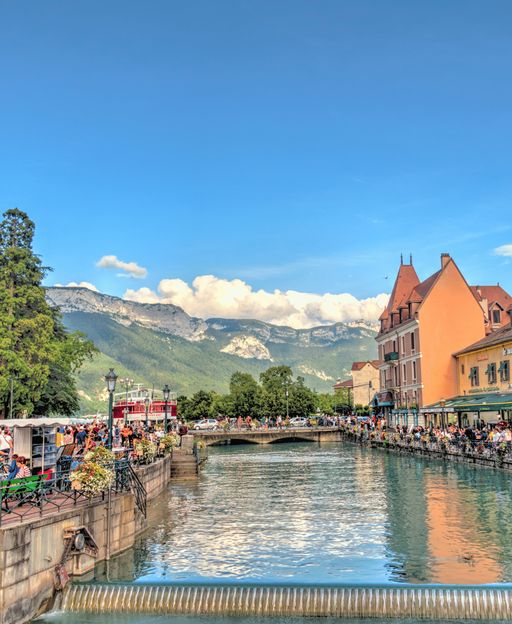
Annecy sits at the edge of one of Europe’s cleanest lakes, ringed by the French Alps, with a medieval old town threaded by canals so clear you can see the riverbed. It is often called “the Venice of the Alps,” and the comparison holds — not because it is anything like Venice, but because the water here does the same thing that water always does to a beautiful town: it doubles it, reflects it, and makes everything feel slightly impossible. Annecy is the kind of place that photographs badly because no single image captures the full effect. You have to be there, walking the narrow streets of the Vieille Ville in the early morning before the tourists arrive, to understand why the French rate it among the finest towns in the country.
Love France? Join 7,000+ readers on our free newsletter → lovetovisitfrance.substack.com
Why Annecy Belongs on Your France Itinerary
Annecy sits in the Haute-Savoie department in the French Alps, about 35 kilometres south of Geneva. It has been popular with French and Swiss visitors for decades, but it remains far less visited by Americans than cities of comparable beauty elsewhere in France. That is partly a geography problem — Annecy is not on the Paris-to-Nice train route that most US travellers follow — and partly because nothing quite prepares you for the scale of the lake. Lake Annecy covers 27 square kilometres and is fed entirely by underground springs. An environmental clean-up programme launched in the 1960s banned effluent from all surrounding towns; today the lake is consistently ranked among the cleanest in Europe, and its water is a vivid turquoise that does not look real in photographs.
The old town, the lake, and the alpine backdrop are the three pillars of any visit. Add the Château d’Annecy on the hill above, a handful of excellent restaurants, and easy day trips into the surrounding mountains, and you have material for three or four days without any difficulty.
The Old Town — Annecy’s Vieille Ville
The old town occupies a compact grid of streets between the castle hill and the Thiou canal. Most of the buildings date from the 15th and 16th centuries, and the arcades that line the main thoroughfares keep the street level shaded and cool even in July. The streets are narrow enough that you hear conversations from opposite windows, and wide enough that every corner opens onto something worth pausing for.
The Palais de l’Île
The Palais de l’Île is Annecy’s most photographed building — a 12th-century stone palace built on a wedge of rock in the middle of the Thiou canal, surrounded by turquoise water on all sides. It has served as a court of justice, a mint, and a prison over its 800-year history; during the Second World War the Gestapo used it as a detention facility. It now houses a small museum of local history, with an upper floor devoted to the town’s role in the Savoyard state before the region became part of France in 1860. The building is open daily except Tuesday; entry costs around €4 for adults. The exterior, however, is free to admire at any hour from the bridges on either side, and it looks best at dusk when the canal lights come on.
The Canals and the Saturday Market
The Thiou canal runs from the lake through the old town to the river. A second canal, built in the 19th century to control flooding, runs parallel. Between them, the old town forms a small island, and the bridges and quaysides are where the daily life of Annecy plays out. On Tuesday, Friday, and Saturday mornings, a market occupies the Place Sainte-Claire and spills into the surrounding streets. The Saturday market is the largest, with produce from the surrounding mountains — Reblochon and Beaufort cheeses, smoked meats, and alpine honey. Arrive before 9am to shop properly; by mid-morning it becomes a tourist spectacle rather than a working market.
The Château d’Annecy
Above the old town, the Château d’Annecy dates to the 11th century and was expanded considerably by the Counts of Geneva and later the Dukes of Savoy. It now houses the Museum of Annecy, with collections covering regional archaeology, natural history, and decorative arts. The views from the ramparts over the rooftops of the old town and across the lake to the mountains beyond are the main reason to climb the hill. Entry costs around €6 for adults, and the grounds remain open after the museum closes on most evenings in summer. The walk up from the Rue de la Perrière takes about ten minutes on a steep cobbled path.
Lake Annecy — What to Do on the Water
The lake is the centrepiece of any visit, and the most enjoyable way to experience it depends on the time of year and how active you want to be.
Swimming and Beaches
The lake is swimmable from June through September. The main public beaches are Plage d’Albigny and Plage des Marquisats, both within walking distance of the old town. The water reaches around 22°C by July and August, and the mountain backdrop makes swimming here feel entirely different from any other lake experience in France. There is no entry charge for the public beaches, though there are supervised sections where you pay for a sun lounger. The water is clean enough to drink, which the locals will happily tell you — though the municipal supply still comes from the springs, not the lake directly.
Cycling Around the Lake
A 21-kilometre cycle path runs around the full perimeter of the lake, mostly flat and mostly traffic-free. The complete circuit takes two to three hours at a relaxed pace and passes through the lakeside villages of Sevrier, Duingt, and Talloires. Bike hire is available at several points around Annecy, and the route is well-signed from the town centre. Duingt, roughly halfway around the lake, has a small 10th-century castle on a promontory and a good lakeside café. Talloires is the most beautiful of the lakeside villages — a quiet spot with a Benedictine abbey turned hotel and clear views across to the opposite shore.
Boat Trips
Several operators run boat trips from the port next to the old town. The most popular is the hour-long tour of the lake, which gives you views of the town from the water and passes close to the château at Duingt. Departures run from April through October, and the last boat of the day — late afternoon in summer — offers the best light for photographs. Prices start at around €15 for adults. You can also hire pedal boats and small electric boats for self-guided exploring.
Planning a trip to France?
Our weekly newsletter covers hidden France — mountain towns, lake villages, and the places most visitors never find. Free every week.
Subscribe Free →Day Trips from Annecy
Annecy is an excellent base for exploring the Haute-Savoie department. The surrounding mountains contain some of France’s best skiing and hiking, and several sites are within easy reach by car or public transport.
Gorges du Fier
About 12 kilometres west of Annecy, the Gorges du Fier is a narrow limestone canyon carved by the River Fier over thousands of years. A metal walkway bolted to the canyon walls takes you through 250 metres of the gorge, at points just wide enough for one person. The walls rise 22 metres above you, and the river runs far below. The gorge takes about 30 minutes to walk through. Combined with a visit to the nearby Château de Montrottier — a medieval castle above the gorge with a collection of weapons, armour, and Asian bronzes — it makes a full half-day out of Annecy. Both sites are open April through October.
Skiing and Hiking in the Aravis Mountains
La Clusaz and Le Grand-Bornand, both about 30 kilometres from Annecy, are the closest ski resorts. In winter, La Clusaz operates 125 kilometres of pistes across four mountain sectors; in summer, the same roads and trails are open for hiking and mountain biking. The Aravis range also produces Reblochon cheese — the same cheese used in tartiflette — and several of the farms in the valleys welcome visitors during the summer season. Our French Alps travel guide covers the wider region if you are planning a longer alpine itinerary.
Geneva — 35 Kilometres North
Geneva is 35 kilometres north of Annecy by motorway, about 40 minutes by car. Regular train and bus services connect the two cities throughout the day. If you are combining an Annecy stay with time in Switzerland, or if you are flying into Geneva airport, the connection is straightforward. The city itself offers the CERN visitor centre, the Jet d’Eau on the lake, and one of the finest collections of watches in the world at the Patek Philippe Museum — though it sits across the border and operates in Swiss francs rather than euros.
Planning Your Visit to Annecy
Getting to Annecy from Paris
Direct TGV services run from Paris Gare de Lyon to Annecy, taking approximately 3 hours and 40 minutes. Tickets start at around €30 if booked in advance on the SNCF website or the Ouigo low-cost service. Alternatively, take a TGV from Paris to Lyon (2 hours) and a connecting regional train to Annecy (1 hour 20 minutes). Annecy’s station is a 10-minute walk from the old town. There is no need for a car within Annecy itself, though you will need one for most of the day trips described above. Car hire is available from the station. Our guide to travelling France by train covers booking strategies and multi-city routing.
Best Time to Visit Annecy
June and September are the best months. June brings warm temperatures, the lake is ready for swimming, and the crowds of July and August have not yet arrived. September is quieter still, the lake stays warm enough for swimming until mid-month, and the alpine light in autumn is exceptional. July and August are peak season — the old town is very busy, accommodation prices rise significantly, and parking around the lake becomes difficult. December through March is ski season in the surrounding resorts, and Annecy has a good Christmas market in the old town during the first three weeks of December. Spring (April and May) is mild and uncrowded but the lake is too cold for swimming.
How Many Days Do You Need?
Two days covers the old town, the castle, and a half-day on or around the lake. Three days lets you add the Gorges du Fier and a cycle around the lake perimeter. Four days gives you time for a day trip into the mountains — hiking in summer, skiing in winter. If you are building Annecy into a broader France trip, it pairs naturally with Lyon (2 hours south), Geneva (40 minutes north), or Chamonix (80 minutes east). See our France trip planning hub for ideas on combining multiple regions.
Where to Stay in Annecy
The old town is the best base, with a range of small hotels and apartments within walking distance of the lake and the main sights. The Rue Sainte-Claire and the streets around it have the highest concentration of accommodation, restaurants, and cafés. For lake views, several hotels on the Quai de la Tournette and the Quai Napoléon III have rooms overlooking the canal and the old town. July and August: book at least eight weeks in advance. At other times of year, a fortnight ahead is usually sufficient.
Frequently Asked Questions
How far is Annecy from Paris?
Annecy is about 550 kilometres from Paris by road. By direct TGV from Paris Gare de Lyon, the journey takes approximately 3 hours and 40 minutes. Tickets start at around €30 if booked in advance through SNCF or Ouigo.
Is Lake Annecy clean enough to swim in?
Yes — Lake Annecy is consistently ranked among the cleanest lakes in Europe. A strict environmental clean-up programme launched in the 1960s banned all sewage and industrial effluent from the surrounding towns. The lake is fed by underground springs and the water is transparent to several metres depth. Public beaches are open June through September.
Do I need a car to visit Annecy?
You do not need a car to enjoy Annecy town, the old town, and the lake. The railway station is a 10-minute walk from the centre, bikes are available to hire, and the main sights are all on foot. For day trips into the surrounding mountains or villages, a hire car is useful. Public buses serve some of the lakeside villages, but the timetables are infrequent outside school-term weekdays.
What is the best thing to eat in Annecy?
Annecy sits in Savoie, the heartland of French mountain cooking. Tartiflette — potatoes, Reblochon cheese, bacon, and onions baked together in a gratin dish — is the regional speciality and appears on almost every menu. Fondue savoyarde (melted Beaufort and Comté cheeses with white wine) and raclette are equally common. The Saturday market is the best place to buy Reblochon directly from the dairy farmers who make it in the Aravis mountains nearby.
You Might Also Enjoy
French Alps Travel Guide — From Chamonix and Mont Blanc to the ski valleys of the Tarentaise, a full guide to planning your French Alps trip.
Gorges du Verdon Travel Guide — France’s answer to the Grand Canyon, with turquoise water and dramatic limestone cliffs in Provence.
Five Days in Paris — A practical itinerary for first-time visitors, covering the essentials and some quieter corners most tourists miss.
Plan Your France Trip
Not sure how to fit Annecy into a wider France itinerary? Our France trip planning hub covers the best ways to combine regions, how to get around, and when to go.
Join 7,000+ France Lovers
Every week, get France’s hidden gems, local recipes, and travel inspiration — the kind you won’t find in any guidebook.
Subscribe free — enter your email:
Love more? Join 64,000 Ireland lovers → · Join 43,000 Scotland lovers → · Join 30,000 Italy lovers →
Free forever · One email per week · Unsubscribe anytime
Tours & experiences you might love


Powered by Viator. Some links are affiliate links — we may earn a small commission at no extra cost to you.

Leave a Reply