
French châteaux are famous for their grand halls, manicured gardens, and centuries of royal intrigue. But the attics? Those cramped, light-dusted spaces above the gilded ceilings hold some of the most extraordinary — and overlooked — stories in France. From lost paintings to personal letters and forgotten furniture, chateau attics across the country have yielded finds that stunned historians, auctioneers, and owners alike.
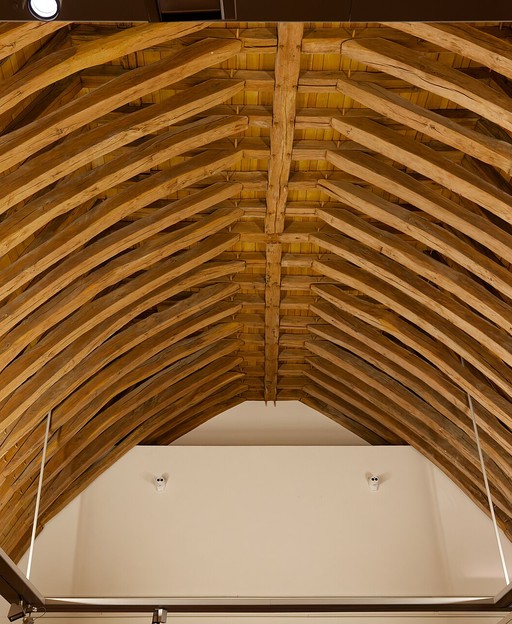
Here is what you are likely to find when the trapdoor finally opens.
Love France and its history? Get our free weekly letter — châteaux, villages, food, and the stories behind them. Subscribe to our France newsletter →
Lost Artworks and Unattributed Paintings
In 2019, a painting discovered in an attic in Compiègne was identified as a 13th-century work by the Italian master Cimabue. It had been hanging unnoticed in a house near the château for years, used as a decorative piece in a hallway. At auction, it sold for over €24 million. This was not a one-off.
French châteaux — particularly those that passed through multiple families after the Revolution — often had their contents scattered across properties. Paintings were moved to secondary buildings, stored in attics for safekeeping, or simply forgotten as estates changed hands. The Louvre’s own acquisition records note that several of its holdings arrived through bequests from families who had been entirely unaware of what they possessed.
Regional auctioneers across France report that attic discoveries account for a steady stream of significant lots each year. Paintings are often wrapped in cloth or brown paper, dated only by the materials behind them. A canvas in good condition rolled up in a chateau grenier (attic) is treated as a potential attribution case by any reputable expert — because it frequently turns out to be exactly that.
Furniture Stored During the Revolution
The French Revolution was devastating for the aristocracy, but many families had warning. Servants were instructed to carry furniture, portraits, silver, and documents to upper floors and cellars before estates were seized or searched. Some attics became deliberate time capsules.
The Château de Breteuil, south-west of Paris, is one of the few grand châteaux still in the same family (the de Breteuil family) after more than 300 years. Its attics and secondary rooms contain furniture and objects that were methodically protected through the Revolution and never fully catalogued. This is common across the Loire Valley and Burgundy — regions where aristocratic estates survived by staying quiet rather than by fighting.
Furniture from this era is identifiable partly by its construction: hand-cut joinery, original hand-forged hardware, and upholstery materials that pre-date industrial weaving. Pieces discovered in château attics regularly appear at Drouot, Paris’s major auction house, with provenance traced back to ancien régime households. The condition is often poor, but the authenticity is frequently undeniable.
Personal Letters and Private Documents
Paper survives surprisingly well in attics — particularly in the dry, cool conditions of a stone château. The Archives Nationales in Paris holds thousands of documents donated or transferred from private châteaux, and researchers estimate that an equal volume remains in private hands, largely unread.
Letters from the 18th and 19th centuries have turned up describing estate management, household finances, political allegiances, and personal relationships. In some cases, attic finds have changed the historical record. A bundle of letters discovered at a château in the Périgord in 2014 revealed correspondence between a local aristocrat and officials in Paris that rewrote the known timeline of a regional uprising during the Revolution.
For genealogists, chateau attics are significant for another reason: household records. Staff lists, payroll books, correspondence with tenants, and birth and death registers were kept on-site in many châteaux well into the 20th century. These records have proved invaluable to researchers tracing French family histories — particularly for descendants of estate workers who do not appear in standard civil records.
We send one letter a week — French history, travel tips, and hidden places most visitors miss. Join thousands of France lovers here →
Vintage Wine and Cellared Bottles
Attics are not the obvious place for wine — but they have been used, particularly in châteaux without purpose-built cellars or when cellars were full. Some of the oldest bottles ever recovered in France were found not in caves but in upper-floor storage rooms, wrapped in sawdust and straw.
In 2010, a collection of bottles estimated to date from the 1770s was uncovered during renovation of a château in the Burgundy region. The condition of the wine was considered undrinkable, but the historical interest was considerable — the bottles themselves, hand-blown and sealed with original wax, were museum pieces. Sotheby’s has handled similar consignments from private châteaux on multiple occasions.
More practically, attics in working wine estates often contain estate records: harvest logs, blend notes, and yields going back hundreds of years. These documents are taken seriously by wine historians and appellation bodies — they can establish the age of a vineyard’s continuous cultivation and, in some cases, affect its official classification.
Military Artefacts and Hidden Weapons
France’s history of invasion — by the English in the Hundred Years’ War, by the Prussians in 1870, and by German forces in both World Wars — left a physical record in château attics across the country. Weapons were hidden. Uniforms were stored. Equipment was concealed.
During the Second World War, some châteaux served as Resistance meeting points. When these properties were renovated in later decades, owners found hidden compartments, buried radio equipment, coded documents, and in at least one documented case in the Dordogne, an intact parachute silk and British-issued medical kit dating to the early 1940s.
Earlier artefacts — swords, pistols, cartridge cases, and armour — turn up regularly in châteaux with military heritage. These items are subject to France’s heritage protection laws, which require owners to report finds of cultural significance. Most owners comply, partly because authenticated military pieces from châteaux with documented histories carry considerable value at specialist auctions.
Textile and Fashion Archives
The attics of 18th-century French châteaux are among the most important — and underused — sources of textile history in Europe. Court dress, household livery, and domestic linens were routinely stored rather than discarded. Silk degrades in light, so attic storage actually preserved fabrics that would otherwise have been lost.
The Musée des Arts Décoratifs in Paris has sourced items from private château collections for its costume and textile archives. Museum curators note that private attics often hold examples of regional weaving traditions — Lyonnais silk, Breton linen, Alsatian embroidery — that survive in no other form. These textiles are not only decorative records; they document the labour, trade, and material culture of entire regions across several centuries.
Fashion historians work with château estates directly. A single trunk of preserved court dress from a minor provincial château can yield more information about pre-Revolutionary textile production than decades of archival research.
How Châteaux Manage Their Attic Collections Today
France has a formal system for managing heritage finds. The loi relative aux monuments historiques (heritage law) gives the state right of first refusal on certain categories of significant objects found in historic buildings. Owners of classified châteaux must notify the Direction Régionale des Affaires Culturelles (DRAC) of significant discoveries.
In practice, this means that renovation projects in older châteaux are typically preceded by a heritage survey. Professional inventory teams — trained in identifying period objects — work through attic and basement spaces before structural work begins. Their reports determine what can be sold, what must be offered to the state, and what can remain in private hands.
Several châteaux now incorporate their attic collections into visitor experiences. The Château de Chantilly, north of Paris, runs guided visits that include stores and secondary rooms containing objects not on permanent display. Visitors can request access to study collections at a number of national-run châteaux, including Versailles and Fontainebleau, through the official research appointment systems.
What to Know If You Are Visiting a French Château
Most château attics are not open to visitors — they are working storage spaces, renovation sites, or areas under heritage assessment. However, a number of châteaux in the Loire Valley, Burgundy, and the Dordogne offer behind-the-scenes tours that include secondary rooms and utility spaces. Booking these requires advance notice and, in some cases, a letter of research interest.
If you are visiting France and want to get close to this kind of history, the most accessible routes are:
- Visit the Château de Breteuil near Paris, which retains much of its original contents and offers guided tours with significant historical detail.
- The Château d’Ancy-le-Franc in Burgundy has one of the most intact interior collections in France and allows access to rooms not open at comparable properties.
- The Musée des Arts Décoratifs in Paris holds the largest collection of objects derived from private château inventories and is open to the public.
- Drouot auction house in Paris publishes weekly catalogues — many lots come directly from château estates and are well-documented.
The attics of France’s châteaux are not just storage. They are the most unfiltered archive the country has — and new finds are still being reported every year.
Get our free weekly letter about France — history, travel, hidden places, and the best cafés. Subscribe free →
Tours & experiences you might love


Powered by Viator. Some links are affiliate links — we may earn a small commission at no extra cost to you.

Leave a Reply