
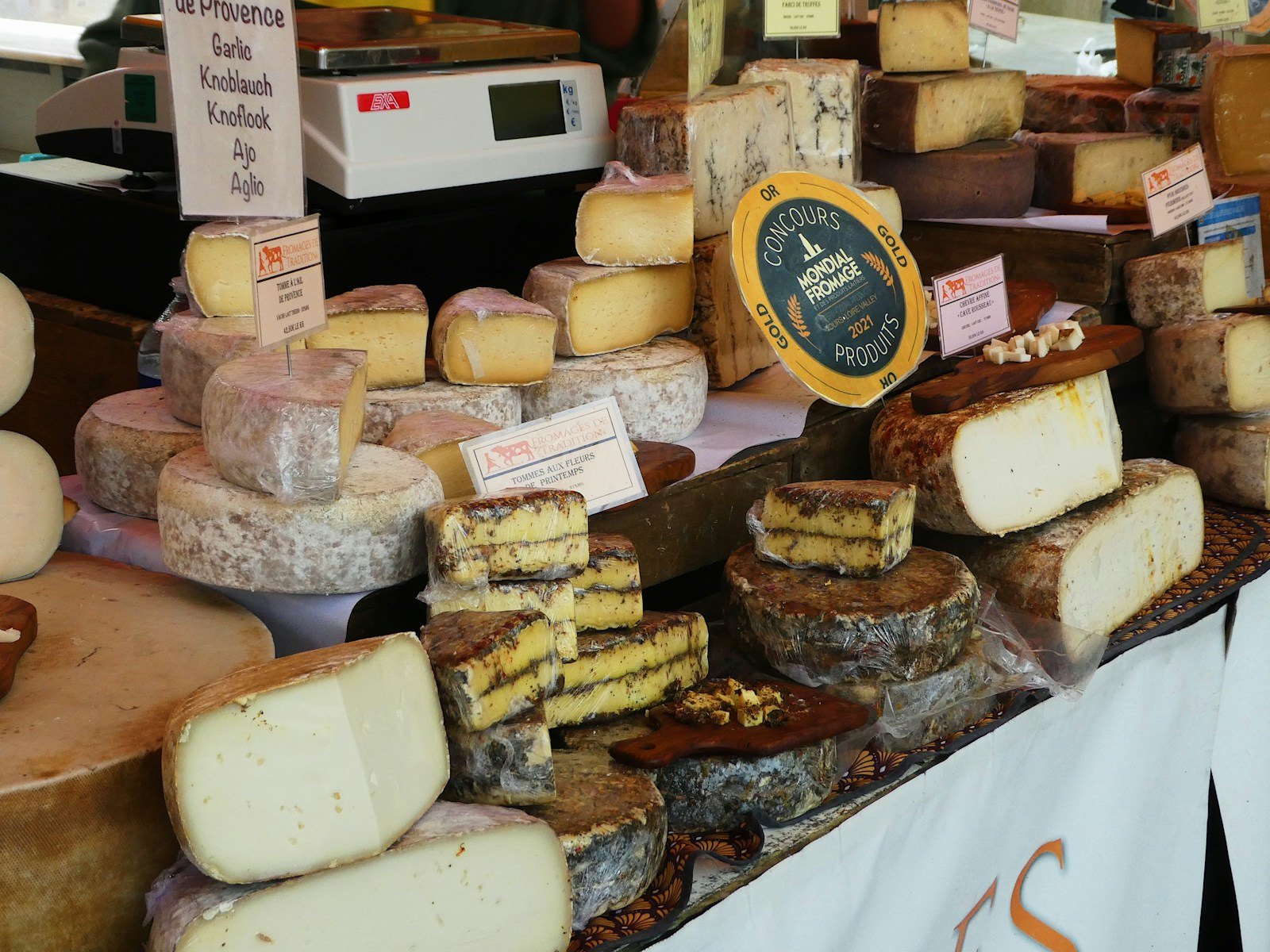
Ask a French market stallholder which cheese you should take home and you might be waiting a while for an answer. France produces over 1,000 varieties of cheese. Some counts put it closer to 1,200. Charles de Gaulle once remarked it was impossible to govern a country with so many. The same logic applies to choosing just one to bring back.
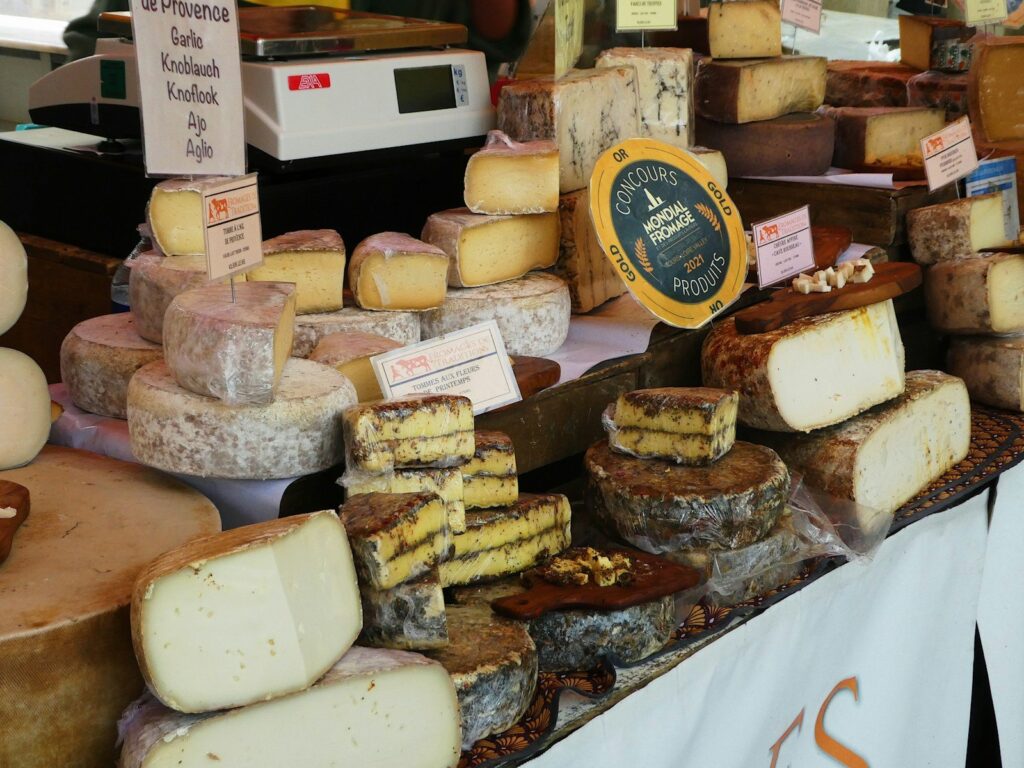
But here’s the thing: not all French cheeses travel well. Some don’t survive a long car journey. Others are so strong they’ll empty a hotel corridor. And a few are simply hard to find outside France, which makes them the obvious pick.
This guide cuts through the choice. Below are the main contenders you’ll find at a French market stall, what makes each one worth buying, and which is likely to hold up on the journey home.
Why Market Cheese Is Worth Buying
French supermarkets sell decent cheese. French market stalls sell something else entirely.
At a market, you’re often buying directly from a fromager — a specialist cheesemonger — or in some cases from the producer themselves. The cheese hasn’t sat in plastic packaging for weeks. It hasn’t been mass-produced to a supermarket specification. It’s at the right stage of ageing for eating now, and the person selling it can tell you where it came from, how it was made, and which village produced the milk.
Many of France’s finest cheeses carry an AOP designation (Appellation d’Origine Protégée). This is the French and EU quality mark for products tied to a specific region and method. It means a Comté labelled AOP genuinely came from the Jura mountains, made from the milk of Montbéliarde cows, aged in the region’s traditional caves. You won’t find that guarantee in a supermarket dairy aisle at home.
The Main Contenders at a French Market
Comté
Comté is arguably the most versatile pick for a traveller. It’s a hard, pressed cheese from Franche-Comté in eastern France. The flavour changes significantly depending on how long it’s been aged — a 12-month Comté is nutty and mild, while an 18-month or 24-month version is deeper and more complex, with occasional crunchy crystals from the aged proteins.
Crucially, Comté travels well. It’s firm, it doesn’t leak, and it keeps for a reasonable length of time if wrapped properly. At a market, look for wheels labelled with the maturation period. Many stalls will offer a taste before you buy — always worth asking.
Camembert de Normandie
This is the cheese most people picture when they think of France. The round wooden box, the white bloomy rind, the soft interior that turns almost liquid when fully ripe. But there’s an important distinction: Camembert de Normandie AOP is a different product from the mass-produced Camembert you find in supermarkets worldwide.
The AOP version must be made in Normandy from raw milk (lait cru), hand-ladled into moulds. It has a more complex, mushroomy flavour and a texture that the industrial version rarely matches. If you’re near Normandy, a market stall Camembert de Normandie AOP is one of the best things you can buy. Just eat it within a day or two of getting home — it won’t wait.
Brie de Meaux
Often called the “king of cheeses,” Brie de Meaux carries AOP status and comes from the Seine-et-Marne area east of Paris. It’s a flat, round cheese with a white rind and a pale yellow interior that softens as it ripens. The flavour is earthy, slightly grassy, and much richer than the mild versions sold internationally.
A word of warning: a ripe Brie de Meaux at room temperature will bulge and spread. It needs to be kept cool and eaten soon. Ask the stall holder how far along the ripening is — if it’s already at peak, plan to eat it that evening.
Roquefort
Roquefort is France’s most famous blue cheese. Made from sheep’s milk, it matures in the natural caves of Roquefort-sur-Soulzon in the Aveyron. The result is a crumbly, intensely flavoured cheese with blue-green veining and a sharp, salty taste.
All Roquefort is AOP, meaning the name is legally protected. What you find at a market stall will be the genuine article. It packs well and keeps for a couple of weeks in the fridge, making it a practical choice for bringing home. Strong in flavour, yes — but it won’t turn your bag into a problem the way a washed-rind cheese might.
Époisses
Époisses is from Burgundy and is famous for two things: its extraordinary depth of flavour, and its smell. The rind is washed repeatedly in Marc de Bourgogne — a grape marc spirit — giving it an orange-brown colour and an aroma that is, let’s say, assertive. Napoleon reportedly loved it. Airlines have reportedly banned it from cabin luggage.
If you do buy Époisses, seal it in multiple layers before putting it in your bag. It’s worth it — the interior is creamy and rich with a complex, savoury flavour that’s unlike anything you’ll find outside France — but be realistic about the logistics.
Reblochon
Reblochon comes from the Savoie region in the French Alps. It’s a semi-soft washed-rind cheese with a pale orange exterior and a creamy, mild interior. It’s best known as the key ingredient in tartiflette — a baked potato and onion dish from the Alps — but eaten on its own at a market, it’s just as rewarding.
It’s a good choice if you find the stronger washed rinds too intense. The flavour is nutty and buttery rather than pungent. Like most soft cheeses, it won’t survive a week in a warm car — keep it cool and eat within a few days.
Tips for Buying Cheese at a French Market
- Ask for a taste. Most stallholders will offer one. It’s expected, not cheeky. If they don’t offer, ask: “Je peux goûter?”
- Ask about the ripeness. For soft cheeses especially, you want to know if it’s ready to eat today or in three days. The stall holder will know.
- Go early. The best market stalls run out. Arrive in the first hour for the widest choice.
- Bring a cool bag. Soft cheeses deteriorate quickly in heat. A small insulated bag and an ice pack will keep things stable on a warm day.
- Check import rules. If you’re flying back to the UK, you can bring most cheeses into the country from EU countries for personal use. However, rules change — it’s worth a quick check before you travel. Raw milk cheeses in particular can attract attention at customs.
How to Get Cheese Home in Good Condition
The packing is as important as the purchase. Here’s a practical approach:
- Wrap each cheese separately in the waxed paper the stall holder provides, or in baking parchment. Cling film is a last resort — it traps moisture and can affect the rind.
- For strong-smelling cheeses, place them in a sealed container or double zip-lock bag before packing.
- Keep soft cheeses in the coolest part of your bag or car — away from direct sun and not in the boot of a car parked in the heat.
- If flying, pack cheese in your hold luggage rather than carry-on where possible, and use an ice pack in a sealed bag to keep the temperature down.
- Once home, store in the fridge — but let soft cheeses come to room temperature for 30–60 minutes before eating. Cold cheese tastes of very little.
So Which One Should You Actually Choose?
If you want a reliable, practical pick that travels well and impresses back home: Comté. A well-aged 18-month Comté is available at nearly every French market, keeps well, and tastes genuinely different from anything you’d easily find in a UK supermarket.
If you’re near Normandy and eating the cheese within 48 hours: Camembert de Normandie AOP. The real thing is a different product from the supermarket version in a way that surprises people every time.
If you want something strong and memorable, don’t mind the smell, and are committed to proper packing: Époisses. It will be the most talked-about cheese you bring home.
For blue cheese lovers, Roquefort is the practical blue — it keeps, packs easily, and is legally protected, so the market version is always the real article.
And if you’re in the Alps or Burgundy, buy regionally. A Reblochon from Savoie or a local goat’s cheese from the Dordogne means you’re bringing back something genuinely tied to where you’ve been — which is the whole point.
The best pick is rarely the most famous one. It’s the one the stallholder reaches for when you ask what they’d take home themselves. Ask that question. You’ll get an honest answer.
Tours & experiences you might love


Powered by Viator. Some links are affiliate links — we may earn a small commission at no extra cost to you.

Leave a Reply