
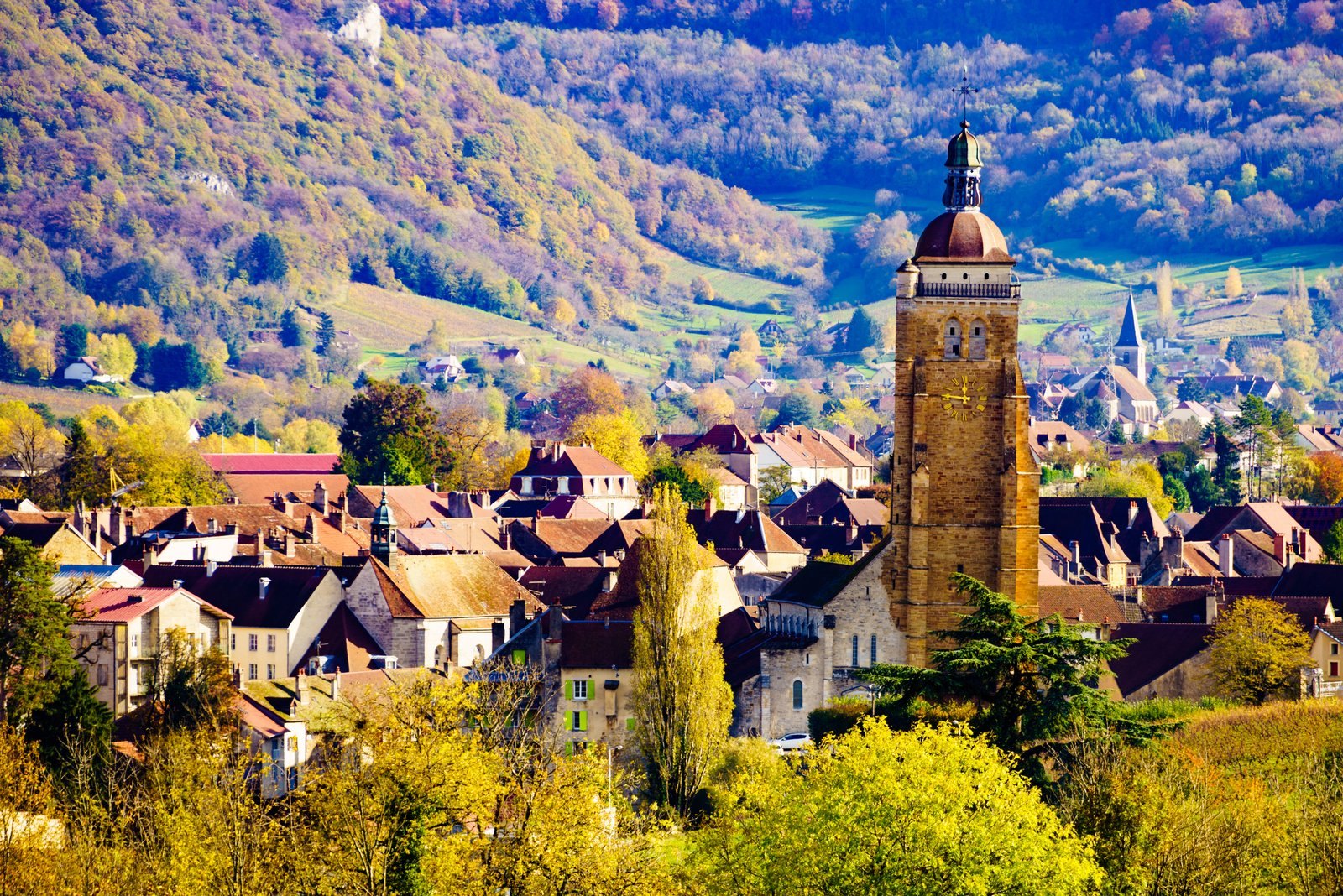
Stand in the square of almost any French village at noon and you will hear it — a deep, rolling clang from the stone tower above the church, bouncing off the houses and fading out across the fields. It is one of the most recognisable sounds in France, and one that has barely changed in centuries.
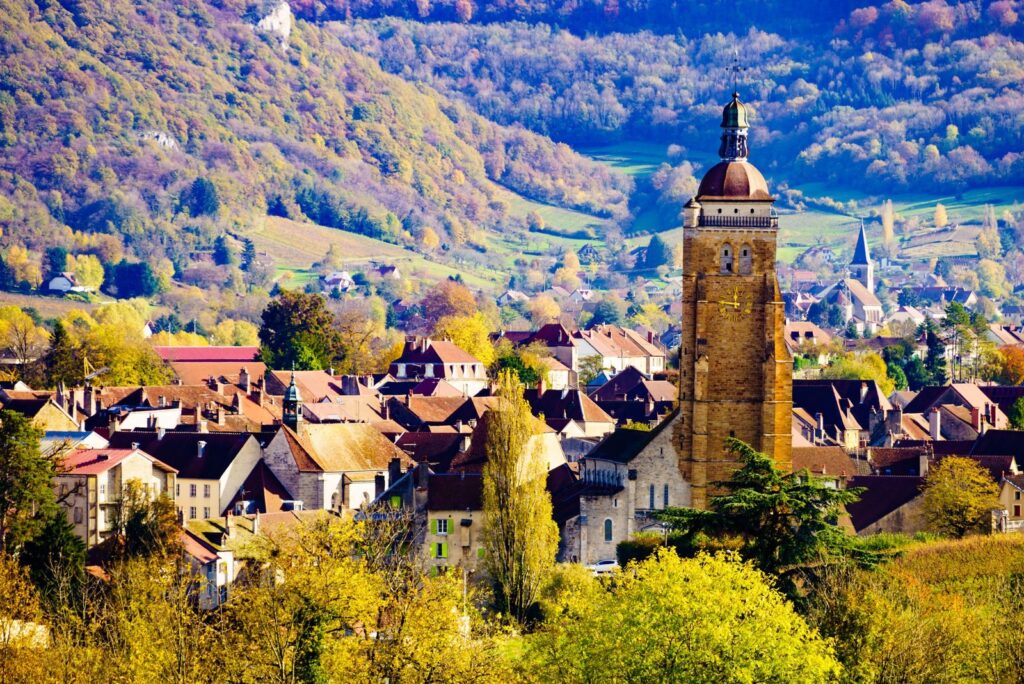
France has around 40,000 churches, and the vast majority of them have a bell tower. These are not decorative features. They have always served a practical purpose: telling people what time it is, marking the moments of the day, and calling the community together. That function is less essential now than it once was, but the bells still ring — and for many visitors, they are one of the most striking things about rural France.
Love France? Get our free weekly newsletter — villages, food, history and culture, direct to your inbox. Subscribe to Love to Visit France →
The Angelus: Three Times a Day
The most regular chime you will hear in France is the Angelus. This is a Catholic tradition dating back to the Middle Ages, in which bells ring three times a day: at dawn (typically 7am), at noon, and again at sunset (often 7pm). The ringing calls the faithful to a brief prayer, but even in secular France, the tradition has been kept going in hundreds of villages.
The noon Angelus is the one most visitors notice. It consists of a series of short rings in three groups of three, followed by a longer peal. If you happen to be eating lunch outdoors in a village when it starts, you will understand immediately why the painter Jean-François Millet chose this moment for his 1857–59 painting The Angelus — two farm workers pausing in a field, bowing their heads as the distant bell rings out. The painting became one of the most reproduced images in French art history. The sound behind it is still there to be heard.
Not every village maintains all three daily rings. Some ring only at noon. Others have automated systems that trigger the bells electronically. But the timing and the rhythm remain consistent, and once you learn to recognise the pattern, you will find yourself listening for it wherever you go.
What Each Ring Means
Bell ringing in France has always been a kind of public communication system. Different ring patterns traditionally carried different messages, and in many villages that code is still loosely observed.
- Sunday Mass: A full peal, usually starting 15 minutes before the service, with a final ring at the start of Mass itself.
- Funerals: A slower, measured toll — often described as a knell. The number of strikes sometimes indicated the age of the deceased, though this practice has largely died out.
- Weddings: A joyful, rapid peal, often lasting several minutes.
- Fire or danger: Historically, rapid continuous ringing was the alarm signal that brought the village running. This is rarely used today, but some communes still include it in official bell-ringing protocols.
- New Year: Many villages ring in the new year with a prolonged peal at midnight.
The person responsible for ringing the bells was traditionally the sacristain (verger) or, in larger churches, a dedicated bell-ringer. Today, most French churches have automated systems, but some villages still employ or volunteer bell-ringers for major occasions.
Regional Styles: How Bell Towers Vary Across France
French bell towers are not all alike. Each region developed its own architectural style, shaped by local materials, climate, and building traditions. These differences are worth looking out for as you travel.
The clocher-mur (wall bell tower) is one of the most distinctive regional forms, found primarily in the southwest — the Périgord, Quercy, Gers, and the Basque Country. Instead of a conventional tower rising from the body of the church, the clocher-mur is a flat stone wall, usually at the west end of the building, with arched openings cut into it for the bells. It looks almost like a giant stone screen. The style developed partly because timber was scarce in some areas, and partly as a practical response to high winds, since a full tower would have been vulnerable. Villages like Belvès and Domme in the Dordogne offer good examples.
Alsace has its own tradition of tall, pointed spires — Gothic in style, often in sandstone — that rise sharply above the Rhine plain. The Collegiate Church of Saint-Thiébaut in Thann has one of the finest examples: a 78-metre tower whose octagonal upper section is considered among the best pieces of Gothic stonework in France.
Auvergne and the Massif Central are known for their Romanesque churches, where the towers tend to be square and solid, with multiple tiers of arcaded windows. The bells here sound heavier and more resonant, partly because of the thick stone walls and partly because many of these bells are very old.
Brittany developed an unusual tradition of enclos paroissiaux (parish enclosures), in which the church, ossuary, triumphal arch, and calvary were grouped together within a walled enclosure. The bell towers in these complexes are often ornate, multi-tiered structures that look more like lighthouses than conventional steeples. Saint-Thégonnec and Guimiliau are the most visited examples.
We write about French villages, history, food and culture every week. Join thousands of France lovers and subscribe free →
The History Behind the Chime
Church bells were introduced to France in the early medieval period, and by the 12th century they had become central to village life. The bell was the village’s timekeeper long before mechanical clocks became widespread. It told people when to wake, when to stop for prayer, when to come to market, and when to go home.
The French Revolution disrupted this tradition significantly. Between 1789 and the mid-1790s, the revolutionary government ordered that church bells be melted down and recast as cannon. Thousands of bells were destroyed. Some communes hid their bells; others surrendered them. The silence that followed in many villages was conspicuous enough that it was recorded in contemporary accounts as one of the stranger effects of the Revolution on daily life.
After Napoleon’s Concordat with the Pope in 1801 normalised relations between France and the Catholic Church, bell-founding resumed and many villages received new bells in the early 19th century. A significant number of the bells you hear in rural France today date from this period of post-revolutionary rebuilding. Some are inscribed with the names of their donors, their weight, and the date of casting — information that local history societies have been cataloguing with increasing care over the past few decades.
The largest bells in France are found in the major cathedrals. Notre-Dame de Paris had ten bells in its north tower before the 2019 fire; Emmanuel, the great bourdon bell in the south tower, weighs approximately 13 tonnes and dates from 1686. Following the cathedral’s restoration and reopening in December 2024, its bells are ringing again. Chartres Cathedral has a bell dating from 1472 — among the oldest still in use in France.
Where to Hear the Most Memorable Bells in France
If hearing French church bells is something you want to seek out deliberately, here are some places worth planning around.
Mont-Saint-Michel, Normandy. The Romanesque abbey church at the summit has bells that carry out across the bay in a way that is hard to forget. Because the island sits in open water, there are no other sounds to compete with. Early morning, before the crowds arrive, is the best time.
Vézelay, Burgundy. The Basilica of Sainte-Marie-Madeleine sits on a hilltop in a village of around 400 people, and its bells echo across the valley of the Cure river. The basilica is a UNESCO World Heritage Site and was one of the major starting points for the medieval pilgrimage to Santiago de Compostela. Mass is still celebrated regularly.
Conques, Aveyron. This tiny village deep in the gorge of the Dourdou river has a population of around 300 but contains one of the great Romanesque churches in France — the Abbey Church of Sainte-Foy, built in the 11th and 12th centuries. Its bells ring out over a landscape that has changed very little in centuries.
Riquewihr, Alsace. A small wine-route village known for its intact medieval walls and half-timbered houses. The church tower and its bells are part of a townscape that has barely changed since the 16th century.
Les Baux-de-Provence. The ruined clifftop citadel is the main draw, but the village chapel below still rings bells that bounce off the limestone cliffs in a particularly resonant way.
Practical Notes for Bell-Tower Visits
Most French churches are open to visitors during the day, and the interiors are free to enter (donations are usually welcomed). Climbing bell towers is less common — access is restricted at most churches for insurance and safety reasons — but a handful of towns do offer organised climbs.
Rouen’s cathedral tower is occasionally open for guided visits. Several towns in Brittany open their bell towers during the Journées du Patrimoine (European Heritage Days), held each September. This is the single best annual opportunity to access spaces that are normally closed, including belfries.
If you want to photograph bell towers, late afternoon light tends to work well for south and west-facing towers. Early morning is quieter and the light is often softer. Standing in the village square at noon during the Angelus, rather than rushing past, takes only a few minutes and leaves an impression that photographs cannot fully capture.
One practical tip: if you are staying in a village with a church nearby, the noon and 7am bells will be audible from your room. This surprises some visitors. It is not a complaint that will get you very far with the locals.
Want more on France’s villages, history and hidden corners? Our weekly newsletter goes out every week — free to read. Subscribe to Love to Visit France here →
Tours & experiences you might love


Powered by Viator. Some links are affiliate links — we may earn a small commission at no extra cost to you.

Leave a Reply