
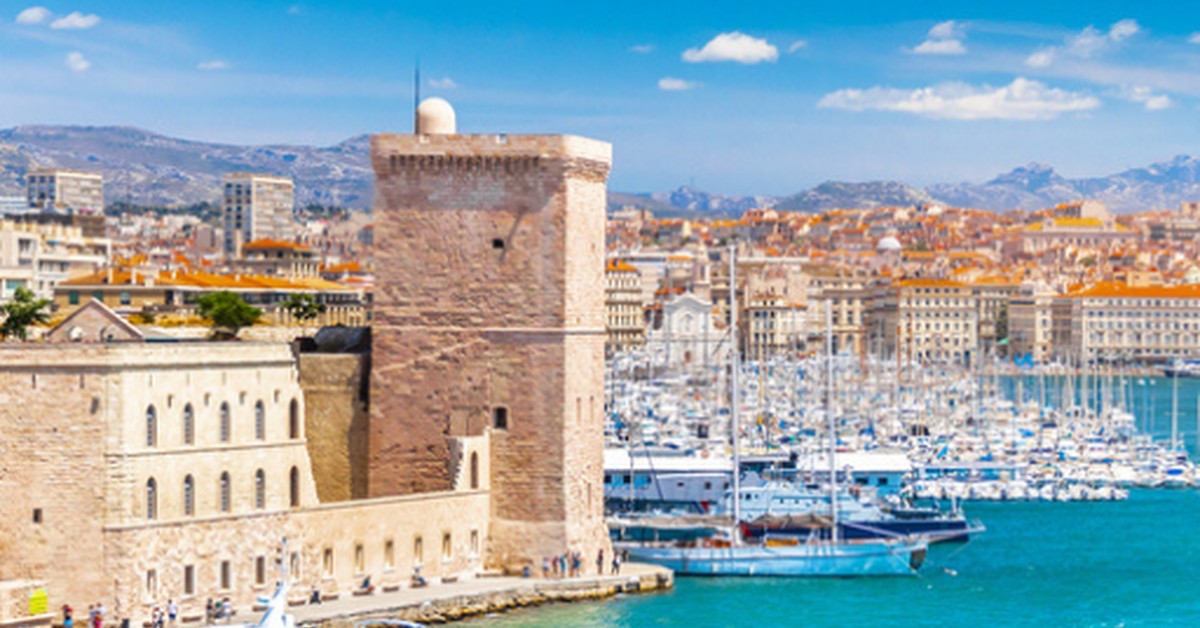
This Marseille travel guide covers the essentials: what to see, what to eat and how to plan a trip to France’s oldest city. Marseille sits on the Mediterranean coast, about three hours from Paris by fast train. Greek sailors founded it around 600 BC, so it has seen more than 2,600 years of arrivals and departures. Today it is a loud, sunny, proudly independent port city with a beautiful harbour, wild limestone coves and some of the best seafood in the country.
Love France? Join 7,000+ readers on our free newsletter → lovetovisitfrance.substack.com
Why Marseille Deserves More Than a Day Trip
Many visitors rush through Marseille on the way to the Riviera. That is a mistake. The city has none of the polish of Nice or the postcard calm of a Provence village. It has something better: real life, played out against blue water and white cliffs.
Marseille is the second-largest city in France. It is also the country’s oldest. Greeks from Phocaea landed here around 600 BC and called the settlement Massalia. Romans, merchants, sailors and migrants from across the Mediterranean followed. You can taste that mix in the food, hear it in the street markets and see it in the faces along the harbour.
Give the city at least two full days. Add a third if you want to walk in the Calanques. If you are still choosing your route, our Provence travel guide shows how Marseille fits with the wider south of France.
Marseille Travel Guide: Getting There and Getting Around
By train and plane
The fast TGV train from Paris Gare de Lyon reaches Marseille Saint-Charles station in about three hours and fifteen minutes. The station sits on a hill above the city. Its grand stone staircase leads down towards the centre. Marseille Provence airport lies about 30 minutes away by road and has flights from across Europe. Our guide to travelling France by train explains how tickets and seat reservations work.
On foot, by metro and by bus
The centre is compact. You can walk from the Old Port to Le Panier in ten minutes. The city has two metro lines and a small tram network, which are fine for longer hops. Bus 60 climbs from the Old Port to the basilica on the hill. Wear comfortable shoes. Marseille is hilly, and its pavements are old.
The Best Things to See in Marseille
The Old Port (Vieux-Port)
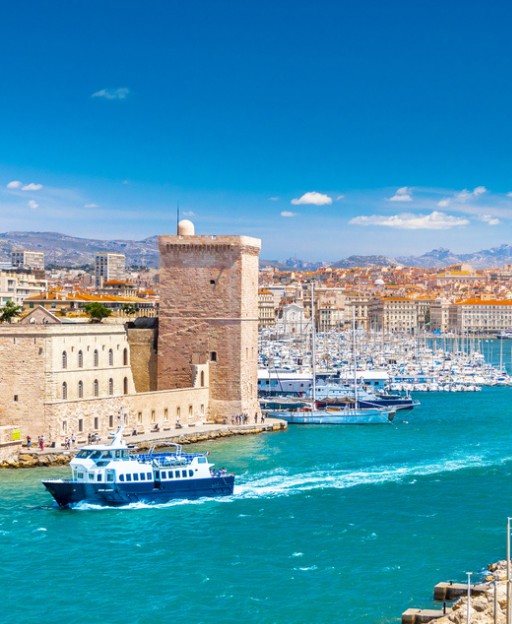
Start here. The harbour has been the heart of the city for more than two millennia. Two old forts, Fort Saint-Jean and Fort Saint-Nicolas, guard the entrance. Fishing boats still unload on the quay each morning, and locals still queue for the day’s catch at the open-air fish market. Visit early for the best colours and the least crowds.
Notre-Dame de la Garde
Locals call this hilltop basilica the Bonne Mère, or Good Mother. Builders finished it in the 1860s on a limestone peak about 150 metres above the sea. A gilded Virgin and Child crowns the bell tower. Entry is free. The view covers the whole city, the islands and the open Mediterranean. Come near sunset if you can.
Le Panier
Le Panier is the oldest quarter in the city. Its steep lanes hold small galleries, craft studios, bakeries and painted stairways. Stop for a coffee in a quiet square, then follow the alleys uphill with no plan. This is the best neighbourhood for a slow afternoon.
MuCEM
The Museum of European and Mediterranean Civilisations opened in 2013, the year Marseille was European Capital of Culture. A lattice-covered cube of a building stands beside Fort Saint-Jean, and a high footbridge links the two. Even if you skip the exhibitions, the walk across the bridge is worth it. Check opening days and tickets on the official MuCEM website.
La Cité Radieuse
Architect Le Corbusier completed this residential block in 1952. People still live in it. Fans of modern design travel from across the world to see its rooftop terrace and concrete lines. It sits south of the centre, so take the metro and a short bus or taxi ride.
The Frioul Islands and the Château d’If
Small boats leave the Old Port for the offshore islands, and the ride takes about 20 minutes. The Château d’If is a 16th-century fortress that later served as a prison. Alexandre Dumas made it famous in his novel The Count of Monte Cristo. The nearby Frioul islands offer rocky paths and quiet swimming spots.
Walking in the Calanques
The Calanques are steep white limestone inlets with turquoise water, pine trees and tiny pebble beaches. France made them a national park in 2012. They start just south of the city and run towards the village of Cassis.
Some paths are easy. Others are hard, rocky and exposed. Take at least a litre and a half of water per person, wear proper shoes and start early. In summer, fire risk can close parts of the park or limit access, so check the day’s status on the official Calanques National Park website before you leave. Some of the most beautiful coves, such as Sormiou and Morgiou, have limited car access in the warm months.
What to Eat and Drink in Marseille
Marseille is a food city, and the best meals are often simple. Here are the dishes to look for:
- Bouillabaisse. This is the city’s famous fish stew. Cooks make it with rockfish, saffron, fennel and olive oil, and serve it with toasted bread and a garlicky sauce called rouille. Good restaurants ask you to order a day ahead, and the dish is rarely cheap.
- Panisse. These are crisp fritters made from chickpea flour. Locals eat them as a snack.
- Navettes. These boat-shaped biscuits taste of orange blossom. Bakers have made them in the city since the 18th century.
- Pastis. Paul Ricard created this aniseed spirit in Marseille in 1932. Locals drink it cold, diluted with water, on a warm afternoon.
For more coastal flavours, read our guide to France’s best coastal towns for seafood.
Planning more of France? Get one friendly email a week from our free newsletter → lovetovisitfrance.substack.com
The Best Time to Visit Marseille
Spring and early autumn work best. From April to June and again in September and October, the days are warm, the sea is pleasant and the crowds are smaller. July and August bring heat, packed beaches and the highest hotel demand. Winter is mild but can be windy. The mistral, a cold, dry wind from the north, can blow for days at any time of year. It clears the sky to a brilliant blue, but it can make outdoor tables chilly. Our best time to visit France guide has the full month-by-month picture.
Where to Stay
Pick your base by mood. The area around the Old Port is lively and central, and it suits first-time visitors. Le Panier is quieter and more characterful. The Endoume and Vallon des Auffes area offers a village feel by the sea, and it sits within easy reach of the centre. The city’s official tourist office website lists current accommodation, events and guided walks.
Easy Day Trips from Marseille
Marseille makes a great base for the region. Aix-en-Provence is about 30 minutes north, and our Aix-en-Provence travel guide covers its fountains and markets. Cassis is a pretty fishing harbour on the way to the Calanques. The Luberon hills and the Sénanque Abbey are within reach for a longer day. If you want sun and glamour, the French Riviera lies further east along the coast.
You Might Also Enjoy
- Provence Travel Guide: What to See, Do and Eat in France’s Sunniest Region
- French Riviera Travel Guide: Everything You Need to Plan Your Côte d’Azur Trip
- France’s Best Coastal Towns for Seafood
Plan Your France Trip
Ready to turn ideas into an itinerary? Our France trip planning hub brings together our guides on regions, trains, seasons and practical tips in one place.
Marseille Travel FAQs
How many days do you need in Marseille?
Two full days cover the Old Port, Le Panier, Notre-Dame de la Garde and a boat trip. Add a third day if you want to walk in the Calanques.
Is Marseille worth visiting?
Yes. It has 2,600 years of history, a lively harbour, great seafood and a national park at its edge. It feels more real and less polished than most French destinations.
What is the best way to get from Paris to Marseille?
The direct TGV train is the easiest option. It takes about three hours and fifteen minutes from Paris Gare de Lyon to Marseille Saint-Charles.
Join 7,000+ France Lovers
Every week, get France’s hidden gems, local recipes, and travel inspiration — the kind you won’t find in any guidebook.
Subscribe free — enter your email:
Read the latest France stories →
Free forever · One email per week · Unsubscribe anytime
Tours & experiences you might love


Powered by Viator. Some links are affiliate links — we may earn a small commission at no extra cost to you.

Leave a Reply