Walk through any French village on a summer evening. You will hear it before you see it.
A sharp clank of metal on gravel. Then voices. Then laughter.
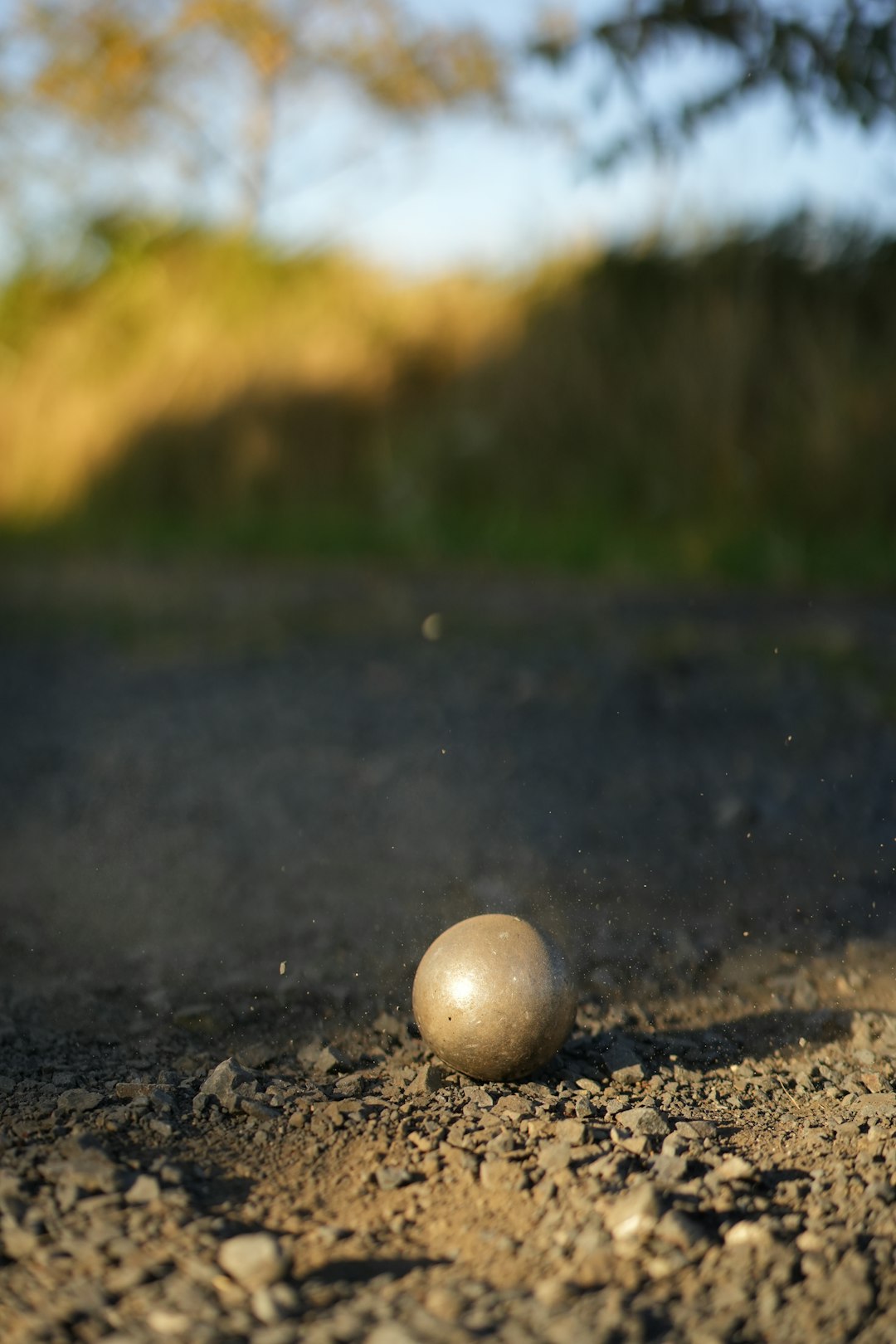
This is pétanque. It is France’s most-loved game. And it means something far deeper than sport.
For millions of French people, pétanque is how afternoons end. It is the village square, the cooling air, the glass of pastis. It is friendship turned into ritual.
What Is Pétanque?
Pétanque is a boules game. Players throw heavy metal balls toward a small target. The target is a wooden ball called the cochonnet. In French, that means “little pig.”
You play on any flat ground. Gravel works best. But packed earth, concrete, and short grass all do the job.
Teams can be one, two, or three players. Singles and doubles use three balls each. Three-player teams use two balls each.
The aim is simple. Get your ball closest to the cochonnet. Score one point for each ball closer than your opponent’s nearest ball. First team to 13 points wins.
A Game Born in Provence
The story of pétanque starts in 1907. The place was La Ciotat, a fishing town near Marseille.
A local man named Jules Lenoir loved boules. But he had bad rheumatism. He could not take the running start that the old game required.
His friend Ernest Pitiot found a solution. Lenoir could stand still and throw from a marked circle. The cochonnet would sit just six metres away.
They played under a row of plane trees. The café owner Marco Fiorina watched from his terrace. He liked what he saw.
The game spread fast. By 1910, people played it all across Provence. By 1945, it had reached every corner of France.
Today, over three million French people play pétanque regularly. The Fédération Française de Pétanque has 320,000 registered members. The world championship draws players from 160 countries.
The word “pétanque” itself comes from Occitan. “Pès tancats” means “feet together.” Standing still is the rule that makes this game what it is.
🇫🇷 Enjoying this? 7,000 France lovers get stories like this every week. Subscribe free →
The Village Square — Where France Comes Together
Ask any French person what they love about their village. They will mention the church. The weekly market. The café by the fountain. And the pétanque court.
The court has a name: the boulodrome. Sometimes it is a formal marked pitch. More often, it is a stretch of gravel beside the mairie or café.
Play starts when the afternoon heat breaks. People drift outside. A game forms. Others join. No one sends invitations.
Pétanque needs no special equipment. It needs no uniform or coach. It needs only people and an afternoon.
Old friends who have played together for forty years. Young people back from the city for the weekend. Visitors drawn into a game by curiosity. All of them meet at the boulodrome.
After a round, you buy a drink. You argue about whose ball was closer. Then you play again. This is France at its most itself.
The Rules — Simple to Learn, Hard to Master
You can learn pétanque in five minutes. You can spend a lifetime getting good at it.
One player draws a small circle on the ground. Each player stands inside with both feet flat. You cannot lift your feet as you throw. This is the rule.
The first player tosses the cochonnet six to ten metres away. Then teams take turns throwing boules toward it.
There are two main skills. “Pointer” means rolling your ball gently close to the target. “Tirer” means throwing hard to knock a rival ball away.
A skilled tireur can send an opponent’s ball two metres aside. The clank of metal on metal is deeply satisfying. So is the look on your rival’s face.
The team losing always throws next. Play continues until all balls are thrown. Then you measure and score. Then you start again.
Pétanque Around the World
France took pétanque everywhere it went. Wherever French settlers went, the game went too.
Today, 160 countries play pétanque. The World Championship draws teams from Thailand, Japan, Madagascar, and the United States.
French Canada has a strong tradition. Quebec has hundreds of active clubs. Montreal and Quebec City host big tournaments each summer.
Louisiana also plays a key role. The Cajun and Creole communities kept French culture alive in the American South. New Orleans has several pétanque clubs. Lafayette Square hosts regular games.
If you have French ancestors, pétanque may well be part of your family story. It was not just a pastime. It was a daily ritual for working people across France for over a century.
Where to Watch and Play in France
You do not need an invitation to watch pétanque in France. Find the village square. Sit down on a bench. Someone will soon explain what is happening.
In the south of France, pétanque is everywhere. The courts near the Rotonde fountain in Aix-en-Provence see active games all summer. Marseille has clubs in almost every neighbourhood.
La Ciotat still honours its place in history. The town hosts a pétanque festival near the original courts each year. It is worth a visit.
Arles, Les Baux-de-Provence, and Gordes all have active courts. September evenings in Provence feel like stepping into a different age.
Paris has its own scene. The Luxembourg Gardens has clay courts open to the public. The Champ de Mars hosts informal games on warm afternoons.
Many clubs welcome visitors who ask politely. You can hire boules at some boulodromes for a small fee. Joining a local game is one of the best things you can do in France.
The big event is the Mondial La Marseillaise in Marseille each July. Over 12,000 players compete. It is a brilliant spectacle for any France lover.
Bringing Pétanque Home
You do not have to be in France to play pétanque. A basic set of boules costs between twenty and forty euros. It is one of the best souvenirs you can bring home.
The top French brand is Obut, based in Saint-Bonnet-le-Château. An Obut set feels right in your hand. The weight is good. The steel finish is smooth.
You need a flat outdoor surface. Gravel is best. Short grass works fine. All you need beyond that is a cochonnet, a few friends, and a pleasant afternoon.
Many Francophiles now hold a weekly pétanque session in their garden. It quickly becomes a favourite part of summer. France feels a little closer with the sound of steel on gravel.
While you set up the court, you could open a bottle from the south of France. A cold glass of rosé from Provence is the correct accompaniment.
Frequently Asked Questions About Pétanque
What is the difference between pétanque and boules?
“Boules” is the general French term for ball-throwing games. Pétanque is one type of boules. The key difference is stance. Pétanque players throw with both feet fixed on the ground. Other boules games allow a run-up before the throw.
Is pétanque the same as bocce?
They share ancient roots but they are not the same game. Bocce is the Italian version. The balls are often larger and the court is longer. The target ball, called the pallino, is smaller. Both games involve throwing toward a target. Only pétanque requires feet together throughout.
Where is the best place in France to play pétanque?
Provence is the heartland. La Ciotat is the birthplace of the modern game. Marseille, Aix-en-Provence, and Toulon all have many active courts. In Paris, the Luxembourg Gardens is a wonderful place to find a game. Any village square in the south of France is also worth trying.
How many people do you need to play pétanque?
Two people is enough. A singles game is called “tête-à-tête.” Two players per team is the most common version. Three players per team is also standard. Most casual games welcome anyone who turns up and wants to join.
Can visitors join a pétanque game in France?
Yes, almost always. French pétanque players are very welcoming. You do not need to speak French well. Point at the game, smile, and say “Je peux jouer?” That means “Can I play?” The answer is nearly always yes.
You Might Also Enjoy
- What September Feels Like in French Wine Country
- The French Boulangerie: Why the Baguette Is Sacred
- Aix-en-Provence: A Complete Travel Guide
Plan Your France Trip
Ready to experience pétanque in person? Start with our complete France travel planning guide. It covers everything from choosing a region to finding the right time to visit.
Join 7,000+ France Lovers
Every week, get France’s hidden gems, seasonal guides, local stories, and the art of la vie française — straight to your inbox.
Subscribe free — enter your email:
Love more? Join 64,000 Ireland lovers → · Join 43,000 Scotland lovers → · Join 30,000 Italy lovers →
Free forever · One email per week · Unsubscribe anytime
Tours & experiences you might love


Powered by Viator. Some links are affiliate links — we may earn a small commission at no extra cost to you.

Leave a Reply