
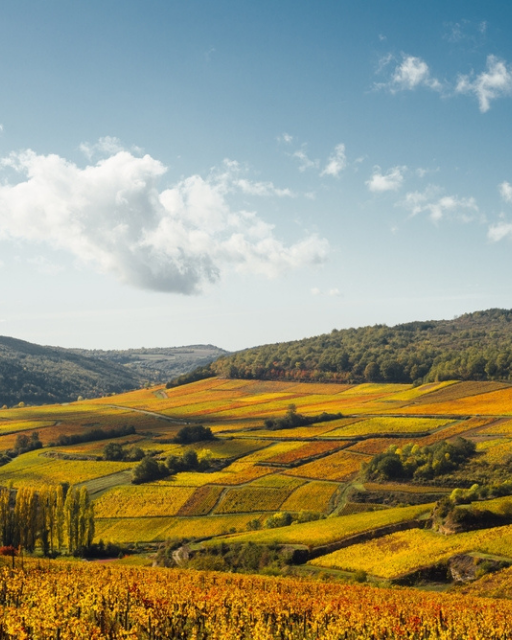
By the second week of September, something has changed in France’s wine regions. The light is lower. The mornings are cooler. The hillsides that held their green all summer have started to turn — slowly at first, then all at once.
This is vendange season. The grape harvest. And if you have never been to the French countryside during harvest, it is worth going at least once. Not for the wine events or the guided tours, but for the way the whole region shifts — its rhythm, its smell, its pace — in the space of about three weeks.
What follows is a practical guide to September in French wine country: where to go, what to expect, and how to get the most out of a region that is doing something it does every year, and doing it without performing for tourists.
Love France? Get our free weekly newsletter.
Every week we cover travel ideas, food, culture, and stories from across France — straight to your inbox.
Subscribe Free →The Vendange: What It Actually Is
The vendange is the annual grape harvest. In France, it happens at different times in different regions — typically between late August and mid-October, depending on the grape variety, the year’s weather, and the decisions of individual winemakers.
In Burgundy, Pinot Noir grapes on the Côte d’Or are usually harvested in the last two weeks of September. In Champagne, picking can begin from mid-September. In Bordeaux, the reds — Merlot and Cabernet Sauvignon — are typically ready from late September into October. In Alsace, late-ripening whites like Gewurztraminer may not be picked until October or even November.
There is no single date. Each domaine decides when its grapes are ready. Some hire seasonal workers and bring in a hundred pickers over ten days. Others still rely on local volunteers and family members, working row by row through the morning hours before the heat builds.
What this means for visitors is that the harvest is not a festival with a start and end date. It is a season, and it behaves like one.
Where to Go in September
France has more than 300 wine appellations. Not all are easy to visit, and not all look spectacular during harvest. These are the regions that combine accessibility with genuine harvest atmosphere.
Burgundy (Bourgogne)
The Côte d’Or — the ridge of hills running south from Dijon — is where some of the world’s most famous and expensive wines are made, from villages like Gevrey-Chambertin, Vosne-Romanée, and Meursault. In September, the hillside vineyards turn gold and orange. The villages are small and quiet. Beaune, at the southern end, is the best base: it has good accommodation, a Wednesday market, and the wine school l’École des Vins de Bourgogne, which runs tasting sessions throughout the month. The Route des Grands Crus runs 60km from Dijon to Santenay and is worth doing by car or bicycle.
Alsace
The Alsace Wine Route runs 170km from Marlenheim in the north to Thann in the south, through a string of villages that are well set up for visitors year-round. In September, the Fête des Vendanges de Marlenheim takes place — a harvest festival with traditional costumes, processions, and wine tastings. The villages of Riquewihr, Ribeauvillé, and Eguisheim are all worth stopping at. Alsace produces mainly white wines, and the harvest here has a particular festive quality: long communal lunches, wine flowing in the cellar, pickers singing in the rows.
Champagne
Reims and Épernay are both easy to reach from Paris — 45 minutes by TGV to Reims — making Champagne one of the most accessible harvest regions. The Avenue de Champagne in Épernay, where the big houses have their cellars, opens for guided visits during harvest season. La Fête du Champagne typically falls in mid-September and includes cellar tours, tastings, and harvest demonstrations. The landscape around the Montagne de Reims — the forested ridge between the two cities — is worth a slow drive during the harvest period.
Bordeaux and the Médoc
The Bordeaux harvest extends into October for most red varieties, so a late-September visit catches the beginning of picking and the build-up of activity around the châteaux. Saint-Émilion is the better base for visitors who are not on a trade trip: it is a medieval village with vineyards on its doorstep, a good range of restaurants, and cellars that welcome walk-in visitors. The Portes Ouvertes des Châteaux — a weekend of open cellar doors across the Médoc — takes place in October rather than September, but the harvest atmosphere is fully underway by the third week of September.
Loire Valley
The Loire is France’s longest wine-producing region, stretching from the Atlantic coast at Nantes east to Sancerre. The Touraine section around Tours is the most practical base: good rail connections, plenty of accommodation, and vineyards producing Vouvray, Bourgueil, and Chinon within easy cycling distance. The harvest here is less showy than in Burgundy or Alsace, but the Loire has a quality that suits September well: smaller crowds, lower prices, and a landscape of rivers, châteaux, and soft light that looks best in autumn.
Love France? Get our free weekly newsletter.
Every week we cover travel ideas, food, culture, and stories from across France — straight to your inbox.
Subscribe Free →What You Will Actually Find in a Harvest Village
If you stay in a wine village during the vendange, the harvest shapes your day whether you are part of it or not.
Mornings are early. Tractors move through the village before 7am. The café fills quickly — pickers taking a coffee before heading out, the patron already serving by half six. The noise of the harvest carries in the still morning air: the rumble of a press, a radio from an open cellar door, voices calling between the rows.
By midday, the picking usually pauses. The heat is too strong for the fruit, and the workers need to eat. In some traditional domaines, lunch is served for the whole picking team — a long table, a lot of bread, and whatever the local cook has put together. In smaller places, this table might be in the farmyard, and if you have got to know the producer, you may find yourself invited to join.
Afternoons are quieter but the cellars stay busy. Grapes come in, get sorted, get pressed. Many domaines press the same day as they pick. The smell around a working cellar in harvest season — fermentation beginning, yeast active, grape skins in open vats — is something you will recognise again immediately if you return the following year.
Evenings in harvest villages tend to be quieter than you might expect. The work is physically hard. The restaurant fills for dinner and empties early. The patron knows everyone at every table.
Practical Information for September Travel
Weather
September in France’s wine regions averages 18–24°C during the day and drops to 10–14°C in the evenings, particularly in Burgundy and Alsace. Rain is possible but usually brief. The light in September is warm and directional — good for photography, and considerably more comfortable than the July heat for walking between vineyards.
Getting There
Lyon is the best gateway for Burgundy (1 hour 45 minutes from Paris by TGV, then hire a car or cycle). For Alsace, Strasbourg is 1 hour 50 minutes from Paris by TGV. Reims for Champagne is 45 minutes. Bordeaux is 2 hours from Paris.
Where to Stay
Chambres d’hôtes run by wine producers are common in all of these regions and usually the best choice. Prices range from €80–150 per night. Many include a cellar visit or informal tasting. Book at least six weeks ahead for September — these fill early, particularly in Burgundy and Alsace.
Visiting Domaines
You do not need expensive wine tours to see the harvest. Drive the Côte d’Or or the Alsace Wine Route and look for “ouvert” signs at cellar doors. Most medium-sized producers are happy to receive visitors during harvest, and a polite knock will get you further than any organised itinerary. Buy something. Ask about the year.
Driving
Wine-route roads are slow. That is the point. Set your navigation to avoid motorways and allow far more time than the distance suggests. Do not plan more than 50km of wine-route driving per day if you want time to stop. The villages are close together; the point is to stop frequently, not to cover distance.
Love France? Get our free weekly newsletter.
Every week we cover travel ideas, food, culture, and stories from across France — straight to your inbox.
Subscribe Free →September in French wine country is not a single event. It is a season that runs on its own logic — the readiness of the fruit, the colour of the vines, the timing of the first frost in the foothills. If you go with a loose itinerary and the willingness to follow a handwritten sign down a farm track, you will find more than you planned for.
Tours & experiences you might love


Powered by Viator. Some links are affiliate links — we may earn a small commission at no extra cost to you.

Leave a Reply