
Every first-time visitor to Provence has the same moment. You’re driving through a valley, and then you look up — and there it is. A village stacked against a cliff face like it grew from the rock itself, its stone walls indistinguishable from the escarpment beneath them. You blink. It seems impossible. It also seems deliberate.
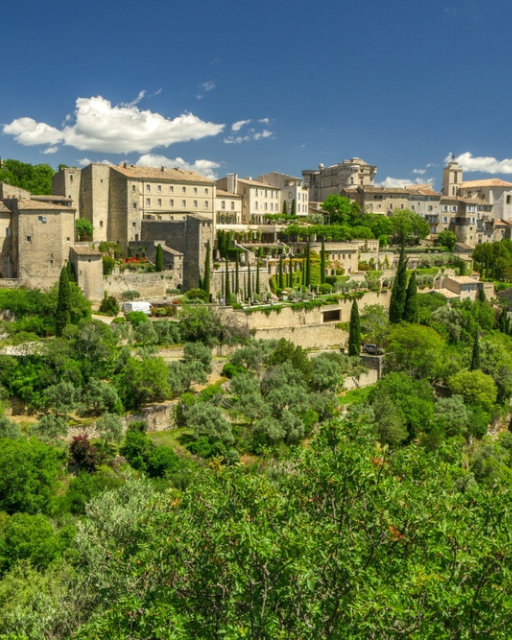
It was.
The Raiders No One Talks About
In the 9th and 10th centuries, the coast of Provence was not the idyllic Riviera of postcards. It was under siege.
Saracen pirates — North African raiders who established a fortified base at Fraxinetum, near modern Saint-Tropez — terrorised the region for more than a century. They burned farms, seized grain, and carried off villagers. Flat ground became synonymous with vulnerability.
Communities responded the only way they could: they climbed.
A village at the top of a cliff had one path in and one path out. Raids became harder to execute. Escape routes became easier to defend. The views were spectacular, but that wasn’t the point.
Why They Never Came Back Down
The Saracens were eventually driven out by the late 10th century. But the villages stayed.
By then, the hilltops had become permanent communities. The plague visited the region repeatedly across the medieval period, and high ground — away from marshlands and river valleys — offered at least the perception of safety. Later, political instability and local feuding made walls and height feel essential.
The villages also acquired wealth, identity, and architecture. Towers. Churches. Squares that trapped the afternoon sun. Why descend to a plain when everything you needed was already there?
What You Find Inside the Walls
Step inside a village perché and the logic becomes immediate.
The lanes are deliberately narrow — wide enough for a loaded donkey, too tight for mounted riders to charge through. Houses share walls to minimise the number of surfaces that need defending. The communal well sits at the heart of the settlement, not at the edge.
Everything is compressed. Every centimetre of the summit was contested, so nothing was wasted. The result, entirely by accident, is one of the most beautiful architectural forms in France: the dense, vertical medieval village, built not for beauty but for survival.
Enjoying this? 7,000 France lovers get stories like this every week. Subscribe free →
The Villages Worth Seeking Out
Gordes is the most photographed — its golden stone cascading down the hillside has appeared on more postcards than any other village in the Luberon. But crowds arrive early and leave late. Go at dusk, after the tour buses have gone.
Roussillon sits on ochre cliffs the colour of burnt copper and terracotta. The entire hill is stained with natural pigment — the paths, the walls, even the light seems orange.
Les Baux-de-Provence clings to a spur of Les Alpilles, its medieval citadel half-ruined and wholly dramatic. The Seigneurs of Les Baux were famously brutal; their fortress reflects that.
Ménerbes and Lacoste are quieter — beloved by artists and writers (Peter Mayle lived near Ménerbes, the Marquis de Sade owned a château at Lacoste), and far less trampled by tourism.
If you’re planning a visit to the region, our Provence travel guide covers where to stay and how to get around. For broader trip planning across the country, the France trip planning hub is a good starting point.
What Happens After Five O’Clock
The transformation is real and worth waiting for.
The coaches leave. The ice cream queues dissolve. The café terraces thin out and the permanent residents re-emerge — a woman carrying bread, an old man with a dog, two teenagers on a step.
The village reveals itself as what it always was: not a tourist attraction, but a place where people still live — surrounded by views that were earned, not chosen, in a place they never needed to leave.
🇫🇷 Discover the France Most Tourists Never Find
Get our free guide to 25 hidden villages of France — then join 7,000+ readers for weekly stories about places most guidebooks never mention.
Get Your Free Village Guide →Love France? So Do We.
Join our free newsletter and get the best of France — travel tips, hidden villages, food traditions, and cultural stories — straight to your inbox every week.
Free. No spam. Unsubscribe anytime.
📥 Free Download: France Travel Planning Guide
Itineraries, insider tips, and the places you must not miss on your next trip to France.
🇫🇷 You Might Also Love
Tours & experiences you might love


Powered by Viator. Some links are affiliate links — we may earn a small commission at no extra cost to you.

Leave a Reply