
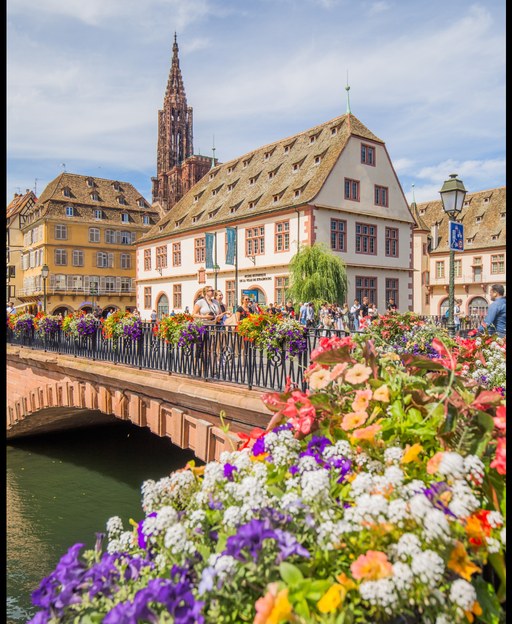
This Strasbourg travel guide shows you how to spend a few days in one of France’s most photogenic cities. Strasbourg sits on the Rhine, close to the German border, in the Alsace region. You get a Gothic cathedral, canals lined with half-timbered houses and a food scene that mixes French and Alsatian cooking.
Love France? Join 7,000+ readers on our free newsletter → lovetovisitfrance.substack.com
Why Strasbourg Deserves a Place on Your France Trip
Most first-time visitors to France head for Paris, Provence or the Riviera. Strasbourg rewards the traveller who wants something different. The city feels French and Germanic at the same time, because the region has changed hands more than once. You hear it in the street names, taste it in the food and see it in the architecture.
Strasbourg also works well for a short stay. The old town is compact, so you can walk almost everywhere. A good plan is two full days in the city, with a third day for a trip into the wine villages. Our Alsace Wine Route guide covers that third day in detail.
A World Heritage city centre
UNESCO added the Grande-Île, the historic heart of Strasbourg, to the World Heritage List in 1988. The listing grew later to include the Neustadt, the “new town” that German planners built in the late nineteenth century. You can read the full citation on the UNESCO World Heritage page for Strasbourg. The Grande-Île sits on an island ringed by the River Ill, so the whole centre feels like one big walking tour.
Strasbourg Cathedral: The Spire That Rules the Skyline
Start with the Cathédrale Notre-Dame de Strasbourg. You will see its single spire from almost every street in the old town. Builders worked on the Gothic cathedral for centuries, and the tower reached its full height in 1439. The spire rises to about 142 metres. For more than two hundred years it stood as the tallest building in the world.
Take time to look at the pink sandstone front before you go in. Stone carvers covered it with figures, arches and fine lacework. Inside, look for the astronomical clock in the south transept. The cathedral’s own website explains the clock and lists the visiting hours, so check it before you plan your morning.
Climb the tower for the view
You can climb to the platform at the base of the spire. The steps are narrow and steep, so wear sensible shoes. From the top you see the red roofs of the old town, the Rhine plain and, on a clear day, the Vosges hills to the west and the Black Forest to the east. Go early in the day to avoid the queue.
Walking Petite France and the Covered Bridges
Petite France is the part of the old town that most visitors picture when they think of Strasbourg. Tanners, millers and fishermen once lived and worked here. Their tall timber-framed houses lean over the canals, and flower boxes fill every window in summer.
Walk the quiet lanes first thing in the morning. The light is soft and the tour groups have not yet arrived. Cross the Ponts Couverts, the three bridges linked by four stone towers, and look back along the water. Then climb to the terrace on top of the Barrage Vauban, a seventeenth-century dam. From there you get a wide view of the canals and the cathedral beyond.
Wander the lanes around the cathedral
Leave time to get lost in the streets between Petite France and the cathedral square. You will pass small museums, chocolate shops and bakeries. The old town has a calm feel in the early evening, once the day visitors leave. The city’s official site, strasbourg.eu, lists museums and events if you want to plan around them.
Planning France in more detail? Our free weekly newsletter sends hidden gems and trip ideas → Join free
The European Quarter and the Neustadt
Strasbourg is also a European capital. The European Parliament holds its main sessions here, and the district around it feels modern and open. You can walk between the glass buildings and the park in under an hour.
Many visitors skip the Neustadt, which is a pity. German architects designed this district between 1871 and 1918. You will see broad avenues, grand stone buildings and a large central square. It looks more like Berlin or Vienna than Paris. A short walk here gives you a clear picture of how the city’s history shaped what you see today.
What to Eat in Strasbourg
Alsatian food is hearty, warming and generous. Plan at least one meal in a traditional winstub, a cosy wine tavern that serves regional dishes. Here are the dishes to look for:
- Tarte flambée (flammekueche): a thin, crisp base topped with cream, onions and bacon. Locals share it as a casual dinner.
- Choucroute garnie: sauerkraut cooked slowly and served with sausages and pork.
- Baeckeoffe: a slow-baked casserole of meat and potatoes, made in a ceramic dish.
- Kougelhopf: a light yeast cake baked in a fluted mould, often with raisins and almonds.
Pair your meal with an Alsace white wine. Riesling, Pinot Gris and Gewürztraminer all suit the local food. Our Colmar travel guide has more on the region’s wine villages and dishes.
Getting to Strasbourg and Getting Around
The easiest way to reach Strasbourg from Paris is by high-speed train. The journey is under two hours from Paris Est station. You can check times and book on the SNCF website or app. Our guide to travelling France by train explains how the system works for visitors from the US.
Once you arrive, you rarely need a car. The old town is walkable, and a modern tram network links the station, the centre and the European quarter. Trams run often, and you can buy tickets from machines at the stops. Many visitors also hire a bike, because the city has plenty of cycle paths along the canals.
The best time to visit
Spring and early autumn bring mild weather and fewer crowds. Summer fills the canals with flowers but also with visitors. The city is famous for its Christmas markets in the weeks before Christmas, and they draw large crowds. If you want that atmosphere, book your hotel well ahead and check the dates on the official Alsace tourism website. Our best time to visit France guide covers the seasons across the country.
Easy Day Trips From Strasbourg
Strasbourg makes a good base for the rest of Alsace. A train or short drive takes you to Colmar, with its canals and painted houses. The Alsace Wine Route runs south from the city through villages that look like illustrations from a children’s book. The region’s history also links back to the Carolingian world, which you can explore in our story of Charlemagne, the king who made Europe.
Frequently Asked Questions About Visiting Strasbourg
How many days do you need in Strasbourg?
Two full days is enough to see the cathedral, Petite France and the European quarter at a relaxed pace. Add a third day if you want to take a trip along the Alsace Wine Route.
Is Strasbourg worth visiting?
Yes, it is one of the most attractive cities in eastern France. The old town has World Heritage status, the cathedral is one of the great Gothic buildings, and the food is distinctive.
What is Strasbourg best known for?
Strasbourg is best known for its cathedral, its half-timbered Petite France district and its role as a seat of the European Parliament. Visitors also come for the Christmas markets and the Alsatian cooking.
How do you get from Paris to Strasbourg?
Take the high-speed train from Paris Est station. The trip takes under two hours, and you can book through the SNCF website or app.
You Might Also Enjoy
- The Alsace Wine Route: A Complete Guide for First-Time Visitors
- Colmar, France Travel Guide: What to See, Do and Eat in Alsace
- How to Travel France by Train: The Complete Guide for Americans
Plan Your France Trip
Ready to build the rest of your itinerary? Visit our Planning Hub for step-by-step help with regions, timing and routes.
Join 7,000+ France Lovers
Every week, get France’s hidden gems, local recipes, and travel inspiration — the kind you won’t find in any guidebook.
Subscribe free — enter your email:
Free forever · One email per week · Unsubscribe anytime
Tours & experiences you might love


Powered by Viator. Some links are affiliate links — we may earn a small commission at no extra cost to you.

Leave a Reply