
Eleanor of Aquitaine was queen of France and then queen of England. She was also the mother of two English kings. No other woman of her age held so much power for so long.
Her story is told across France today. You can trace it from the quays of Bordeaux to the streets of Poitiers. It ends at a quiet abbey in the Loire Valley. She rests there.
Who Was Eleanor of Aquitaine?
Eleanor was born around 1122 in south-west France. Her father was William X, Duke of Aquitaine. Her grandfather, William IX, is the earliest troubadour whose songs survive.
That matters. Eleanor grew up in a court that loved poetry, music and learning. Her lands stretched from the Loire to the Pyrenees. They were larger than the lands held by the French king himself.
Today that region is called Nouvelle-Aquitaine. Its towns still carry her mark.
A Duchess at Fifteen
In 1137 her father died on a pilgrimage to Spain. Eleanor was about fifteen. She became Duchess of Aquitaine overnight.
She was now the richest heiress in Europe. The French king, Louis VI, moved fast. He arranged her marriage to his son, Louis. The couple married in Bordeaux in July 1137.
Louis VI died weeks later. His son became Louis VII, and Eleanor became queen of France. She was still a teenager.
Queen of France
Eleanor spent fifteen years as queen of France. She had two daughters, Marie and Alix. She also joined Louis on the Second Crusade, from 1147 to 1149.
The marriage did not last. The couple had no son. Louis was a quiet, devout man, and Eleanor was neither. In March 1152 the church annulled their marriage. The reason given was that they were distant cousins.
Eleanor took her lands back with her. That was a serious blow to the French crown.
Queen of England
Eight weeks later, Eleanor married again. Her new husband was Henry Plantagenet. He was Count of Anjou and Duke of Normandy. They married at Poitiers in May 1152.
Henry became king of England in 1154. Eleanor became queen for the second time. Together they ruled a huge realm. It reached from the Scottish border to the Pyrenees.
Historians call it the Angevin Empire. Much of it lay in France. Henry spent more time in France than in England.
The couple had eight children. Five were sons. Two of them, Richard and John, became kings of England. Richard is better known as Richard the Lionheart.
Eleanor also ran her own court at Poitiers for several years from 1168. Poets and singers gathered there. Many people link her to the ideas of courtly love, though the details are debated.
Her marriage reshaped trade as well. Under English rule, Bordeaux sent more wine across the Channel. That trade made the city rich. You can read more in our guide to the Bordeaux wine region.
🇫🇷 Enjoying this? 7,000 France lovers get stories like this every week. Subscribe free →
The Court at Poitiers
In 1168 Eleanor settled in Poitiers with her children. Henry was busy elsewhere. She made the city her base for about five years.
Her court was lively. Troubadours sang there. Young nobles came to learn manners and music. Some writers later told tales of a “court of love” in her halls. Most historians think those tales grew in the telling.
Still, the idea stuck. Eleanor became a symbol of the age of chivalry. Her grandfather’s songs and her own taste for poetry helped spread the troubadour style across Europe.
She also managed her lands with care. She travelled her duchy, settled disputes and backed local towns. Aquitaine stayed her own, even when her husband was king.
The Long Captivity
The marriage turned sour. Henry took mistresses. Eleanor backed her sons when they turned against their father.
In 1173 the sons rose in revolt. The rising failed. Henry captured Eleanor and held her prisoner. She stayed in captivity for about sixteen years.
Henry died in July 1189 at Chinon, in the Loire Valley. The castle there still stands above the town. Eleanor was free at last. She was about sixty-seven.
The Widow Who Would Not Retire
Her son Richard became king. He sent her out to rule for him. She acted as regent while he went on crusade.
At an age when most people rested, she crossed the Pyrenees in winter. She went to Navarre to fetch Richard a bride. She also helped raise the huge ransom that freed him in 1194.
Richard died in 1199. Her youngest son, John, took the throne. Eleanor worked to keep Aquitaine loyal to him.
She then withdrew to Fontevraud Abbey. She died there on 1 April 1204. She was about eighty-two. That was a remarkable age for the time.
Where to Follow Eleanor in France
You can build a fine heritage trip around her life. Here are four places to start.
Poitiers
Poitiers was her home for years. The Palais de Justice stands on the site of the old palace of the dukes of Aquitaine. Nearby, the church of Notre-Dame-la-Grande has a richly carved Romanesque front. The Baptistère Saint-Jean dates from the 4th century. It is one of the oldest Christian buildings in France.
Chinon
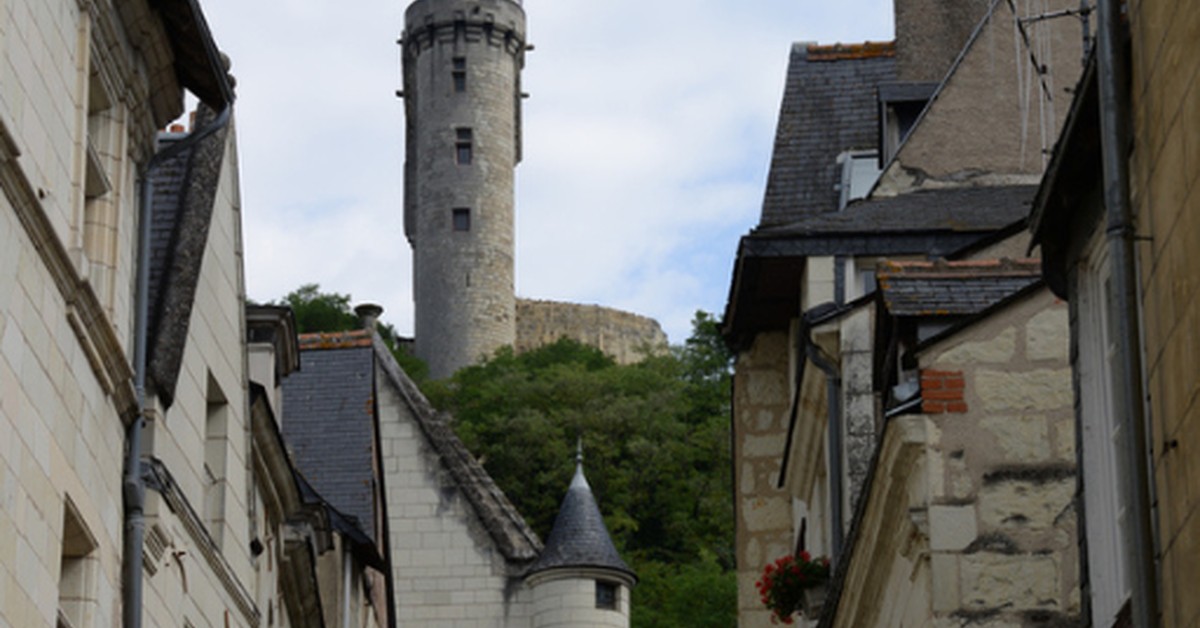
Chinon was one of Henry’s favourite homes. He died here. Climb to the castle for wide views over the Vienne river. The same fortress later welcomed Joan of Arc. Read her story in our article on Joan of Arc.
Fontevraud Abbey
This is the heart of the trip. Eleanor chose to end her life here. Four painted stone effigies lie in the abbey church. They show Eleanor, Henry II, Richard the Lionheart and Isabella of Angoulême, John’s queen.
Look for the Romanesque kitchen tower too. The abbey later served as a prison, from 1804 until 1963. Today visitors walk freely through its cloisters.
Bordeaux
Bordeaux was where Eleanor married her first husband. The city is easy to reach by fast train from Paris. Pair it with a day trip to Saint-Savin Abbey and its Romanesque paintings, not far from Poitiers.
Fontevraud and Chinon sit close together in the Loire Valley. Our Loire Valley road trip guide shows how to link them in a few days.
Why Her Story Still Matters
Eleanor lived eight hundred years ago. Yet her life still feels modern. She inherited a great fortune. She argued with kings. She outlived most of her rivals.
She also shows how closely France and England were once tied. Their royal families shared lands, language and wars for centuries. Eleanor sat at the centre of that tangled story.
Eleanor and Your French Roots
Poitou was one of her heartlands. It is also where many French-Canadian and Acadian families trace their roots. Many early settlers of New France left from ports on this Atlantic coast.
If your family comes from this part of France, Eleanor’s world is your world. Her time shaped the roads, towns and abbeys your ancestors knew.
For more medieval France, read about Charlemagne, the Cathars of Languedoc and the Knights Templar in France.
Frequently Asked Questions
Why is Eleanor of Aquitaine so famous?
She was queen of France and then queen of England. She also ruled Aquitaine in her own right. Two of her sons became kings of England.
Where is Eleanor of Aquitaine buried?
She is buried at Fontevraud Abbey, in the Loire Valley. Her husband Henry II and her son Richard the Lionheart lie beside her.
Was Eleanor of Aquitaine French or English?
She was French. She was born in Aquitaine and spoke French and Occitan. She became queen of England by marriage but spent much of her life in France.
Can you visit places linked to Eleanor of Aquitaine today?
Yes. Poitiers, Chinon, Fontevraud Abbey and Bordeaux are all open to visitors. Fontevraud and Chinon are close to each other in the Loire Valley.
How long did Eleanor of Aquitaine live?
She lived to about eighty-two. She died on 1 April 1204. Few people of her age lived so long.
You Might Also Enjoy
- Joan of Arc: The Teenage Heroine Who Saved France
- Charlemagne: The King Who Made Europe
- Saint-Savin Abbey: France’s Hidden Sistine Chapel of Romanesque Art
Plan Your France Trip
Ready to see her France for yourself? Start with our France trip planning hub. It covers when to go, how to travel and where to stay.
Join 7,000+ France Lovers
Every week, get France’s hidden gems, seasonal guides, local stories, and the art of la vie française — straight to your inbox.
Subscribe free — enter your email:
Free forever · One email per week · Unsubscribe anytime
Tours & experiences you might love


Powered by Viator. Some links are affiliate links — we may earn a small commission at no extra cost to you.

Leave a Reply