
The 6 official steps (visa, healthcare, money, housing, the first 90 days) and a town finder with the nearest hospital and airport for each town. Open the Live in France guide →
The French Riviera has attracted retirees for over a century. The warm Mediterranean climate, the palm-lined promenades, the fresh seafood markets, and the relaxed pace of life make it one of the most appealing retirement destinations in the world. If you are considering retiring on the French Riviera, you are not alone — thousands of Americans and Britons make this move every year.
Love France? Join our free newsletter → lovetovisitfrance.substack.com
This guide covers the practical side: where to live, what it costs, how healthcare works, and what you need to sort out before you make the move. For a broader introduction to the coast itself, see our French Riviera travel guide.
Why the French Riviera Suits Retirees
The Côte d’Azur stretches from Toulon in the west to the Italian border in the east. It offers something rare: genuine year-round warmth without the punishing heat of inland Provence.
Temperatures in Nice average 13°C in January and 26°C in August. The region averages 300 sunshine days per year — more than almost anywhere else in France. The mistral wind that batters much of Provence rarely reaches the coast.
For retirees, this matters enormously. You can walk the seafront in January without a heavy coat. You can sit at a café terrace for nine months of the year. The physical environment genuinely supports an active outdoor life well into later years.
The infrastructure is strong, too. Nice Côte d’Azur Airport connects directly to dozens of European cities and to major US hubs. The regional train network links Nice to Monaco in 20 minutes, to Antibes in 30, and to Cannes in 40. Many retirees find they do not need a car at all.
The Best Towns for Retiring on the French Riviera
Not every town suits every lifestyle or budget. Here are the four most popular choices among foreign retirees.
Nice
Nice is the largest city on the Riviera and the most practical choice for retirees who want everything within reach. It has a large international community, excellent healthcare facilities including a major university hospital, and a wide range of housing options.
The old town, Vieux-Nice, is compact and walkable. The Promenade des Anglais runs along the seafront for 7 kilometres. The government’s carte des loyers puts advertised apartment rents in Nice at about €20.4 per m² a month, charges included (2025).
Menton
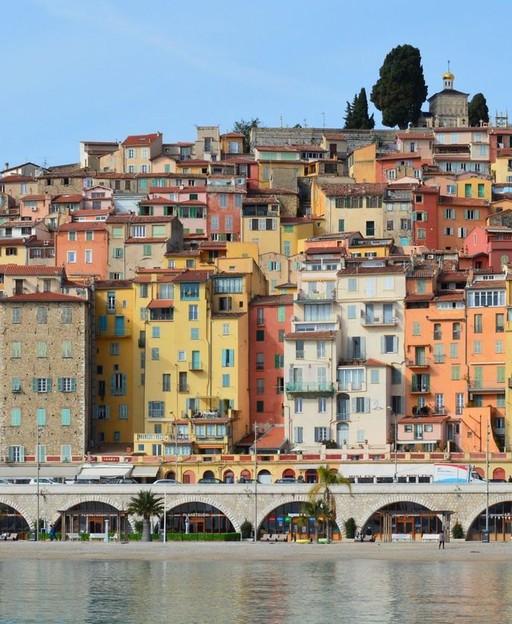
Menton sits at the Italian border and is the most relaxed town on the Riviera. It is quieter than Nice, smaller than Cannes, and has a gentler pace. Property prices are lower here than in most other Riviera towns.
The town is known for its extraordinary climate — sheltered by the Alps, it grows lemons year-round and rarely sees cold winters. It suits retirees who want warmth, quiet, and easy access to Italy without the intensity of a large city.
Antibes
Antibes has a strong English-speaking community and a large marina. It sits roughly halfway between Nice and Cannes, with easy rail access to both. The old town is a pleasure to explore, and the Saturday market is among the best on the entire coast.
Retirees who want a smaller town atmosphere with real amenities nearby often find Antibes the right balance. Housing is less expensive than Cannes or Cap d’Antibes but more affordable than central Nice.
Villefranche-sur-Mer
Villefranche-sur-Mer sits between Nice and Monaco. It is one of the most beautiful villages on the coast: a deep natural harbour with turquoise water, colourful houses climbing the hillside, and a medieval citadel overlooking the bay.
It is quieter than Nice, which many retirees prefer. The drawback is higher property prices and fewer on-the-doorstep amenities — though Nice is only 20 minutes away by train.
What It Costs to Live on the French Riviera
The Riviera is not cheap. But compared to similar coastal retirement destinations — the Algarve, Tuscany, or coastal Florida — the costs are more manageable than many people expect.
The one official cost figure is rent. The government’s carte des loyers gives advertised apartment rents, charges included, per m² a month (2025):
- Nice: about €20.4 per m²
- Menton: about €21.1 per m²
- Antibes: about €20.3 per m²
- Villefranche-sur-Mer: about €26.4 per m²
Checked 20 November 2026: check the official page before you act. Food, utilities, transport and a top-up mutuelle come on top: get quotes for your own case. Owning property rather than renting reduces monthly outgoings significantly. See our France travel budget guide for a broader picture of costs across the country.
The second major cost consideration is the purchase price of property. Recorded sale prices, street by street, are in the government’s DVF open data and on the notaires’ price map. For the full picture on what the retirement process in France involves — from the visa requirements to the tax paperwork — read the full Retire in France guide, which covers every step in detail.
Dreaming of France? Join the readers getting weekly France stories, hidden gems, and travel inspiration. Subscribe free →
Healthcare on the French Riviera
Healthcare is often the biggest concern for retirees considering a move abroad, and France has one of the most respected healthcare systems in the world. The key is understanding how it works and how to access it as a foreign resident.
Once you hold a long-stay visa and establish French residency, you can apply to join the Protection Universelle Maladie (PUMa). This brings you into the national health insurance system; the share it pays depends on the kind of care. If you do not work in France, your rights open after 3 months of living here (Service-Public: what is the PUMa?).
The remaining costs are typically covered by a mutuelle — a top-up insurance policy. Prices depend on your age and the level of cover you choose. For a thorough breakdown of how the French healthcare system works for retired expats, including how to get your carte vitale, see our guide to French healthcare for retired expats.
Nice has the Hôpital Pasteur — a large, well-equipped university hospital — alongside numerous private clinics. English-speaking GPs are available in the region. Finding one is easier if you ask within the local expat community on arrival.
Visas and the Move: What to Sort Out First
Moving to France takes more planning than most people expect. The French system rewards preparation and penalises last-minute applications. Here is what to organise before you retire on the French Riviera.
The Long-Stay Visa
Americans need a long-stay visa (visa de long séjour) to live in France. You apply on France-Visas, the official visa site, before you leave. Apply well before your intended move date.
France requires proof that you can support yourself without working. Service-Public sets the minimum resources for the “visiteur” card and updates them: read the current amount on Service-Public: the “visiteur” residence card and ask your consulate what it expects. Our detailed guide to the French long-stay visa for Americans walks through the full documentation list.
Tax and Banking
France and the United States have a tax treaty, but both countries may still require you to file tax returns. Getting advice from a cross-border tax specialist before you move is worth the cost. It is not unusual for new residents to be surprised by French wealth taxes or US FBAR reporting requirements.
Opening a French bank account requires proof of address and identity. As a new resident, this can be a chicken-and-egg problem — you need an address to open an account, but you need a bank account to secure a rental property. Online banks such as N26 or Wise can serve as a bridge while your main account is being established.
What to Expect in Your First Year
A few realities that catch retirees off guard:
The Riviera high season runs from July to mid-September. Crowds are significant, prices rise, and traffic can be heavy. Many long-term residents adapt their routines during these months, avoiding coastal towns at peak times and using inland markets instead.
French bureaucracy is thorough and slow. Every step of the residency process involves paperwork, and delays are normal. Building patience into your planning is genuinely necessary — not just advisable.
Learning French changes everything. On the French Riviera, English is widely spoken, especially in international communities. But even basic French transforms your daily interactions, your relationship with neighbours, and your confidence navigating the system.
For a broader comparison of where in France suits different retirement lifestyles, the guide to where to retire in France covers five regions in detail.
Frequently Asked Questions About Retiring on the French Riviera
Is the French Riviera affordable for retirees on a fixed income?
Rent is the biggest cost: official advertised rents are about €21.1 per m² in Menton and €20.4 in Nice (carte des loyers, 2025). The seafront and Cap d’Antibes areas require significantly more. Menton and smaller inland towns offer the most affordable entry points on the Côte d’Azur.
Do I need to speak French to retire on the French Riviera?
You can manage day-to-day life in English, particularly in Nice and Antibes where the international community is large. However, dealing with French administration, healthcare paperwork, and building a genuine social life requires at least conversational French. Evening classes before you move pay dividends quickly.
How long does it take to get a French long-stay visa for retirement?
Processing times vary, so we don’t print one: check France-Visas and your consulate before you book anything. The application involves proof of resources, medical insurance and accommodation, so apply well in advance of your intended move date.
You Might Also Enjoy
- French Riviera Travel Guide: Nice, Cannes and the Côte d’Azur
- French Healthcare for Retired Expats: PUMa, Carte Vitale, and the Mutuelle
- The French Long-Stay Visa for Americans
Plan Your France Trip
Whether you are planning a first visit or preparing to make France your permanent home, our France planning hub brings together everything you need in one place.
Join the France Lovers
Every week, get France’s hidden gems, local recipes, and travel inspiration — the kind you won’t find in any guidebook.
Subscribe free — enter your email:
Free forever · One email per week · Unsubscribe anytime
Tours & experiences you might love


Powered by Viator. Some links are affiliate links — we may earn a small commission at no extra cost to you.

Leave a Reply