
Almost every French-Canadian alive today descends from one woman. She came from France in the 1660s or 1670s. She was one of the Filles du Roi.
The name means “Daughters of the King.” Between 1663 and 1673, King Louis XIV sent around 800 women to New France. They came to marry, to settle, and to build a nation. They succeeded beyond all imagination.
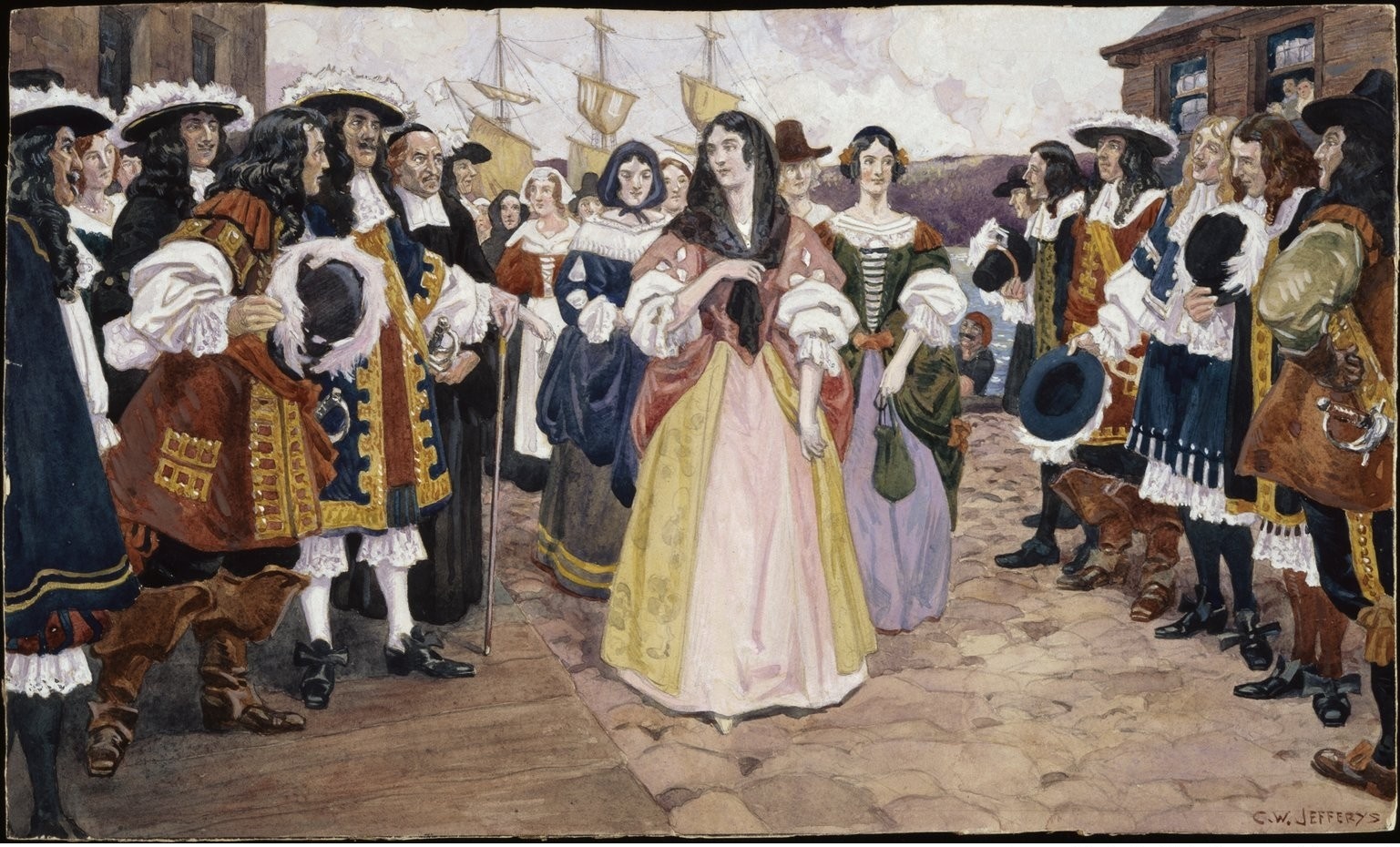
Who Were the Filles du Roi?
New France had a serious problem. It had far more men than women. The colony could not grow without families. King Louis XIV and his administrator Jean Talon found a solution.
They recruited women from France. The Crown paid their passage across the Atlantic. It also gave each woman a small dowry. These women agreed to build a new life in a cold, unfamiliar land.
Most women were between 12 and 25 years old. Many came from orphanages and hospitals in Paris. Others came from farming families across France. A few were minor nobility who had fallen on hard times.
The programme ran for just ten years. In that time, around 800 women made the crossing. Their impact on French Canada was permanent.
Where in France Did the Filles du Roi Come From?
The Filles du Roi came from across France. The largest group came from the Île-de-France region, which includes Paris. Around a third of the women had roots there.
Normandy sent many women too. The port city of Rouen was a major source. Women from Brittany, Poitou, and Champagne also made the journey.
Historians believe the Hôpital Général de Paris was a key source. This large institution housed orphans, widows, and working women. It was not a prison. Many women chose to go. They were seeking a better life.
The regions they came from still exist today. If you have French-Canadian roots, your ancestor likely came from one of these provinces. You can still visit those places. You can walk the same streets she once walked.
Surnames from these regions spread across New France. Names like Martin, Richard, Bouchard, and Poirier came with these women. Many are still the most common names in Quebec today. Our guides to French surnames of Normandy and French-Canadian surnames explore these connections in depth.
The Crossing to New France
The voyage was brutal. The Atlantic crossing took six to eight weeks. Ships were cramped and cold. Illness spread quickly.
Most women sailed from La Rochelle or Dieppe. These port towns were the main departure points for the French empire. The journey was long and frightening. Many had never left their home village before.
Those who survived arrived at Quebec City. The sight was dramatic. High cliffs rose above the St Lawrence River. A small but growing town clung to the rock above.
Men came to meet the ships. In some accounts, marriages happened within days of arrival. In others, women spent weeks at the Ursuline convent before choosing a husband. Either way, the pace was fast. The colony needed families.
Building a New Nation
Life in New France was hard. Winters were long and fierce. Settlers cleared the land and farmed it. Homes were basic.
But the Filles du Roi were tough. They adapted quickly. Within a few years, most had built stable families. The birth rate in New France became one of the highest in the world.
Jean Talon had a plan. He gave land grants to married couples. He offered bonuses for large families. Families with ten children received a royal pension. This policy worked well.
The women who came became the mothers of a nation. Their children spread across Quebec, Ontario, Acadia, and the United States. The French-Canadian diaspora today numbers around 8.8 million in Canada alone.
For the story of one branch of this diaspora, read about the Acadians. These French settlers in Nova Scotia were shaped by the same era.
The Surnames They Carried
The women brought their surnames from France. Some kept their maiden names in early records. Others are known only by their husband’s name. But the surnames they carried have lasted for centuries.
Common surnames among the Filles du Roi included:
- Boucher — from Old French, meaning one who dealt in livestock
- Guillet — a Norman name from “Guillaume” (William)
- Langlois — meaning “the Englishman,” given to someone with English ties
- Landry — from Germanic “land-ric,” meaning land ruler
- Poirier — meaning “pear tree,” a common French landscape name
- Rousseau — meaning “red-haired,” a descriptive name
- Thibault — from Germanic “theod-bald,” meaning bold people
- Tremblay — from the aspen tree, a landscape name common in Quebec
Many of these became the most common names in Quebec. Tremblay is now the most common surname in the province. That is the direct legacy of these women and the France they came from.
🇫🇷 Enjoying this? 7,000 France lovers get stories like this every week. Subscribe free →
How to Find Your Fille du Roi Ancestor
If you have French-Canadian roots, there is a good chance you descend from a Fille du Roi. Here is how to find out.
Start with the PRDH. The Programme de recherche en démographie historique at the Université de Montréal holds the most complete database of early Quebec families. It contains records of almost all the Filles du Roi.
Search the Drouin Collection. This archive of Quebec parish records is on Ancestry.ca. It covers baptisms, marriages, and burials from the 1600s onwards. Marriage records often name the woman’s home parish in France.
Look for the key dates. If your Quebec family line starts between 1663 and 1680, you may have found her. Most Filles du Roi arrived in this ten-year window.
Plan a heritage visit. Once you know which region in France your ancestor came from, you can visit her birthplace. Our guide to planning a French heritage trip will help you get started.
Our full guide to tracing your French ancestry covers all these steps in more detail.
Frequently Asked Questions
Who sent the Filles du Roi to New France?
King Louis XIV of France sent the Filles du Roi to New France. His administrator Jean Talon ran the programme. The Crown paid for each woman’s passage and gave her a small dowry for marriage.
How many Filles du Roi came to New France?
Around 800 women came between 1663 and 1673. Historians have identified roughly 770 to 800 women through parish and ship records. The exact number is hard to confirm because some records were lost over time.
What does Filles du Roi mean in English?
“Filles du Roi” is French for “Daughters of the King.” The name refers to the fact that King Louis XIV sponsored their journey. It does not mean they were his daughters by blood.
How do I know if I descend from a Fille du Roi?
If your French-Canadian family line traces back to Quebec before 1700, you likely descend from a Fille du Roi. The PRDH database at the Université de Montréal is the best starting point. The Drouin Collection on Ancestry.ca also holds many key records.
Where in France did the Filles du Roi come from?
Most came from the Île-de-France region around Paris, and from Normandy. Smaller groups came from Brittany, Poitou, and Champagne. A large number came from the Hôpital Général de Paris and other urban institutions across the country.
You Might Also Enjoy
French-Canadian Surnames: Origins and Their Roots in Old France — discover where the most common Quebec surnames came from and which regions of France they trace back to.
The Acadians: Expelled from Nova Scotia, Forever French — the story of the French settlers who were forced from their homes but kept their language and culture alive.
How to Trace Your French Ancestry — a step-by-step guide to finding your family roots in France, using archives, records, and genealogy databases.
Plan Your France Trip
Ready to follow in the footsteps of your ancestors? Start with our complete guide to planning your trip to France. It covers every step, from choosing your region to visiting an archives départementales.
Join 7,000+ France Lovers
Every week, get France’s hidden gems, seasonal guides, local stories, and the art of la vie française — straight to your inbox.
Subscribe free — enter your email:
Love more? Join 64,000 Ireland lovers → · Join 43,000 Scotland lovers → · Join 30,000 Italy lovers →
Free forever · One email per week · Unsubscribe anytime
Tours & experiences you might love


Powered by Viator. Some links are affiliate links — we may earn a small commission at no extra cost to you.

Leave a Reply