Ingredients
Equipment
Method
- Whisk the flour, salt and sugar together in a large bowl and make a well in the middle. Break in the eggs and start whisking from the centre.
- Pour in the cold milk a little at a time, whisking all the while; adding it slowly is what keeps the batter free of lumps. Whisk in the melted butter and the rum or orange blossom water. The batter should be about as thin as single (light) cream.
- Cover and leave the batter to rest for 30 minutes to 1 hour at room temperature, or overnight in the fridge. Stir it before you start.
- Heat the pan over medium-high heat and wipe it with a little butter on a folded paper towel. Pour in about 4 tablespoons (60 ml / ¼ cup) of batter and tilt the pan straight away so it covers the base in a thin layer.
- Cook for about 1 minute, until the edges turn golden and lift away from the pan. Flip with a spatula (or toss it, holding your coin) and cook the other side for about 30 seconds. The first crêpe is often a test one.
- Slide each crêpe onto a plate, grease the pan again every 2 or 3 crêpes, and carry on until the batter is used up.
Notes
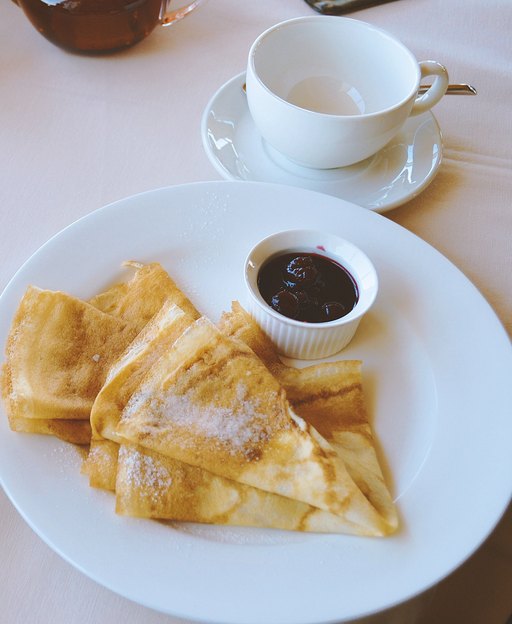
Fillings: the simplest is a squeeze of lemon and a sprinkle of sugar. Jam, honey, chestnut cream and salted caramel are all French favourites. Fold the crêpe in four or roll it.
American swaps: use all-purpose flour and whole milk. Any non-stick frying pan of about 24 cm (9½ in) works as well as a crêpe pan.
Make ahead and storage: the batter keeps 2 to 3 days covered in the fridge, and so do cooked crêpes. To keep a stack warm, set the plate over a pan of simmering water and cover it with foil. Cooked crêpes freeze, layered with parchment, for up to two months.
The Chandeleur flip: tradition says you hold a coin in one hand and make a wish as you flip the first crêpe; if it lands back in the pan, the wish comes true.
Free from Love France: France's Best Market Mornings, six market mornings worth planning a trip around, from Nice to Colmar (free PDF)