Ingredients
Equipment
Method
- Stir the vinegar, shallot, crushed pepper and salt together in a small bowl. Cover and chill for at least 1 hour so the shallot softens into the vinegar.
- Keep the oysters cold until you open them: in the bottom of the fridge, lying flat with the rounded side down. Use only oysters with tightly closed shells.
- To open each oyster, fold a thick towel several times and hold the oyster in it, rounded side down, with the hinge (the pointed end) towards you, or wear a cut-resistant glove. Push the tip of an oyster knife into the hinge and twist until the shell pops. Keep the blade pointing away from your hand.
- Slide the knife along the inside of the top shell to cut the muscle, lift off the top shell, then slide the knife under the oyster to free it, keeping as much of the liquid in the shell as you can. Check it is alive: prick the edge with the knife tip and it should flinch. Throw away any oyster that does not react, smells bad or looks dry.
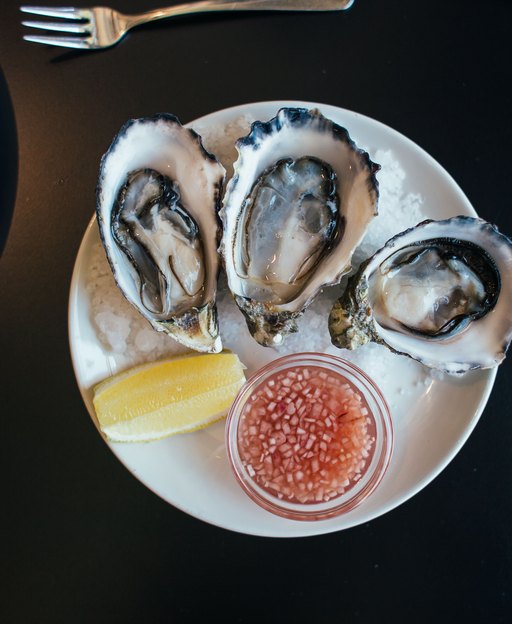
- Set the opened oysters on a platter of crushed ice or coarse salt so they sit level. Serve at once with the lemon wedges, the mignonette with a small spoon, and bread and salted butter.
Notes
Food safety (read this first): raw oysters can carry bacteria such as Vibrio. The US Centers for Disease Control and Prevention (CDC) advises against eating raw or undercooked oysters, and says this matters most for people with an underlying condition, especially liver disease. CDC also names diabetes, iron overload disease and a weakened immune system (for example from cancer treatment) as raising the risk of serious illness. If that is you, eat oysters only when they are thoroughly cooked. Search 'CDC Vibrio prevention' for the official page. Checked November 2026.
Opening safely: use a short, sturdy oyster knife rather than a kitchen knife. Always protect the hand holding the oyster with a folded towel or a cut-resistant glove, and wash your hands after handling raw shellfish.
American swaps: any good half-shell oysters work. In France the most common are the cupped Pacific oysters (huîtres creuses); flat oysters (plates) are much rarer.
Make ahead: the mignonette keeps, covered, for up to 3 days in the fridge. Open the oysters only just before serving.
Two French ways: purists eat oysters with nothing at all; others add lemon, a turn of the pepper mill or a spoonful of mignonette. Around Bordeaux and Arcachon they often come with a glass of dry white wine.
Free from Love France: France's Best Market Mornings, six market mornings worth planning a trip around, from Nice to Colmar (free PDF)