Stand at any French café counter on a Tuesday morning. A man in a suit takes his espresso in two sips, sets the small cup down, and walks out. He never asked for a lid. He never thought to.
The Unwritten Rule
In France, you sit for coffee. Not for convenience — for the principle of it. The café is not a fuel stop. It is a punctuation mark in the day.
The French call it faire une pause — to make a pause. Every espresso demands one. You may have a meeting in twenty minutes. You still sit. You still sip. You still look.
No law enforces this rule. No café owner demands it. But try to walk out with your cup and something shifts in the room. The barman watches. The regulars notice. The rule holds itself up.
What the French Actually Order
Forget the flat white. French café culture runs on three drinks, and the French know exactly when to order each one.
Un café — a straight espresso — is the default at any hour. Small, dark, and strong, it arrives in a cup no bigger than a shot glass, with a tiny packet of sugar on the saucer.
Un café crème — roughly half espresso, half steamed milk — is the morning drink. Order it before midday. After noon, the French switch to espresso. Ordering a milky coffee in the afternoon marks you immediately as a visitor.
Café au lait belongs at home, poured into a wide bowl over breakfast bread. Few French people order it in a café at all. It is a domestic ritual, not a public one.
Why the Terrace Exists
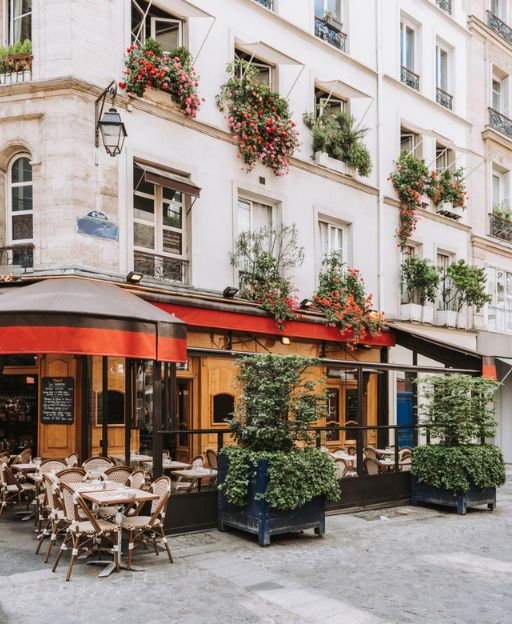
On warm mornings across France, café terraces fill by eight. People do not sit to rush — they sit to watch. The French art of flânerie, of unhurried observation, finds its natural home in a café chair facing the street.
This is not wasted time. French culture values presence over productivity. A coffee consumed in a moving car or at a desk is not a coffee at all — it is a missed opportunity.
There is also a practical reason. French espresso cools in seconds. The machine, the cup, and the ritual are built for one act: stopping. The drink demands presence by design.
If you want to build your trip around France’s best regions and food experiences, our France planning guide covers where to stay, when to visit, and how to make the most of every day.
Enjoying this? 7,000 France lovers get stories like this every week.
Thinking about it seriously? If you’ve started actually planning a move, our complete our complete Moving to France guide walks through every step, every cost, and the paperwork that catches most people out.
The Counter Is for Regulars
Not everyone sits at a table. The zinc bar — the long metal counter found in traditional bistros and brasseries — has its own quiet culture.
Regulars drink standing at the counter, and the price reflects it. Drinks at the bar cost less than at a table, and far less than on the terrace. Locals know this. Visitors rarely do.
The whole transaction takes five minutes. The barman knows your order before you speak. You exchange a word about the weather, or the news, or nothing at all. Then you leave. The neighbourhood connects, briefly, before the day begins in earnest.
The Slower South
In Provence and the Languedoc, the café pace slows further. Many villages have just one café on the main square. Morning here follows a rhythm so predictable you could set your watch by it.
Shutters open. The café owner unlocks the door. The first regulars arrive by seven. By nine, the square empties again. Life moves on to the market, the bakery, the school run — but the pause happened first.
Visitors who find this rhythm often stay far longer than planned. They ordered a coffee and sat for an hour. They had not planned to think, to read, or to watch the square. The café made them do it.
French food culture runs deeper than any single cup. Read about the bouchon — the honest, unglamorous restaurant that reveals what French people actually eat when no one is watching. Or dive into the full gastronomic story with our Lyon travel guide.
What do the French typically order at a café?
An espresso — called un café — is the standard order at any time of day. In the morning, many French people choose a café crème, which combines espresso with steamed milk. After midday, milky coffee signals that you are a visitor. Switch to espresso instead.
Is it acceptable to order coffee to go in France?
Most traditional French cafés do not offer takeaway cups. Some modern spots in Paris now provide them, but in smaller towns and villages, ordering coffee to go is unusual. Sitting — even for five minutes at the bar — is simply how it works.
How much does a coffee cost in a French café?
A standard espresso costs between €1 and €2 at the counter in most of France. Prices rise to €2.50–€4 on a terrace in Paris or the Côte d’Azur. Ordering at the bar (le comptoir) almost always costs less than sitting at a table or on the terrace outside.
What is the best time to visit a French café?
Early morning, between 7am and 10am, is the richest time in any French café. Locals gather before work, the croissants are fresh, and the atmosphere feels most authentic. By midday, many cafés shift to serving food, and the coffee crowd thins considerably.
The next time you see a man standing at a zinc counter in Paris, espresso in hand, eyes somewhere between the street and nothing at all — he is not in a rush. He is exactly where he wants to be. That might be the most French thing there is.
Join 7,000+ France Lovers
Three times a week, get France’s hidden gems, seasonal guides, local stories, and the art of la vie française — straight to your inbox.
Subscribe free — enter your email:
📲 Know someone who’d love this? Share on WhatsApp →
Love more? Join 65,000 Ireland lovers → · Join 43,000 Scotland lovers → · Join 29,000+ Italy lovers →
Free forever · Unsubscribe anytime
🇫🇷 You Might Also Love
Tours & experiences you might love


Powered by Viator. Some links are affiliate links — we may earn a small commission at no extra cost to you.

Leave a Reply