Walk into any wine bar in Paris or Lyon and ask the sommelier what excites them most right now. They won’t point to a grand château. They’ll reach for a cloudy, unfined bottle from a farmer most people have never heard of.
France’s natural wine movement has been building for four decades. Now it has reached every corner of the country — and every curious traveller who visits France can find it.
What Actually Is Natural Wine?
Natural wine has no legal definition. But producers who make it share a simple principle: grow grapes without pesticides, harvest by hand, ferment with wild yeast, and add nothing in the cellar.
No industrial yeast from a catalogue. No fining agents. No sulphites beyond the bare minimum.
The result is wine that tastes like somewhere specific. You can tell a Jura chardonnay from a Loire chenin blanc. Terroir — the soil, the climate, the hands that picked the grapes — comes through in every glass.
Natural wine can be unpredictable. Sometimes a bottle is cloudy and strange. Some producers will tell you that’s the whole point.
The Loire Valley: Where the Movement Was Born
Most visitors know the Loire as château country. But in the cellars beneath those vineyards, something different happened.
In the 1980s, a group of growers around Anjou and Saumur began rejecting what they called industrial wine. They stopped using commercial yeasts. They stopped adding fining agents. They tasted each other’s experiments and argued constantly about what wine should actually be.
The Loire today produces some of France’s most sought-after natural wines. Merchants once dismissed Muscadet as cheap seaside plonk. Now collectors seek it out. Chenin blanc from Savennières can age twenty years or more.
Ask at any wine shop in Angers or Saumur for a natural producer. The staff will light up immediately.
Beaujolais: The Region That Rebuilt Its Reputation
Beaujolais suffered for decades under the shadow of Beaujolais Nouveau — the thin, rushed wine that floods supermarkets every November.
Then natural wine producers arrived and changed everything.
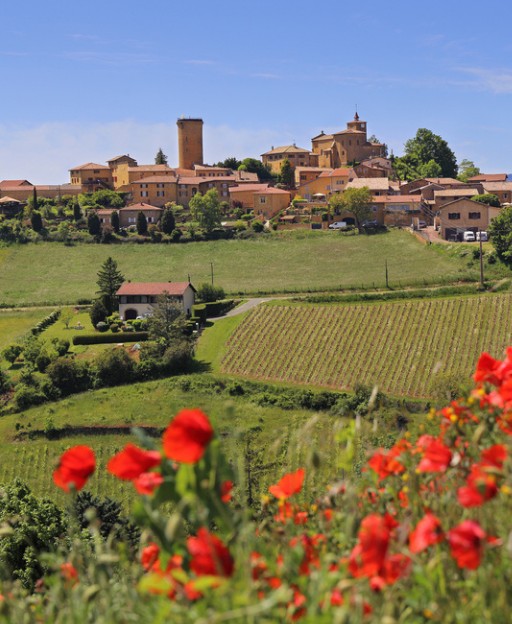
Growers in the Beaujolais crus — Morgon, Fleurie, Moulin-à-Vent — began making gamay wines of real depth and complexity. These weren’t gluggable Nouveau bottles. They were serious wines that rewarded patience and attention.
Marcel Lapierre’s estate in Morgon became a pilgrimage site. His son Mathieu continues the work today. Collectors wait years for his bottles.
Beaujolais now draws wine travellers who once dismissed it entirely. Small producers welcome visitors on the roads between villages. No tourist coaches here. No gift shops.
Enjoying this? 7,000 France lovers get stories like this every week.
Thinking about it for retirement? If you’ve started thinking seriously about retiring there, our complete our full Retire in France guide covers the visa, healthcare, cost-of-living, and the regions worth shortlisting.
The Jura: France’s Quietly Magnificent Wine Country
Drive east from Burgundy and the landscape changes. The hills grow steeper. The villages grow quieter. You’ve entered the Jura.
The Jura produces wines unlike anything else in France. Ouillé chardonnay tastes precise and mineral. Savagnin aged under voile — a veil of yeast that develops across the barrel surface — produces vin jaune, a wine of extraordinary intensity and longevity.
Natural producers here work in a tradition that predates the modern wine industry entirely. The Jura never went fully industrial, so returning to natural methods felt less like rebellion and more like memory.
Domaine Ganevat and Domaine de la Tournelle draw wine lovers from across the world. Both welcome tastings by appointment.
How to Find Natural Wine on Your Trip
The easiest route is through caves à manger — wine bars that serve food alongside a natural wine list. Paris alone has hundreds of them. Lyon’s natural wine bar scene goes even deeper.
Ask for vin naturel or vin nature. Better still, ask what the bar is currently excited about. A good natural wine bar owner will tell you the story behind every bottle on the shelf.
Wine fairs help too. La Dive Bouteille in Saumur takes place in late January or February and attracts producers from across France. You can taste dozens of wines directly from the maker in a single afternoon.
Use our France trip planning guide to time your visit around harvest season or a wine fair. For neighbouring wine country, our guide to Burgundy’s hidden wine villages covers small producers and backroads just west of the Jura. To understand why French wine became so strictly regulated, read about the ancient harvest signal Bordeaux still follows today.
What is the best region in France for natural wine?
The Loire Valley is the spiritual home of French natural wine, particularly the villages around Anjou and Saumur. Beaujolais and the Jura are also world-class destinations for natural wine exploration, each with a distinct character.
When is the best time to visit France for natural wine?
Harvest season runs from late September through October. Producers are active in the vineyards and many welcome curious visitors. La Dive Bouteille, the biggest natural wine fair in France, takes place in Saumur every January or February.
Can I visit natural wine producers in France without a booking?
Most small producers ask for an appointment in advance. However, natural wine bars and caves à manger across Paris, Lyon, and Bordeaux serve excellent selections without any reservation. Ask the staff which producer excites them most right now.
What makes natural wine different from organic wine?
Organic wine describes how the grapes were grown — without synthetic pesticides. Natural wine goes further. It also means minimal intervention in the cellar: no commercial yeasts, no fining agents, and very little added sulphite. Both the vineyard and the winemaking process matter.
Join 7,000+ France Lovers
Three times a week, get France’s hidden gems, seasonal guides, local stories, and the art of la vie française — straight to your inbox.
Subscribe free — enter your email:
📲 Know someone who’d love this? Share on WhatsApp →
Love more? Join 65,000 Ireland lovers → · Join 43,000 Scotland lovers → · Join 29,000+ Italy lovers →
Free forever · Unsubscribe anytime
France has made wine for 2,000 years. These producers are simply asking what it tasted like before the formulas arrived. The answer — cloudy, wild, and very much alive — turns out to be extraordinary.
Frequently Asked Questions
What is natural wine?
Natural wine has no legal definition, but producers follow a simple principle: grow grapes without pesticides, harvest by hand, ferment with wild yeast, and add nothing in the cellar (no commercial yeast, fining agents, or excess sulphites). The result tastes like somewhere specific, with terroir—the soil, climate, and hands that picked the grapes—coming through in every glass.
Where should I go to find natural wine in France?
You'll find it in wine bars across Paris and Lyon, but the Loire Valley is where the movement was born and remains especially strong—ask at any wine shop in Angers or Saumur and staff will enthusiastically point you toward producers. The natural wine movement has now reached every corner of France.
Why does natural wine sometimes look cloudy or taste unpredictable?
Natural wine is made without the fining agents and filtering additives that clarify industrial wine, and it ferments with wild yeast instead of controlled commercial strains. Many natural wine producers say that unpredictability is the whole point.
Where did the natural wine movement start?
The movement began in the Loire Valley in the 1980s, when growers around Anjou and Saumur rejected industrial wine-making and started experimenting with wild fermentation and minimal intervention. Today, the Loire produces some of France's most sought-after natural wines.
🇫🇷 You Might Also Love
Tours & experiences you might love


Powered by Viator. Some links are affiliate links — we may earn a small commission at no extra cost to you.

Leave a Reply