
Falaise Castle stands on a rocky spur in Normandy. It looks down on the small town of Falaise and the green Ante valley.
Around 1027, a baby was born inside these walls. He grew up to be William the Conqueror.
Today the castle is one of the best places to meet the Normans. It is quiet, dramatic and far less crowded than Mont Saint-Michel. Here is the story, and how to see it.
Where Is Falaise Castle?
Falaise lies in the Calvados area of lower Normandy. It sits about 35 km south of Caen.
The castle crowns a cliff of pale rock. The name Falaise comes from the French word for cliff.
The site is easy to defend. Steep rock guards three sides. That is why the dukes of Normandy chose it.
The Boy Who Was Born at Falaise
William was the son of Robert, Duke of Normandy. His mother was Herleva, also called Arlette. She was the daughter of a local tanner.
Her family was not noble. Because of this, some nobles later mocked William.
They called him the Bastard. He never forgot it.
One old tale says Robert first saw Herleva washing clothes in a stream. The story may be a legend. Even so, it tells us how the Normans saw their duke’s humble roots.
Chroniclers add another tale. In 1051, William besieged the town of Alençon. The defenders hung animal hides from the walls.
They shouted insults about his tanner ancestors. William took the town and punished them hard.
A Hard Childhood in Normandy
Robert left on a pilgrimage to Jerusalem in 1034. He died on the way home in 1035. William was only about seven.
A young duke is a tempting target. Powerful lords fought for control of Normandy.
Some of his guardians were killed. William had to hide in the homes of loyal families.
The boy grew up fast. By his early twenties he was leading his own army.
In 1047 he won a key battle at Val-ès-Dunes in Normandy. That victory saved his dukedom.
A Fortress on a Rock
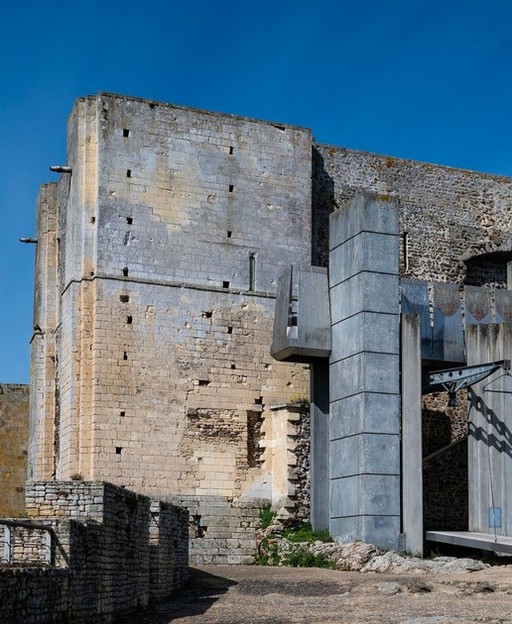
The first castle on the rock was a Norman stronghold. It was already old when William was a child. The grey stone you see today is later.
The great keep dates from the early 1100s. Henry I of England had it built.
Henry was William’s youngest son. He ruled both England and Normandy.
The keep is a tall, plain block of stone. It was made to impress and to protect. The thick walls still look powerful.
In 1202, King John of England held his young nephew Arthur of Brittany at Falaise. Arthur was later moved to Rouen. He was never seen in public again.
In 1204, the French king Philip Augustus took Falaise. Normandy then joined the French crown. Philip added the round tower you see beside the keep.
This tower is called the Talbot Tower. It takes its name from John Talbot, an English commander. He held the castle during the 1400s.
From Falaise to the Throne of England
In 1066, King Edward of England died without a child. William said Edward had promised him the crown. He gathered ships and men at the Norman coast.
He crossed the Channel that autumn. On 14 October he won the Battle of Hastings. On Christmas Day he was crowned in Westminster Abbey.
This changed English history for ever. It also changed the English language. Words like beef, castle and justice came from Norman French.
The Bayeux Tapestry tells this tale in thread. See it scene by scene in our guide to the Bayeux Tapestry.
Checked November 2026: the Bayeux Tapestry museum in Bayeux closed to the public on 31 August 2025 for a new museum, planned to open in October 2027, so the Tapestry cannot be seen there until then (Bayeux Museum).
🇫🇷 Enjoying this? France lovers get stories like this every week. Subscribe free →
What to See at Falaise Castle
Start with the keep. Walk through its rooms and climb to the upper levels. Modern steps and walkways help you move around.
Next, visit the Talbot Tower. Its round shape and stone top are very striking. The view from the top is wide and green.
Look for the modern metal and glass work in the keep. Designers added it to make the old rooms easier to understand.
Some visitors love it. Others find it bold.
Displays inside explain William’s life and the Norman world.
Allow about two hours for the castle. Add more time if you like to read every display.
The Town Below the Castle
Falaise is a small, calm market town. In the main square you will find a large statue of William on horseback. It was unveiled in the 1800s.
Around the statue stand figures of other Norman dukes. It is a fine place for a photograph.
The town suffered heavy damage in the summer of 1944. Much of it was rebuilt after the fighting. You can still find old stone streets and churches among the newer buildings.
Stop for a coffee or a lunch of local cider and cheese. Normandy is famous for both.
How to Plan Your Visit
Falaise works well as a half-day trip. Drive from Caen in about 40 minutes. Or combine it with the D-Day beaches and Bayeux over a few days.
Opening hours and ticket prices change each season. Check them on the official castle website before you go (checked November 2026).
For a wider plan, see our Normandy travel guide. It covers beaches, towns and food. You can also visit Mont Saint-Michel on the same trip.
A Place for Norman Family Roots
Many families around the world have Norman roots. Some English and American surnames trace back to the men who sailed with William.
If that sounds like your family, Falaise is a special place to stand. You walk where the first Norman king of England was born.
Want the full picture of this people? Read how the Normans changed the world, from France to England to Sicily.
Falaise Castle FAQ
Who was born at Falaise Castle?
William the Conqueror was born at Falaise around 1027. He became Duke of Normandy and, in 1066, King of England.
How far is Falaise from Caen?
Falaise is about 35 km south of Caen. The drive takes around 40 minutes.
How long do you need at Falaise Castle?
Plan on about two hours for the castle. Add an hour for the town centre and its statue.
Is Falaise Castle the original castle of William?
Not fully. The first stronghold stood here in William’s day. The stone keep and the Talbot Tower were built later, in the 1100s and 1200s.
Can you visit Falaise on a day trip from Paris?
It is possible but long. Falaise is better as a stop from Caen or Bayeux. Most visitors stay a night in Normandy.
You Might Also Enjoy
- The Bayeux Tapestry: The Story of 1066 Stitched in Linen
- The Normans Who Changed the World: From France to England to Sicily
- Cluny Abbey: The Burgundy Monastery That Shaped Medieval Europe
Plan Your France Trip
Ready to plan the rest of your journey? Start with our planning hub for your trip to France.
Join the France Lovers
Every week, get France’s hidden gems, seasonal guides, local stories, and the art of la vie française — straight to your inbox.
Subscribe free — enter your email:
Free forever · One email per week · Unsubscribe anytime
Tours & experiences you might love


Powered by Viator. Some links are affiliate links — we may earn a small commission at no extra cost to you.

Leave a Reply