
In 1993, the French government did something no other country had done. They passed a law to define exactly what a baguette must contain. No additives. No preservatives. Flour, water, salt, and yeast — nothing else. They called it the Décret Pain, and it changed how France bakes bread.
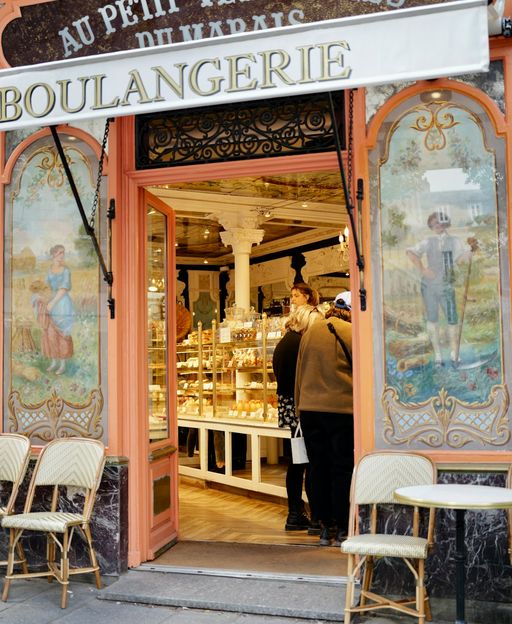
When Supermarkets Threatened the Boulangerie
By the 1980s, industrial bread had taken over French supermarket shelves. Factories produced soft, fluffy loaves that lasted for days. Stores stacked them in plastic bags. They were cheap, convenient, and tasted of almost nothing.
Meanwhile, neighbourhood boulangers were closing. Small bakers couldn’t compete on price. Families stopped making the morning walk. The ancient ritual — still dark outside, warm bread smells drifting into the street — began to disappear.
Bakers, politicians, and ordinary citizens pushed back. They argued that real bread wasn’t just food. It was a national institution. The government agreed.
What the Décret Pain Actually Says
The 1993 law created a protected category: the baguette de tradition française. To carry that name, a loaf must contain only four ingredients — wheat flour, water, salt, and yeast. No additives. No improvers. No chemical shortcuts.
The baker must also make it on-site. They cannot buy pre-shaped frozen dough and call it a tradition baguette. Hands must shape it. A proper oven must bake it. Every loaf must leave the shop the same day it enters the oven.
Industrial bread can still be sold. But it cannot pretend to be something it isn’t. The tradition baguette has its own protected name, its own standards, and its own pride. You can plan your whole trip around finding it if you like.
What Happens Inside a Boulangerie Before Dawn
Most boulangers start work at 3 or 4am. The oven reaches temperature before any other light appears on the street. Dough prepared the previous evening rests in proving baskets. The baker scores each loaf by hand — those diagonal cuts are not decorative. They control exactly where steam escapes during baking.
By 7am, the first batch is ready. In French towns, a short queue often forms before the door opens. People stand with no urgency, exchanging brief morning greetings. They walk home with the baguette tucked under one arm, often eating the pointed end — the quignon — before they reach their door.
This is not nostalgia. This is daily life in France. It sits alongside the café ritual of never drinking coffee to go as one of those small, serious French habits that visitors notice immediately.
Enjoying this? 7,000 France lovers get stories like this every week.
Thinking about it seriously? If you’ve started actually planning a move, our complete our complete Moving to France guide walks through every step, every cost, and the paperwork that catches most people out.
Regional Bread Beyond the Baguette
France makes far more than baguettes. Each region has its own tradition.
In Alsace, bakers produce Kugelhopf — a brioche-style loaf bakers shape in a distinctive fluted mould. Families traditionally eat it on Sunday mornings. In Brittany, pain de campagne — a dense, slightly sour country loaf — shares the shelf with kouign-amann, a flaky pastry built from butter and sugar. The Auvergne produces pain de seigle, a dark rye loaf that pairs perfectly with the region’s robust cheeses.
Even within Paris, preferences shift by neighbourhood. The Marais favours the classic baguette. Saint-Germain has long supported sourdough ateliers. Montmartre’s oldest boulangers still bake pain de tradition in wood-fired ovens.
How to Hear a Good Baguette
The French have a simple test. Tap the base of the loaf. A dull thud means the inside is dense and poorly baked. A hollow knock means the crust has set correctly and the interior has the right open crumb.
Squeeze the middle gently. Real bread springs back immediately. Stale bread does not.
The crust should shatter when you break it — not bend. A good loaf is deeply golden, not pale. It crackles audibly when you carry it home. The French hear a good baguette before they taste one. The annual Grand Prix de la Baguette names Paris’s finest baker each year — the winner supplies bread to the Élysée Palace for twelve months. Use our guide to France’s best local discoveries to find them on your visit.
Frequently Asked Questions
Is there a law that protects the French baguette?
Yes. The 1993 Décret Pain created the protected category of baguette de tradition française. It requires bakers to use only flour, water, salt, and yeast — no additives — and to bake every loaf on-site on the day of sale. Industrial loaves can still be sold but cannot use the protected name.
What is the difference between a baguette and a baguette de tradition?
A standard baguette can include additives and improvers to extend shelf life. A baguette de tradition française uses only natural ingredients with no shortcuts. Most artisan boulangers are proud to sell the tradition version — look for the word tradition on the label or sign.
What time do French boulangers start work?
Most boulangers begin between 3am and 4am to have fresh bread ready by opening time around 7am. Many boulangeries bake two batches — one for the morning rush and one for the midday and afternoon trade.
Where can I find the best baguettes in France?
Independent artisan boulangers consistently outperform chain bakeries. Look for the word artisan on the shop front. In Paris, the annual Grand Prix de la Baguette identifies the city’s finest baker — the winner supplies bread to the Élysée Palace for a full year.
There is something quietly extraordinary about a country that wrote a law — not to protect a famous dish or a complex recipe — but to protect a loaf of bread. A country that decided a four-ingredient staple deserved the same seriousness as a wine appellation or a champagne region.
When you next stand in a boulangerie queue at 7am, holding that warm loaf under your arm and tearing off the quignon before you reach the door, you are not just buying bread. You are participating in something France refused to let die.
Join 7,000+ France Lovers
Three times a week, get France’s hidden gems, seasonal guides, local stories, and the art of la vie française — straight to your inbox.
Subscribe free — enter your email:
📲 Know someone who’d love this? Share on WhatsApp →
Love more? Join 65,000 Ireland lovers → · Join 43,000 Scotland lovers → · Join 29,000+ Italy lovers →
Free forever · Unsubscribe anytime
🇫🇷 You Might Also Love
Tours & experiences you might love


Powered by Viator. Some links are affiliate links — we may earn a small commission at no extra cost to you.

Leave a Reply