Ask most visitors where they want to go in France, and you’ll hear Paris, Provence, or the Loire. Almost nobody says Nantes. That is precisely why you should go.
Photo: Shutterstock
Where Brittany Meets the Loire
Nantes sits where the Loire River meets the Atlantic world. For centuries it served as the capital of the Duchy of Brittany — before France absorbed it, before the port made it wealthy, before the twentieth century stripped out the industries and left the riverbanks quiet.
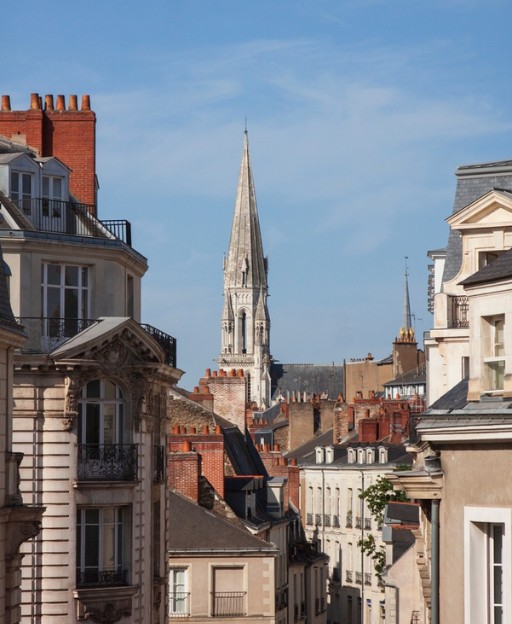
Today the city holds those layers lightly. The Castle of the Dukes of Brittany stands in the city centre with its moat intact, its towers unchanged since the fifteenth century. Streets of nineteenth-century buildings rise above covered passages — the kind Paris made famous, but far less crowded here.
The Erdre River slides through the city without drama. Cyclists cross old bridges. Bakeries open at six. Nantes does not announce itself. It simply gets on with things.
The Mechanical Elephant That Fills an Entire Shipyard
In 2007, a group of artists took over a former industrial island in the Loire and built something extraordinary.
The Machines of the Isle of Nantes centres on a 12-metre mechanical elephant — built from steel and timber, capable of walking, breathing through its trunk, and blinking with slow precision. It carries up to 50 passengers on its back. Children go silent when they see it move for the first time. Adults tend to do the same.
The installation connects deliberately to Jules Verne, who grew up in Nantes in the 1830s and 40s. At eleven, Verne tried to stow away on a ship bound for the West Indies. His father pulled him off at the last stop. He reportedly promised to travel only in his imagination from then on. He kept that promise — across 54 novels and seven continents.
The Jules Verne Museum and the City He Left Behind
The Jules Verne Museum occupies a house above the Loire, full of original manuscripts, navigational charts, mechanical models, and the globes he used to plot his fictional routes. Staff treat him not as a relic but as a resident who stepped out briefly.
Verne left Nantes at fifteen to study law in Paris. He found the theatres instead, then the publishing houses, then the world. He set his novels on every continent and under every ocean. But Nantes gave him the vocabulary — a port city where ships carried impossible things to impossible places.
Allow an hour for the museum. Allow longer for the walk along the Loire quays that follows it.
🇫🇷 Discover the France Most Tourists Never Find
Get our free guide to 25 hidden villages of France — then join 7,000+ readers for weekly stories about places most guidebooks never mention.
If you’ve started thinking seriously about retiring there, our complete our full Retire in France guide covers the visa, healthcare, cost-of-living, and the regions worth shortlisting.
Subscribe free →
The Market, the Muscadet, and the Morning
The Talensac covered market opens most mornings in the heart of Nantes. Stalls carry vegetables from the Loire floodplain, goats’ cheese from the Vendée, rillettes, and fresh Atlantic fish. It runs at the calm, purposeful pace that French markets manage better than anywhere else. Get there early.
Nantes produces its own white wine — Muscadet — from the Melon de Bourgogne grape. Most wine lists in France overlook it. In Nantes, restaurants take it seriously. Order a glass with a plate of oysters at one of the quayside restaurants and you’ll understand why the region spent centuries holding its own identity.
A City That Does Not Try to Impress You
Nantes has no single landmark moment. No tower defines the skyline, no square appears on every postcard. It works at street level — neighbourhood boulangeries, covered passages, bookshops that have sold maps since before GPS, squares where men play pétanque in the evening light.
Visitors expecting spectacle leave slightly puzzled. Visitors who walk slowly and eat well leave wanting to return. Nantes takes a day to understand and then becomes difficult to forget.
For help planning your time in this part of France, the France planning hub covers getting here by train, the best seasons, and how to build a wider Loire itinerary.
Nantes is best known as the home of the Machines of the Isle — a working mechanical elephant and art installation on a former shipyard island — and as the birthplace of Jules Verne. The city also holds a well-preserved medieval castle, a strong local food scene, and its own Muscadet wine appellation.
Direct TGV trains run from Paris Montparnasse to Nantes in around two hours and fifteen minutes. Services run throughout the day, making Nantes an easy city break from the capital without needing a car.
May through September offers the best weather and full opening hours for the Machines of the Isle. The city hosts the Voyage à Nantes arts festival every July and August, which adds temporary art installations across the whole city and draws visitors from across France.
One full day covers the Machines of the Isle, the Castle of the Dukes of Brittany, and a morning market visit. Two days let you add the Jules Verne Museum, the covered passages, and a slower lunch along the Erdre River at a pace the city rewards.
The elephant was still moving when we left. Slowly, steadily, turning in its circuit above the old shipyard, the Loire wide and quiet below. Jules Verne left Nantes as a teenager and spent his life coming back in his imagination. After a day here, you’ll understand the impulse entirely.
Join 7,000+ France Lovers
Three times a week, get France’s hidden gems, seasonal guides, local stories, and the art of la vie française — straight to your inbox.
Subscribe free — enter your email:
Already a free subscriber? Upgrade to Premium for exclusive Sunday guides, hidden gems, and local secrets.
It's a 12-metre mechanical elephant made of steel and timber that can walk, breathe through its trunk, and carry up to 50 passengers. It's the centerpiece of the Machines of the Isle of Nantes, a former industrial island transformed by artists where children and adults alike go silent when they see it move.
Visit the Castle of the Dukes of Brittany with its intact moat, explore the nineteenth-century covered passages that run through the city, and spend time at the mechanical elephant installation. The Erdre River is perfect for cycling, and there are bakeries opening at six if you want an early breakfast.
Jules Verne grew up in Nantes during the 1830s and 40s and tried to stow away on a ship bound for the West Indies as an eleven-year-old. The Machines of the Isle installation deliberately connects to his life and the imaginative legacy he created from his Nantes childhood.
Why should I visit Nantes instead of Paris or Provence?
Most visitors head to Paris, Provence, or the Loire, but Nantes offers the same history and architecture without the crowds. The city moves at a slower pace where cyclists cross old bridges and locals simply get on with their day.
Powered by Viator. Some links are affiliate links — we may earn a small commission at no extra cost to you.
Other newsletters you might like
How To Move To Ireland
A daily newsletter and blog for people moving to Ireland — visas and immigration, finding work, housing, healthcare, cost of living, banking, driving, schools and settling in.




Leave a Reply