
Most travellers speed through eastern France without a second glance. They head south toward Lyon or east toward Alsace, and the Jura — a long ridge of wooded hills running parallel to the Swiss border — disappears in the wing mirror. That is exactly how the locals prefer it.
What the Jura Actually Is
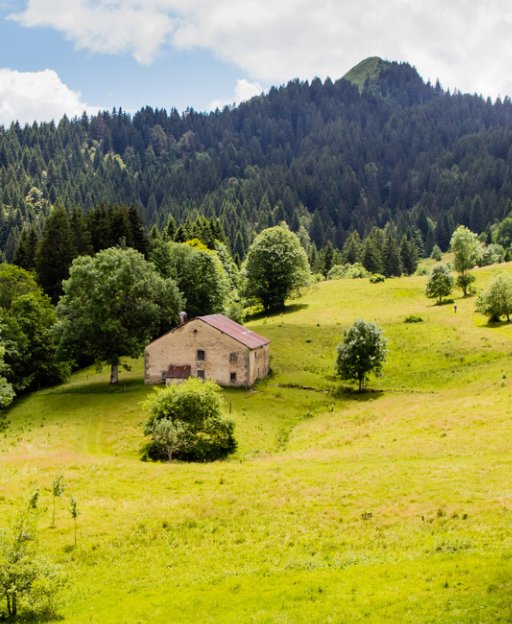
The Jura covers the old Franche-Comté region in eastern France — dense pine forests, clear rivers, limestone plateaux, and small villages that look unchanged since the 17th century. No motorway cuts through the heart of it. The roads wind.
The region borders Switzerland, and you feel that influence in the food, the architecture, and the pace. People here take their time. They eat properly. They do not seem in a hurry to attract tourists.
That inaccessibility is the point.
The Cheese That Defines the Region
Comté comes from the Jura and nowhere else. French households consume more Comté than any other cheese — over 60,000 tonnes a year — and every wheel begins in one of the small mountain co-operatives called fruitières.
Each fruitière collects milk only from farms within a few kilometres. Cows graze on specific mountain grasses. Cheesemakers have followed the same recipe for eight centuries.
Affineurs age each wheel in cold stone caves for a minimum of four months and sometimes up to 24. They turn and salt each wheel by hand throughout the process. Many caves open to visitors — the Maison du Comté in Poligny explains everything in English.
The Wine That Nobody Talks About
Jura wine baffles first-timers and delights everyone who discovers it. The region produces vin jaune — yellow wine — from the Savagnin grape. Winemakers age it for six years and three months in barrels, never filling the airspace at the top.
A layer of yeast forms naturally and protects the wine as it matures. The result tastes nutty, rich, and oxidative — unlike anything Bordeaux or Burgundy produces. Connoisseurs compare it to dry sherry, but that undersells it.
Winemakers in Arbois practised minimal intervention for generations before the rest of France called it natural wine. If you want to understand where France’s natural wine movement came from, start here.
Enjoying this? 7,000 France lovers get stories like this every week.
Thinking about it for retirement? If you’ve started thinking seriously about retiring there, our complete our full Retire in France guide covers the visa, healthcare, cost-of-living, and the regions worth shortlisting.
Where to Go in the Jura
Arbois anchors the southern Jura. Louis Pasteur grew up here — his family house opens to visitors year-round. The town square fills on summer evenings with locals eating smoked sausages and drinking Jura rosé at outdoor tables. Come for a night. Stay for three.
Baume-les-Messieurs sits inside a dramatic cirque, a curved valley carved by glaciers over thousands of years. An abbey at its centre dates from the 9th century. Very few tourists find it.
The Cascades du Hérisson is a series of waterfalls dropping through a forested gorge. Walk the trail on a weekday in spring and you may have it completely to yourself. In high summer, French families discover it — arrive early.
How to Plan Your Visit
The nearest TGV station is Mouchard on the Lyon-Strasbourg line, roughly two hours from Paris. From Mouchard, a hire car is essential — public transport does not reach the best places.
May to September gives the best conditions. Winters in the Jura are cold, and many small gîtes close from November to March. Late summer marks the local festivals celebrating the transhumance, when farmers bring their cattle down from the high summer pastures.
For a broader overview of travelling France independently, the France trip planning guide covers transport, regions, and the best time to visit each area.
Frequently Asked Questions
What is the best time to visit the Jura region in France?
Late spring (May to June) and early autumn (September to October) offer ideal conditions. The waterfalls run full in spring and the autumn colours turn the forests copper and gold. Summer is busy near the lakes but still far quieter than Provence or the Dordogne.
What food is the Jura region known for?
Comté, Morbier, and Bleu de Gex are the three AOC-protected cheeses of the Jura. Beyond cheese, local charcuterie — smoked sausages, dried hams, and pork terrines — defines everyday eating. Restaurants here serve generous, unfussy food at honest prices.
How far is the Jura from Paris?
The TGV from Paris Gare de Lyon reaches Mouchard in around two hours. From there, most Jura villages sit within an hour’s drive. Budget a minimum of two full days to do the region justice.
Is Jura wine worth seeking out?
Absolutely. Vin jaune from the Arbois appellation is one of France’s most distinctive wines, and Jura producers also make excellent Chardonnay and Pinot Noir. Most wine shops in Arbois offer tastings, and the annual Percée du Vin Jaune festival in February draws visitors from across France.
The Jura asks nothing of you except time. Give it two days and it will show you the France that still exists before the tour buses arrive.
Join 7,000+ France Lovers
Three times a week, get France’s hidden gems, seasonal guides, local stories, and the art of la vie française — straight to your inbox.
Subscribe free — enter your email:
🇫🇷 Discover the France Most Tourists Never Find
Get our free guide to 25 hidden villages of France — then join 7,000+ readers for weekly stories about places most guidebooks never mention.
Get Your Free Village Guide →📲 Know someone who’d love this? Share on WhatsApp →
Love more? Join 65,000 Ireland lovers → · Join 43,000 Scotland lovers → · Join 29,000+ Italy lovers →
Free forever · Unsubscribe anytime
🇫🇷 You Might Also Love
Tours & experiences you might love


Powered by Viator. Some links are affiliate links — we may earn a small commission at no extra cost to you.

Leave a Reply