
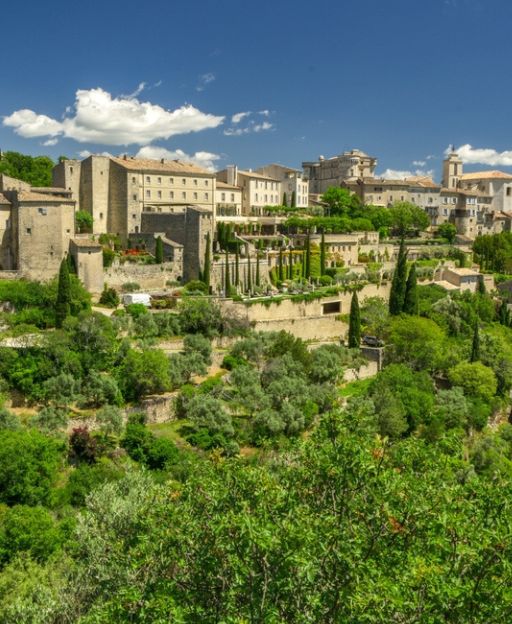
The first time most visitors see Gordes, they brake without thinking. The village rises straight from the rock — a stack of pale stone houses fused to the cliff above the Luberon valley. Nobody told them it would look like this. Nobody could have prepared them.
The Luberon is a range of low mountains in the Vaucluse, east of Avignon. The hillsides hide some of the most beautiful — and least-visited — villages in France. Most tourists focus on the big Provence highlights: Aix-en-Provence, Avignon, the lavender fields near Valensole. They miss the hilltops entirely.
That’s actually quite fortunate for anyone who arrives.
Gordes: The Village That Stops Traffic
Gordes sits 400 metres above the valley floor. Stone houses fan outward from a 12th-century castle in tight, rising rings. Every alley leads somewhere unexpected. Turn any corner and another view opens up.
France officially lists Gordes as one of its Plus Beaux Villages — the “most beautiful villages” designation the country grants to fewer than 200 places. The locals accept this status calmly. They’ve had decades to get used to the attention.
Three kilometres outside the village, the monks at Sénanque Abbey keep their 12th-century routine. Cistercians have lived here since 1148. Their lavender fields bloom purple every June and July. Photographers drive hours for that image. The monks carry on regardless, unmoved by the tripods surrounding them.
Lourmarin: Where Camus Chose to Rest
Lourmarin sits in the southern Luberon — quieter and less steep than Gordes. Albert Camus loved it enough to make it his home in the final years of his life. The village cemetery holds his grave: a simple headstone, a rosemary plant growing beside it, no grand monument.
A Renaissance château stands at the village centre, open for tours. On Friday mornings, the market fills the square with cheese, olives, herbs, and lavender sachets. Locals do their shopping. Tourists photograph everything. Everyone mostly ignores each other in that comfortable Provençal way.
If you’re planning a trip to France and want to base yourself in Provence, Lourmarin makes an excellent overnight stop. Proper restaurants and small hotels operate here without the crowds of the larger Provence towns.
Bonnieux and Ménerbes: Hillsides and Literary Ghosts
Bonnieux is the village most people pass through on the way somewhere else. That’s their loss. A cedar forest grows below the village — one of the most unusual in Provence, planted in the 19th century to stop the hillside eroding. Walk through it in the morning and long golden shafts of light cut between the trunks.
Ménerbes, a few kilometres west, sits on a narrow rocky ridge with views across two valleys. Peter Mayle made this village famous in A Year in Provence, his 1989 account of restoring a farmhouse and learning to love French bureaucracy. The book sold millions of copies worldwide. Ménerbes stayed quietly, stubbornly small.
Just nearby, the ruined castle above Lacoste belonged to the Marquis de Sade. Artists now run a school from the lower levels of the fortress. The Marquis would probably find this development very dull.
Enjoying this? 7,000 France lovers get stories like this every week.
Thinking about it seriously? If you’ve started actually planning a move, our complete our complete Moving to France guide walks through every step, every cost, and the paperwork that catches most people out.
Oppède-le-Vieux: The Village That Came Back From the Dead
Most Luberon villages are alive and thriving. Oppède-le-Vieux is different.
Residents abandoned the medieval village in the early 20th century, moving downhill to the modern settlement at Oppède. Artists discovered the ruins in the 1960s and began restoring them piece by piece. A small community lives there year-round today, sharing the hilltop with the half-ruined church and the castle above.
You reach Oppède-le-Vieux on foot, along a steep path through garrigue scrubland. At the top, the silence is close to total — just wind and birdsong far below. A café opens in summer. In every other season, the village belongs almost entirely to itself.
When to Visit and How to Get Around
May and September are the best months for the Luberon. Temperatures are comfortable, the light is extraordinary, and the crowds are a fraction of summer levels.
July and August fill the main villages fast. Gordes, in particular, feels overwhelmed in peak summer. Go early — before 9am, the streets belong to locals and cats, and the light is at its best anyway.
A hire car is essential for this circuit. The villages sit 10–20 kilometres apart on hilltops with almost no public transport between them. The D2 road connects most of them. Plan a loose circular route and stop wherever a view makes you want to stop — which happens frequently.
The Sunday antique market at Isle-sur-la-Sorgue is just 20 minutes from Gordes and deserves a morning of its own. Pair it with a Luberon loop for a very full — and very good — Provence day.
What is the best time to visit the Luberon villages?
May, June, and September are ideal. Spring brings wildflowers and warm afternoons. September offers the grape harvest, golden light, and far fewer visitors than the summer peak. The lavender near Sénanque blooms from late June to mid-August if that’s your main target.
Do I need a car to visit the Luberon?
Yes — a hire car is essential. The hilltop villages sit far apart with almost no public transport between them. Drive the D2 road from Isle-sur-la-Sorgue to Apt and you’ll pass most of the main villages. Allow a full day for a comfortable circuit.
Which Luberon village should I visit first?
Start with Gordes for the most dramatic first impression. The view from the belvedere car park alone justifies the journey. Then work south through Bonnieux, Ménerbes, and Lourmarin. Save Oppède-le-Vieux for late afternoon, when the light is softer and the path feels more atmospheric.
Where should I stay when visiting the Luberon?
Lourmarin and Apt make practical bases with good restaurants and hotels at sensible prices. Gordes has boutique options with valley views, though prices are high. Book well ahead for July and August — the Luberon fills up fast in peak season.
Join 7,000+ France Lovers
Three times a week, get France’s hidden gems, seasonal guides, local stories, and the art of la vie française — straight to your inbox.
Subscribe free — enter your email:
🇫🇷 Discover the France Most Tourists Never Find
Get our free guide to 25 hidden villages of France — then join 7,000+ readers for weekly stories about places most guidebooks never mention.
Get Your Free Village Guide →📲 Know someone who’d love this? Share on WhatsApp →
Love more? Join 65,000 Ireland lovers → · Join 43,000 Scotland lovers → · Join 29,000+ Italy lovers →
Free forever · Unsubscribe anytime
There’s a moment — usually somewhere between Gordes and Lourmarin, with the afternoon light going golden across the valley — when the Luberon stops feeling like a place you’re visiting. You slow down without deciding to. The stone walls hold the warmth of the day. It seems wrong to hurry through a place like this.
Frequently Asked Questions
What is the Luberon and where is it?
The Luberon is a range of low mountains in the Vaucluse department, located east of Avignon in Provence. It's home to some of France's least-visited villages, largely overlooked by tourists focused on bigger highlights like Aix-en-Provence and the lavender fields near Valensole.
What makes Gordes worth visiting?
Gordes rises directly from the rock as a stack of pale stone houses fused to the cliff above the Luberon valley—a visual that stops people in their tracks. France officially designates it as one of fewer than 200 "Plus Beaux Villages" (most beautiful villages) in the country, and every alley reveals another unexpected view.
Where can I see lavender fields in the Luberon?
Sénanque Abbey, three kilometers outside Gordes, maintains lavender fields that bloom purple every June and July. The Cistercian monks have lived there since 1148 and continue their 12th-century routine regardless of the photographers who arrive for the views.
What's worth doing in Lourmarin?
Albert Camus chose to live in Lourmarin during the final years of his life, and his grave sits in the village cemetery with a simple headstone and rosemary plant. The village also has a Renaissance château open for tours and a Friday morning market filled with local cheese, olives, herbs, and lavender sachets.
🇫🇷 You Might Also Love
Tours & experiences you might love


Powered by Viator. Some links are affiliate links — we may earn a small commission at no extra cost to you.

Leave a Reply