
In the early 1790s, a farmer’s wife in rural Normandy sheltered a priest fleeing the Revolution. He brought her a recipe. She had good milk, a Norman farmhouse, and an instinct for flavour. What she made from that encounter would eventually reach every corner of the world.
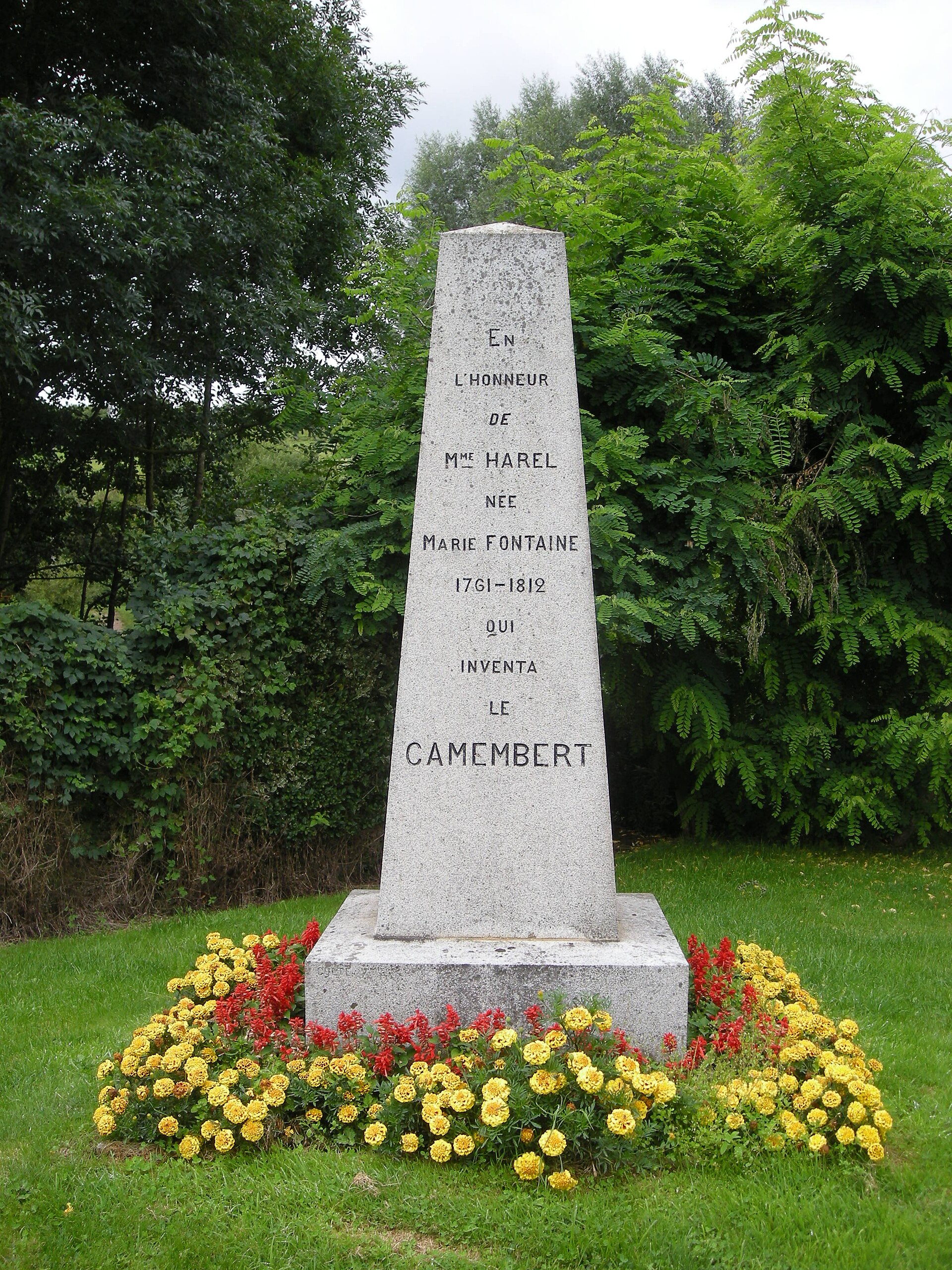
Her name was Marie Harel. The village bore the name Camembert. Two centuries later, the descendants of what she created still fight for its survival.
A Recipe Sheltered From the Revolution
The Pays d’Auge sits in the heart of Normandy — a landscape of apple orchards, hedgerows, and dairy farms that have operated the same way for generations. This was Marie Harel’s world.
Accounts of what happened vary. Some say the priest came from the Brie region and shared a soft-cheese technique. Others say Marie Harel adapted methods already in use locally. What’s clear is that she produced something different from anything made in Normandy before.
Her family continued the cheese after her death. Her daughter, and later her grandson, refined and sold it more widely. By the mid-19th century, Camembert had found its way to Paris.
The Village Itself
The village of Camembert sits in the Orne department of Normandy, near the market town of Vimoutiers, roughly 180 kilometres west of Paris. It holds perhaps 200 people. There is no theme park here, no grand fromagerie experience centre.
Just farmhouses, rolling hills, and an ancient church. A statue of Marie Harel stands in Vimoutiers itself — a simple tribute to a woman who fed much of the world without knowing it.
Visitors who make the drive often find the quiet startling. The most imitated cheese on earth came from fields that still look exactly as they did in 1791.
The Wooden Box That Let It Travel
For much of the 19th century, Camembert stayed local. The cheese was too soft to survive a long journey without damage.
Everything changed in 1890. An engineer named Ridel designed a thin, circular wooden box that gave the cheese structure and protection during transit. The railway connected Normandy to Paris, and within years, Camembert appeared on market stalls and café menus across France.
During the First World War, the French army included Camembert in soldiers’ rations. By then, it had become a national symbol — not just a regional cheese. The wooden box is still standard today. Some things, once perfected, don’t need improving.
Enjoying this? 7,000 France lovers get stories like this every week.
Thinking about it for retirement? If you’ve started thinking seriously about retiring there, our complete our full Retire in France guide covers the visa, healthcare, cost-of-living, and the regions worth shortlisting.
When the Imitations Arrived
Success created a problem. Cheese producers outside Normandy — and eventually outside France — began making their own versions, calling them “camembert.” They used pasteurised milk for longer shelf life and higher yield. Industrial moulds replaced the careful hand-ladle technique.
Today, the overwhelming majority of the “camembert” sold in French supermarkets is not genuine Camembert de Normandie. It carries the name and the round box. It lacks the raw milk, the traditional breeds, and the methods that define the original.
Taste them side by side and the difference is obvious. The authentic version smells of damp straw and woodland mushrooms. The rind yields gently under pressure. The interior near the edge is soft, runny, and complex. The industrial version is firmer, blander, and entirely predictable.
The AOP Fight
The Appellation d’Origine Protégée — AOP — label exists to protect cheeses like this. Camembert de Normandie AOP requires raw milk from Normande cows, hand-ladle moulding, and production within a defined Norman territory.
Industrial producers have repeatedly pushed to relax those rules. If the AOP label allowed pasteurised milk, the distinction between authentic and industrial would effectively disappear. Norman artisan producers have fought back, and so far the protections have held.
For travellers, the lesson is simple: look for Camembert de Normandie with the AOP stamp. The label matters. “Fabriqué en Normandie” without AOP tells you almost nothing about what’s inside.
If you want to explore the full region, our Normandy travel guide covers its markets, villages, and coastal routes. The Normandy fishing villages sit nearby and pair beautifully with a drive through the Pays d’Auge. For planning your wider France trip, the France planning hub is where to start.
Frequently Asked Questions
What is the difference between AOP Camembert de Normandie and regular camembert?
AOP Camembert de Normandie uses raw (unpasteurised) milk from Normande cows and traditional hand-ladle moulding. Regular supermarket camembert uses pasteurised milk with industrial methods. The AOP version has a richer, more complex flavour and a softer texture near the rind.
Where is the village of Camembert?
The village sits in the Orne department of Normandy, near the market town of Vimoutiers, roughly 180 kilometres west of Paris. It is a quiet, working agricultural village with no major tourist facilities.
When is the best time to visit Normandy for cheese and food?
Late spring (May to June) and early autumn (September to October) are ideal. Pastures are lush, the milk is richest, and markets across the Pays d’Auge sell seasonal produce at its best.
Where can I buy genuine Camembert de Normandie?
Look for the AOP label in local fromageries across Normandy or specialist cheese shops in Paris. Markets in towns like Vimoutiers, Lisieux, and Caen often sell directly from small producers.
Marie Harel never trademarked her recipe. She never built a factory. She just made cheese the way her corner of Normandy demanded — slow, careful, and alive.
Two centuries later, the village that carries her legacy is smaller than ever. But the cheese, when made right, still tastes like someone cared deeply about getting it right. That is all Normandy has ever asked.
Join 7,000+ France Lovers
Three times a week, get France’s hidden gems, seasonal guides, local stories, and the art of la vie française — straight to your inbox.
Subscribe free — enter your email:
📲 Know someone who’d love this? Share on WhatsApp →
Love more? Join 65,000 Ireland lovers → · Join 43,000 Scotland lovers → · Join 29,000+ Italy lovers →
Free forever · Unsubscribe anytime
🇫🇷 You Might Also Love
Tours & experiences you might love


Powered by Viator. Some links are affiliate links — we may earn a small commission at no extra cost to you.

Leave a Reply