
The Loire river moves slowly through central France, broad and unhurried, lined with white stone and old willows. On its banks stand more royal châteaux than anywhere else on earth. France’s kings understood something the rest of the world is still discovering.
The Valley the French Kings Could Not Resist
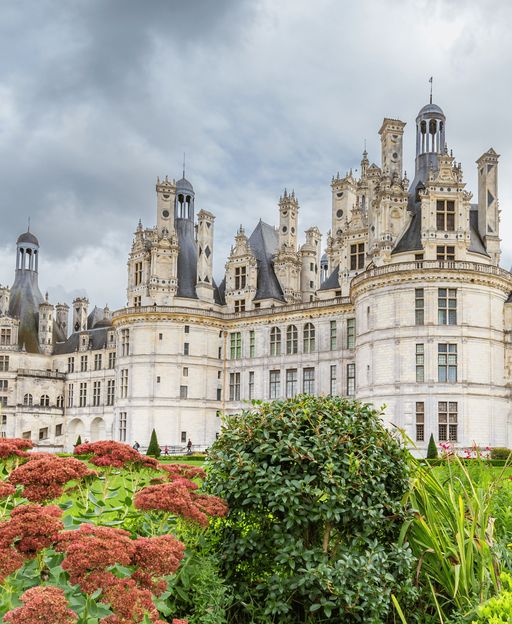
François I was not a man who did anything quietly. In 1519, he ordered a hunting lodge beside the Loire. The result was Chambord — 440 rooms, 77 staircases, and a central double-helix staircase that two people can climb simultaneously without ever meeting.
Historians believe Leonardo da Vinci designed that staircase. Da Vinci spent his final years in Amboise, twelve kilometres away, as a personal guest of the king. He died there in 1519, the same year Chambord’s foundations were laid.
Paris had politics, plague, and noise. The Loire offered clean air, vast hunting grounds, and Italian Renaissance architects willing to build something extraordinary. For two centuries, this valley was the centre of French power.
Chambord — The Hunting Lodge That Became a Palace
Chambord feels impossible the moment you see it. Rising from a flat clearing in the middle of a national forest, it has 426 windows, 84 staircases, and a roofline that looks like a miniature city skyline.
François I never finished it. He died in 1547 and the château passed to his heirs, still incomplete. It took 28 years and several kings to reach its current form.
The double-helix staircase at the centre remains the most studied structure in the Loire Valley. Two people can climb from ground to roof and never cross paths. Whether da Vinci drew the original plans remains unproven. The geometry, however, belongs entirely to his way of thinking.
Visitors today walk the same rooftop terraces where the French court gathered to watch the hunt return across the plain below.
Chenonceau — The Château Built Over a River
Twelve kilometres from Amboise, Château de Chenonceau stretches across the River Cher like a bridge that forgot its purpose. Women built it, extended it, and saved it — most famously Diane de Poitiers, the mistress of Henri II, and Catherine de Medici, his wife.
When Henri died, Catherine forced Diane out and claimed the château. The two women shaped the same building from opposite directions for decades without ever meeting there.
Today Chenonceau is the most visited château in France after Versailles, and the most photographed building in the Loire Valley.
Enjoying this? 7,000 France lovers get stories like this every week.
Thinking about it for retirement? If you’ve started thinking seriously about retiring there, our complete our full Retire in France guide covers the visa, healthcare, cost-of-living, and the regions worth shortlisting.
The Wine That Grows Between the Châteaux
The Loire Valley is one of France’s most important wine regions — and far less crowded with visitors than Bordeaux or Burgundy. The locals prefer it that way.
Red Chinon tastes of dark fruit and cold stone. White Vouvray runs from bone-dry to honeyed sweet, depending on the vintage. Muscadet, grown near the Atlantic mouth of the river, is the wine the Loire sends to oyster bars across France.
At the eastern end of the valley, Sancerre produces the most copied Sauvignon Blanc on earth. The village perches on a hill above the vines, with views that stretch for miles.
Wine caves cut into the white tufa cliffs run for kilometres beneath the Loire villages. Many serve as wine bars and restaurants. This is the Loire Valley most visitors never find.
When to Go and Where to Stay
Spring and early autumn offer the finest conditions. May brings green landscapes, open flowers, and cycling routes that are still quiet. Summer brings heat and crowds around the three main châteaux, though the valley is wide enough to absorb them.
The best bases are Amboise (compact, close to Chambord and Chenonceau) and Blois (larger, with its own royal château at the centre of town).
For a slower visit, rent a cottage near the river and cycle the Loire à Vélo — 800 kilometres of signposted trail following the river toward the Atlantic. You can plan your full trip with the France travel planning guide.
Frequently Asked Questions
What is the best time to visit the Loire Valley?
Late April through May and September are ideal. You get mild weather, green landscapes, and far smaller crowds. The main châteaux stay open year-round, including in winter.
How many châteaux are in the Loire Valley?
The Loire Valley contains over 300 châteaux, of which around 42 are UNESCO World Heritage listed. Most visitors concentrate on Chambord, Chenonceau, and Amboise — leaving dozens of smaller châteaux almost entirely to themselves.
Do you need a car to visit the Loire Valley?
A car is flexible but not essential. The Loire à Vélo cycling route connects all the main towns and châteaux. Trains from Paris reach Amboise and Blois in under 90 minutes, each within cycling distance of major sights.
How far is the Loire Valley from Paris?
The Loire Valley starts roughly 150 kilometres south-west of Paris. By train, Amboise and Blois are under 90 minutes from Paris-Montparnasse. Many visitors come for a day trip, though the valley rewards at least two or three nights.
The Loire Valley does not ask you to be anywhere in a hurry. The river sets the pace. The châteaux are already waiting — exactly where the kings left them.
Join 7,000+ France Lovers
Three times a week, get France’s hidden gems, seasonal guides, local stories, and the art of la vie française — straight to your inbox.
Subscribe free — enter your email:
🇫🇷 Discover the France Most Tourists Never Find
Get our free guide to 25 hidden villages of France — then join 7,000+ readers for weekly stories about places most guidebooks never mention.
Get Your Free Village Guide →📲 Know someone who’d love this? Share on WhatsApp →
Love more? Join 65,000 Ireland lovers → · Join 43,000 Scotland lovers → · Join 29,000+ Italy lovers →
Free forever · Unsubscribe anytime
🇫🇷 You Might Also Love
Tours & experiences you might love


Powered by Viator. Some links are affiliate links — we may earn a small commission at no extra cost to you.

Leave a Reply