
At 3:45am, a light appears behind a boulangerie window. The baker starts the oven. By 7am, the queue stretches down the pavement — and the bread is already half gone.
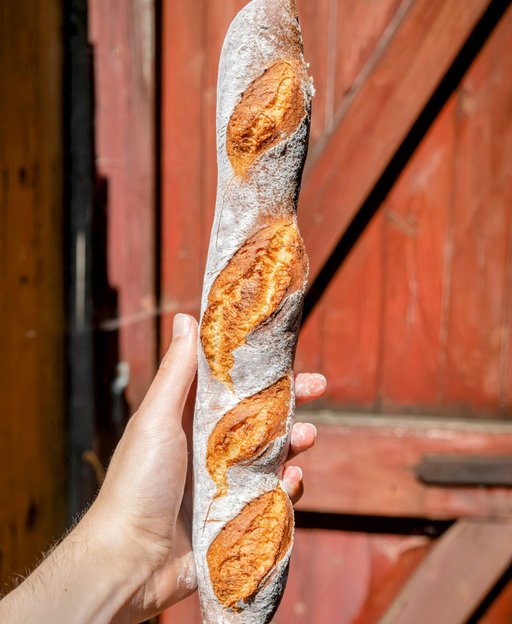
This is not exceptional. Across France — in every city, market town, and mountain village — the same ritual plays out before dawn. The French boulangerie is not a shop. It is a tradition with its own laws, its own hours, and its own place in French life.
The Law Behind Every Loaf
France does not leave bread to chance. A boulangerie artisanale must, by law, make all its bread on the premises. No pre-made dough. No frozen baguettes delivered overnight and passed off as fresh.
The décret pain — a legal decree from 1993 — defines exactly what a baker must do to display the word “boulangerie” on the sign. Any shop that buys in ready-made dough and simply bakes it cannot call itself one.
This law protects the craft. It also protects the morning. The baker cannot cut corners, because the law removes them entirely.
Three Hours Before Dawn
Dough for the first baguettes often begins the night before. Slow fermentation — sometimes 12 to 16 hours — builds complex flavour. The baker shapes each loaf by hand. Then scores the surface with a lame, a razor-sharp blade. Then loads the oven.
The Flour That Defines a Region
Not all baguettes taste the same. Bakers choose flour the way winemakers choose grapes. Some use T65 for a classic, pale crust. Others prefer T80, a slightly darker and nuttier variety. Hydration levels and fermentation times change everything about the crumb.
Every baker leaves a mark on their bread. Regulars know the difference.
The Morning Queue
By 7am in any French town, a queue forms outside the boulangerie door. This is not impatience. It is participation.
People greet their neighbours. They ask what looks good. The baker appears from the back, flour still on the apron. Someone requests a demi-baguette. The baker cuts it without complaint.
You leave with bread tucked under your arm like a newspaper. The crust crinkles in the morning air. It is still warm. The morning boulangerie run is also social — as much about the ritual as the bread itself. For a full guide to what to order when you walk through the door, our French boulangerie breakfast guide covers every item worth trying.
Enjoying this? 7,000 France lovers get stories like this every week.
Thinking about it seriously? If you’ve started actually planning a move, our complete our complete Moving to France guide walks through every step, every cost, and the paperwork that catches most people out.
Why the French Buy Bread Twice a Day
Fresh bread does not keep. This is the point.
A baguette baked at 6am grows stale by early afternoon. So French households often send someone out again at lunchtime — or stop at the boulangerie on the way home from work. Many bakeries run two rush hours: the morning and the early evening.
If you visit France, this rhythm reshapes how you think about a meal. Bread sits at the centre of the table. It earns its place alongside everything that comes next. For ideas on building your French trip around food and culture, start with our France trip planning guide.
The Bread Beyond the Baguette
Most visitors know the baguette. Far fewer discover what else a boulangerie holds.
The pain de campagne — a round sourdough loaf — keeps better and cuts more easily. The ficelle is a thinner, crispier cousin. In Brittany, bakers make kouign-amann, a caramelised butter bread unlike anything else in France. In Alsace, pretzels share shelf space with caraway loaves. In Provence, bakers shape the fougasse like an olive branch and press olives or herbs into the dough.
Each region shapes bread differently. Each baker carries a small piece of French identity into the morning.
A Craft Under Pressure
France has fewer boulangeries today than thirty years ago. Supermarkets and chain bakeries have taken ground. Some small towns have lost their only baker.
The government supports bakers through training grants and regional funds. UNESCO inscribed the baguette as intangible cultural heritage in 2022 — placing it on the same list as flamenco and the Mediterranean diet. For more on how France’s bread laws saved the baguette from industrial production, the full story is worth reading.
What keeps the craft alive, more than any law or inscription, is the queue at 7am. The regulars who know their baker’s name. The families who walk five minutes for fresh bread instead of buying a wrapped loaf at the supermarket checkout.
The baker who starts at 3:45am does it because this is the job. Because the flour, the dough, and the oven wait for no one. And because somewhere down the street, someone is already reaching for their coat.
What time do boulangeries open in France?
Most boulangeries open between 6:30am and 7:30am. Some in larger cities open as early as 6am. Most close one day per week — often Monday or Wednesday — to give the baker a rest. Check local hours before you visit.
What is the difference between a boulangerie and a pâtisserie in France?
A boulangerie focuses on bread — baguettes, loaves, and simple viennoiseries like croissants. A pâtisserie specialises in cakes, tarts, and elaborate pastries. Many French shops combine both, but only those that make their bread on site may legally call themselves a boulangerie.
What should I order at a French boulangerie as a visitor?
Start with a baguette tradition or a baguette de campagne — these show the baker’s skill. Point and say “un, s’il vous plaît” if your French is limited. Arrive before 8am for the best selection. Bring coins rather than a card for small purchases.
Is it acceptable to eat a baguette while walking in France?
Yes — breaking off the end of the baguette (the quignon) while walking home is completely normal. Most French people do it without thinking. Eating a full meal on the move is frowned upon, but nibbling fresh bread straight from the bag is entirely acceptable.
Join 7,000+ France Lovers
Three times a week, get France’s hidden gems, seasonal guides, local stories, and the art of la vie française — straight to your inbox.
Subscribe free — enter your email:
🇫🇷 Discover the France Most Tourists Never Find
Get our free guide to 25 hidden villages of France — then join 7,000+ readers for weekly stories about places most guidebooks never mention.
Get Your Free Village Guide →📲 Know someone who’d love this? Share on WhatsApp →
Love more? Join 65,000 Ireland lovers → · Join 43,000 Scotland lovers → · Join 29,000+ Italy lovers →
Free forever · Unsubscribe anytime
🇫🇷 You Might Also Love
Tours & experiences you might love


Powered by Viator. Some links are affiliate links — we may earn a small commission at no extra cost to you.

Leave a Reply