
Near Verdun in northeastern France, there are nine villages that no longer exist. Not ruins, not ghost towns — just empty fields with a sign at the edge. Beneath the grass, the village still waits.
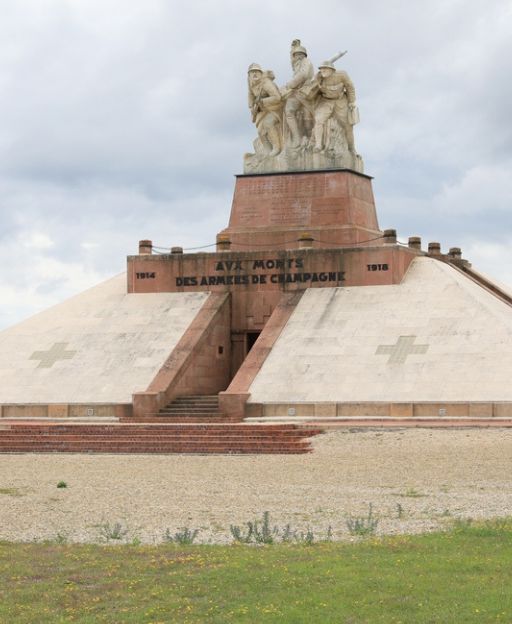
What Happened to These Villages
When the First World War ended in November 1918, certain parts of France were left in such a state of destruction that the government faced an extraordinary choice: rebuild, or let go.
In some areas, letting go was the only option. The land was saturated with millions of unexploded shells, poison gas canisters, human remains, and the wreckage of four years of industrial warfare. Rebuilding was not just impractical. In places, it was genuinely impossible.
These areas were officially declared Zone Rouge — the Red Zone. At its peak, the Zone Rouge covered around 1,200 square kilometres of northeastern France. The villages within it were beyond saving.
The Villages That Died for France
Nine villages near Verdun were given a formal designation: villages morts pour la France — villages that died for France.
They were completely destroyed during the Battle of Verdun, one of the most devastating battles in history. By the end of the fighting, nothing recognisable remained in many of them. No standing walls. No streets. No trees.
France made a remarkable decision: it did not erase these villages from the map. Each one still exists as an official French commune. Each still has a mayor. Each still files paperwork with the state. But not one of them has a single permanent resident.
The most visited is Fleury-devant-Douaumont. During the battle, the village changed hands sixteen times. When the fighting finally stopped, the land held nothing but craters. Today, you walk through a field of gentle grassy mounds — the shapes of old cellars, the outlines of streets, the ghost of a village. A small marker shows where the church stood. Another marks the school.
You can walk through this field in twenty minutes. It takes much longer to leave.
If you are planning a visit to this region, the Champagne countryside makes a natural companion to the Verdun battlefields. Our guide to the Champagne region covers the best ways to explore northeastern France at a slower pace.
Enjoying this? 7,000 France lovers get stories like this every week. Subscribe free →
The Iron Harvest
More than a hundred years on, the land is still returning what it buried.
Every spring, farmers across the old front line plough up shells — sometimes hundreds of tonnes in a single year. The French call it the récolte de fer: the iron harvest. Bomb disposal teams, the démineurs, are called out year-round to handle what the fields reveal. It is not an emergency. It is routine.
In some parts of the old Zone Rouge, the arsenic levels in the soil remain too high for safe habitation. Scientists estimate the contamination in certain areas will persist for centuries. Around 100 square kilometres remains permanently off-limits to this day.
This is a part of France where the ground itself has not yet made peace.
Walking Where a Village Once Stood
Visiting the ghost villages near Verdun is not a conventional travel experience. There are no cafés, no souvenirs, no explanatory panels telling you how to feel.
What there is: silence, grass, and space. Fleury has a small memorial chapel — rebuilt after the war — that stands alone in the field. Around it, the land is peaceful in the way that very old grief becomes peaceful. The birds are loud. The sky is wide.
You understand, without being told, that this place asks something quiet of you.
Most visitors combine the ghost villages with a broader trip through northeastern France. If you are still planning your route, our France travel planning guide can help you build an itinerary that gives this region the time it deserves.
Why France Chose to Keep Them Empty
France could have let these village names disappear quietly into history. Instead, it chose to keep them named, maintained, and officially recognised — while remaining empty.
The decision carries a particular kind of weight. These places are not monuments in the usual sense. There is no statue, no plinth, no dramatic inscription. There is only absence.
And absence, the French understood, can say more than any memorial ever could.
Standing in one of these empty fields, with the wind moving through the grass and the light the same as it always was, you feel the strangeness of it. This is France — green, sunny, alive in every direction — except here, where the land still remembers something no one has ever quite found the words to say.
Join 7,000+ France Lovers
Every week, get France’s hidden gems, seasonal guides, local stories, and the art of la vie française — straight to your inbox.
Love more? Join 65,000 Ireland lovers → · Join 43,000 Scotland lovers → · Join 30,000 Italy lovers →
Free forever · One email per week · Unsubscribe anytime
Leave a Reply