
Walk into a French home for dinner and you will notice something strange. After the main course, before anyone mentions dessert, a wooden board appears at the centre of the table. On it: three or four different cheeses, a knife, and nothing else. No crackers. No jam. Just bread, which someone will have already torn into rough chunks. This is how France has ended its meals for generations.
The Cheese Course Is Not Optional
In France, cheese is a course of its own. It comes after the main dish and before dessert. This surprises most visitors, who are used to cheese as a starter or a snack.
The French call it le plateau de fromages — the cheese board. When it arrives at the table, conversations often slow down. People settle in. Nobody rushes to the dessert. That pause is the point.
This is not just a food preference. It is a signal. The cheese course tells everyone at the table that the evening is not over yet.
What Goes on the Board
A proper French cheese board has variety, not quantity. Three to five cheeses is enough. You might find a soft Brie de Meaux from the Île-de-France, a firm and nutty Comté from the Jura mountains, and a pungent Époisses from Burgundy. Each one is different in texture, age, and region.
The cheeses come out of the fridge at least an hour before serving. Cold cheese has almost no flavour. A French host who served cold cheese would not be forgiven easily. Room temperature is not a preference — it is the rule.
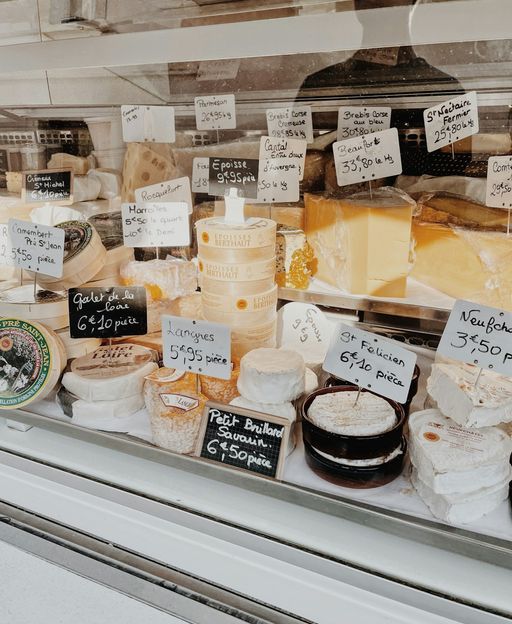
Walk into any fromagerie in France and you will see rows of cheeses at exactly the right temperature, tended by an affineur who knows each one by smell, by feel, and by day of ageing. They will ask you what you are eating that evening before they recommend anything.
The Order Nobody Teaches You
There is a method to how the French eat a cheese board, and most of them have never consciously thought about it. You move from mild to strong. Start with the softest, freshest cheese — perhaps a young chèvre or a delicate Saint-Marcellin. Work your way towards the aged and powerful.
Children in France learn this by watching their parents. By adulthood, it feels like instinct. The idea of starting with a strong Roquefort and ending with a mild Camembert would feel deeply wrong to most French people — like eating pudding before the starter.
If you are planning your first trip and want to know how to eat like a local from the moment you arrive, our guide to planning your trip to France covers everything you need before you sit down at your first French table.
Bread, and Nothing Else
Cheese in France is eaten with bread. Not crackers, not grapes, not chutney — just bread. This is not snobbery. It is logic. Good bread absorbs the flavour without competing with it. Crackers have their own taste. Fruit changes the experience. Bread lets the cheese speak.
The bread is usually torn, not sliced. It is set on the table already broken, ready to be used. A baguette that is a few hours old is ideal — not so fresh it is chewy, not so old it is dry.
That relationship between bread and everything else on a French table is deep and specific. This piece on the hidden world of French bakers gives you a sense of how seriously France takes its bread culture.
Enjoying this? France lovers get stories like this every week. Subscribe free →
Why the Pause Matters
The cheese course is not really about cheese. It is about time. It is the moment in a French dinner when the meal could wind down — or go on for another hour. In most French homes, it goes on.
The French do not eat alone, and they do not eat fast. Their whole approach to meals is built around presence — sitting down properly, taking the time, staying at the table long enough to actually talk. The cheese course fits perfectly inside that logic.
When the board arrives, nobody checks their phone. Nobody asks for the bill. The cheese course buys another thirty minutes, sometimes an hour. It is, in the politest possible way, a refusal to leave.
A Ritual Worth Borrowing
France has over 1,200 recorded varieties of cheese, and every region has its own. Normandy has its Camembert and Livarot. Provence has its fresh chèvres. Alsace has its Munster, powerful and washed-rind. Burgundy has Époisses, which Napoleon reportedly loved so much he had it sent to Paris by special courier.
Each cheese carries a region with it. Eating a Roquefort from the caves of Combalou is eating something that has been made in the same place, in roughly the same way, for centuries. The French understand this. They do not need it explained.
In France, the cheese course has survived every food trend, every diet, and every generation. It is still there, every evening, on boards across the country. A pause in the middle of a meal. A quiet insistence that this — right now — is worth staying for.
Join the France Lovers
Three times a week, get France’s hidden gems, seasonal guides, local stories, and the art of la vie française — straight to your inbox.
Subscribe free — enter your email:
Free forever · Unsubscribe anytime
🇫🇷 You Might Also Love
Tours & experiences you might love


Powered by Viator. Some links are affiliate links — we may earn a small commission at no extra cost to you.

Leave a Reply