
A Loire Valley road trip from Paris is one of the best escapes you can make in France. The valley sits about two hours south-west of the capital by car, putting you in the heart of château country within a morning. Over three days, you can visit the most beautiful royal palaces in Europe, eat well, drink outstanding local wine, and drive through a landscape that has barely changed in centuries.
Love France? Join 7,000+ readers on our free newsletter → lovetovisitfrance.substack.com
This guide covers a three-day route starting from Paris, the best châteaux to include, what to eat and drink, and the practical details you need before you go.
Why Do a Loire Valley Road Trip?
The Loire Valley is a UNESCO World Heritage Site, recognised for its châteaux, villages, and the river itself. French royalty built more than 300 castles here over the centuries. Not all of them survived, but the ones that did are extraordinary — ranging from vast Renaissance palaces to intimate manor houses still occupied by the same families after 400 years.
Driving gives you a freedom that trains and buses cannot. The châteaux are spread across a 200-kilometre stretch of river. Some are easy to reach by public transport. Others are not. With a hire car, you set your own pace, stop at the villages between castles, and see the valley the way it was meant to be seen — slowly.
Planning Your Loire Valley Road Trip
How Far Is the Loire Valley from Paris?
The Loire Valley begins at Gien, about 150 kilometres south of Paris. Most visitors aim for the central stretch between Blois and Saumur, which holds the highest concentration of major châteaux.
From Paris, Blois is around 185 kilometres by road — roughly two hours without traffic. If you are flying into Charles de Gaulle or Orly, allow an extra 30 to 45 minutes on top of that.
How Many Days Do You Need?
Three days is the minimum for a satisfying trip. You can visit the main châteaux, eat well, and still have time to wander without rushing.
Five days lets you push further west towards Saumur, explore the Anjou wine region, and visit the lesser-known castles that most itineraries skip. If you have the time, take it.
Should You Drive or Take the Train?
The fast train from Paris Montparnasse reaches Blois in under an hour and a half. From there, local buses and taxis connect to Chambord and Cheverny. Cycling is also popular — the Loire à Vélo cycling route runs the full length of the valley.
But a hire car gives you proper freedom. You can visit Chenonceau in the morning, drive to Amboise for lunch, and reach Azay-le-Rideau by late afternoon — on your own schedule, without waiting for a bus.
For US travellers, hiring a car in France is straightforward. Book in advance and note that most vehicles have manual gearboxes. If you need an automatic, specify it when booking — they cost more but are available.
The 3-Day Loire Valley Road Trip Route
Day 1: Chambord and Cheverny
Start at Chambord. It is the largest château in the Loire Valley and one of the most recognisable buildings in France. Francis I began construction in 1519, intending to project the wealth and power of the French monarchy to the world.
The interior centrepiece is the double-helix staircase — two staircases that spiral around each other without ever meeting. Many historians credit the design to Leonardo da Vinci, who was living nearby at the time. Climb to the rooftop terrace for a sweeping view across the surrounding forest and the château’s 13,000-hectare grounds.
In the afternoon, drive 14 kilometres south-west to Château de Cheverny. Where Chambord is vast and theatrical, Cheverny is intimate and lived-in. The same family has owned it for nearly four centuries. Visit the furnished apartments — one of the best-preserved in France — then walk to the kennels where the estate keeps 70 hunting dogs, fed daily in a ceremony open to visitors.
Day 2: Chenonceau and Amboise
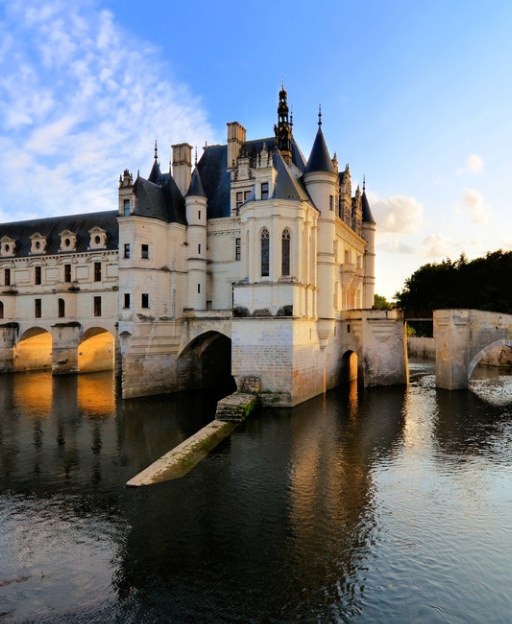
Château de Chenonceau spans the River Cher on a series of arches — the image most people picture when they think of the Loire Valley. It was shaped by a series of remarkable women, most famously Diane de Poitiers and Catherine de Medici, who turned it into one of the most beautiful châteaux in France.
Arrive early. By mid-morning the coaches arrive and the crowds build. The formal gardens on either side of the château are worth as much of your time as the interior.
In the afternoon, follow the river east to Amboise. The town sits beneath a clifftop royal château where Charles VIII was born. Leonardo da Vinci spent his final three years here and is buried in the château chapel. Walk from the château down into town and visit the Clos Lucé, the manor house where Leonardo lived until his death in 1519. His bedroom is preserved, and the grounds contain full-scale models of his inventions.
Enjoying this guide?
Every week, we share free France travel stories, hidden gems, and planning tips.
Day 3: Villandry and Azay-le-Rideau
Château de Villandry is famous above all for its gardens — three formal terraces covering six hectares, each designed in the French Renaissance style. The vegetable garden is planted in geometric patterns of colour and form. It is unlike anything else in the Loire Valley, and it is at its best in summer when everything is growing.
From Villandry, it is a short drive west to Azay-le-Rideau. The château rises from an island in the River Indre, surrounded by a natural moat that reflects its white stone towers in the water. It is smaller than Chambord and less crowded than Chenonceau, which makes it easier to enjoy at your own pace. The interior is elegant — built not for a king but for a wealthy tax collector who wanted to impress.
What to Eat and Drink Along the Way
The Loire Valley is one of France’s great wine regions. Muscadet comes from the western end near Nantes — light, dry, and perfect with the river fish. Sancerre and Pouilly-Fumé come from the eastern stretch. In the middle, look for Vouvray, made from Chenin Blanc. Depending on the year, it can be bone dry, off-dry, or sparkling. Ask locals what to try.
Local food is satisfying and unpretentious. Rillettes de Tours is a coarse pork spread eaten on bread — every decent delicatessen along the route sells it. Tarte Tatin, the upside-down caramelised apple tart, was invented in the Loire region and is still the default dessert in most restaurants.
Most of the towns along the route hold weekly markets. Amboise holds a Friday morning market beside the river. Blois has one on Saturday. If you want a picnic, these are the best places to stock up.
When to Visit the Loire Valley
Late spring is the best season for a Loire Valley road trip. May and June bring warm days, the gardens are at their peak, and the summer crowds have not yet arrived. The châteaux are busy but manageable.
July and August are the most popular months. French families take their summer holidays along the Loire, and queues at Chambord and Chenonceau can be long. If you visit in summer, book château tickets online in advance. It saves you an hour in the queue on a hot day.
September is excellent. The harvest begins, the light turns golden, and coaches are mostly gone. Accommodation is easier to find and slightly cheaper.
Winter (December to February) is quiet but many smaller sites close entirely. The main châteaux stay open year-round with reduced hours.
Tips for US Travellers
Book château tickets in advance. Chambord and Chenonceau both allow advance booking online. On busy days it saves you significant time.
Stay in a village, not a city. Blois and Tours are convenient hubs and both are good bases. But if possible, stay somewhere smaller — Amboise, Chaumont-sur-Loire, or Azay-le-Rideau. The atmosphere shifts completely after the day visitors leave.
Fuel up before leaving the motorway. Petrol stations in rural Loire villages are rare. Fill the tank in town before heading out to the smaller châteaux.
Carry some cash. Most châteaux accept cards, but local restaurants and market stalls often prefer cash. A few small villages have no card reader at all.
Before you leave for France, check our France travel budget guide for a full breakdown of costs. Also see our complete Loire Valley travel guide for more detail on each town and château, and our guide to choosing the best regions in France if you are still deciding where to go.
Frequently Asked Questions
What is the best base for a Loire Valley road trip from Paris?
Blois and Amboise are the most practical bases. Blois puts you within 20 kilometres of Chambord and Cheverny. Amboise is central to Chenonceau and the middle stretch of the valley. Both have good hotels and restaurants. For a three-day trip, Amboise is slightly more convenient as a single base.
Do you need a car to do the Loire Valley?
A car is the most flexible option, but not essential for the main châteaux. Fast trains connect Paris to Blois and Tours. Local buses and taxis reach Chambord, Cheverny, and Chenonceau. Cycling is popular and well-catered for along the Loire à Vélo route. If you prefer not to drive, hire a bike from Blois or Amboise.
How much does a Loire Valley road trip cost for two people?
A three-day road trip with hire car, mid-range accommodation, and admission to four châteaux costs roughly €400–600 for two people, excluding meals and wine. Chambord entry is around €15 per person, Chenonceau around €17. See our France travel budget guide for a full cost breakdown.
You Might Also Enjoy
- Loire Valley Travel Guide: The Complete Introduction
- Visiting the Normandy D-Day Beaches: A Complete Guide for American Travellers
- Bordeaux Travel Guide: France’s Wine Capital and What to Do There
Plan Your France Trip
Ready to start planning? Our France trip planning hub covers everything from when to go to how to get around — a single starting point for your whole trip.
Join 7,000+ France Lovers
Three times a week, get France’s hidden gems, local recipes, and travel inspiration — the kind you won’t find in any guidebook.
Subscribe free — enter your email:
Love more? Join 64,000 Ireland lovers → · Join 43,000 Scotland lovers → · Join 30,000 Italy lovers →
Thinking about it seriously?
If you’ve started actually planning a move, our complete our complete Moving to France guide walks through every step, every cost, and the paperwork that catches most people out.
Free forever · Unsubscribe anytime
Tours & experiences you might love


Powered by Viator. Some links are affiliate links — we may earn a small commission at no extra cost to you.

Leave a Reply