
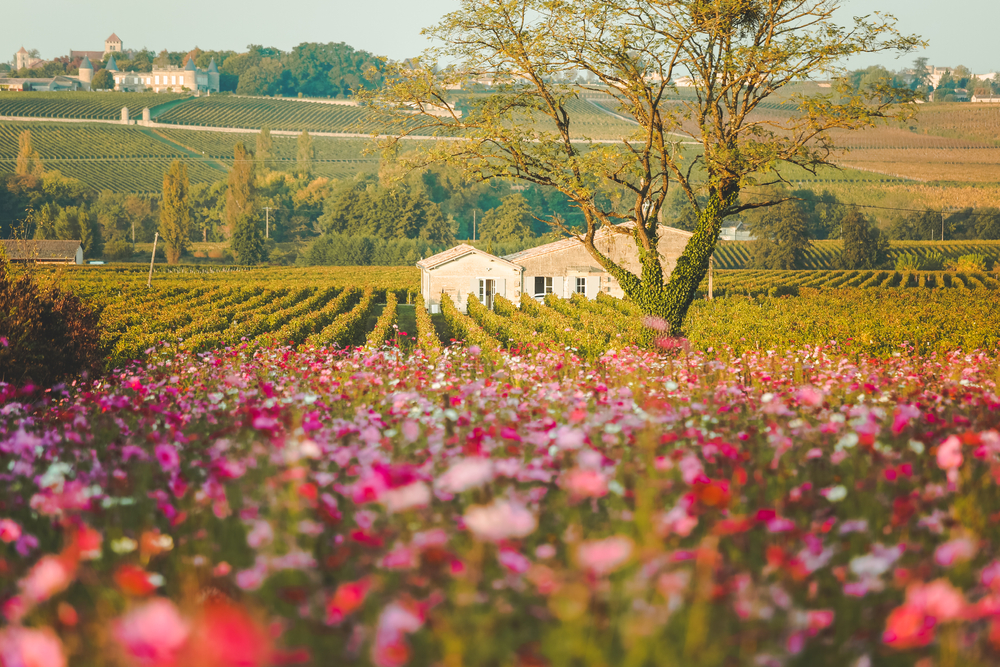
Bordeaux is one of the most recognised wine regions on the planet. The name alone conjures images of rolling vineyards, stone chateaux and glasses of deep red wine. But there is far more to this corner of south-west France than its reputation suggests. Whether you are a serious wine enthusiast or simply someone who enjoys good food, good scenery and interesting history, Bordeaux has a lot to offer — and it is more accessible than many visitors expect.
This guide covers the key facts about the Bordeaux wine region: where it is, what to drink, which villages to visit, when to go, and how to get there. No fluff — just the information you need to plan a trip worth taking.
The Bordeaux Wine Region at a Glance
Bordeaux sits in the Gironde department of south-west France, roughly 580 kilometres from Paris and about 100 kilometres from the Atlantic coast. The city of Bordeaux itself is a major urban centre with around 260,000 residents, making it France’s sixth-largest city. But for most visitors, the wine region surrounding it is the main draw.
The region produces around 700 million bottles of wine each year, covering approximately 120,000 hectares of vineyards. These vineyards are divided into more than 60 appellations — official wine-producing zones — each with its own rules about which grape varieties can be grown and how the wine must be made.
The region divides broadly into two areas: the Left Bank, which sits to the west of the Gironde estuary and the Garonne river, and the Right Bank, to the east. The Left Bank is dominated by Cabernet Sauvignon and is home to famous appellations such as Pauillac, Margaux and Saint-Julien. The Right Bank, including Saint-Emilion and Pomerol, leans more heavily on Merlot.
Between the two rivers lies Entre-Deux-Mers — literally “between two seas” — which produces mainly dry white wines from Sauvignon Blanc and Semillon.
Love France? Get more like this every week.
Join thousands of readers who follow our free France newsletter — travel tips, cultural stories, food guides and more. Subscribe free here.
Saint-Emilion: A UNESCO World Heritage Village
If you visit only one village in the Bordeaux wine country, make it Saint-Emilion. This small medieval town, located about 40 kilometres east of Bordeaux city, sits at the heart of the Right Bank appellation of the same name. In 1999, UNESCO granted it World Heritage status — not just for its vineyards, but for the entire cultural landscape: the limestone plateau, the underground churches, the medieval town centre and the wine-producing tradition that has continued here for over 2,000 years.
The town itself is compact and easy to explore on foot. The main landmarks include the Monolithic Church — a vast underground church carved entirely out of rock between the 8th and 12th centuries — the Collegiate Church and its cloisters, and the Tour du Roi, a 13th-century tower that offers views across the vineyards.
Saint-Emilion’s narrow cobbled streets are lined with wine merchants, bakeries selling macarons de Saint-Emilion (a local speciality made from almonds, sugar and egg whites), and small restaurants where you can eat well without spending a fortune.
The vineyards here produce wines from Merlot and Cabernet Franc, typically softer and more approachable in their youth than many Left Bank wines. The Premier Grand Cru Classe wines — such as Cheval Blanc and Ausone — are among the most expensive in the world, but there are hundreds of smaller producers making excellent bottles at far more reasonable prices.
What to Drink: Understanding Bordeaux Wine
You do not need to be an expert to enjoy Bordeaux wine, but a few basics will help you choose well and get more from any tasting you attend.
Red Bordeaux is a blend, not a single variety. Left Bank wines typically lead with Cabernet Sauvignon, which gives structure, tannin and longevity. Right Bank wines lead with Merlot, which is rounder, fruitier and often easier to drink younger. Both styles are usually finished with smaller amounts of Cabernet Franc, Petit Verdot or Malbec.
White Bordeaux is made primarily from Sauvignon Blanc and Semillon. The dry whites from Entre-Deux-Mers are crisp and aromatic. The sweet whites from Sauternes and Barsac — made from grapes affected by noble rot — are some of the most complex dessert wines in the world. Chateau d’Yquem is the most famous name, but smaller Sauternes producers offer remarkable quality for a fraction of the price.
Claret is simply the British term for red Bordeaux, derived from the French word for light red wine. The term has been used in Britain since the Middle Ages and is still widely understood in wine circles.
For tastings, many chateaux in the region welcome visitors, but most require advance booking. The tourist offices in Bordeaux city and Saint-Emilion can help arrange visits, or you can book directly through chateau websites. Harvest season — typically September and October — is the busiest period, and booking several weeks ahead is essential.
Beyond Wine: What Else to Do in Bordeaux
Wine is the headline act, but Bordeaux offers plenty more.
Bordeaux city has a beautifully preserved 18th-century centre that earned it UNESCO World Heritage status in 2007. The Place de la Bourse, reflected in the vast water mirror (Miroir d’Eau) opposite it, is one of the most photographed squares in France. The Cite du Vin is a striking modern building shaped to suggest wine swirling in a glass; its permanent collection covers wine history and culture across the globe.
The Medoc on the Left Bank is best explored by car or bicycle. The Route des Chateaux winds through Margaux, Saint-Julien, Pauillac and Saint-Estephe, passing some of the most famous wine estates in the world. The small town of Pauillac has a good restaurant scene and makes a useful base.
Arcachon Bay, about 50 kilometres west of Bordeaux, is famous for its oysters, its sand dunes and its seafood restaurants. The Dune du Pilat — at 110 metres, the tallest sand dune in Europe — is worth the short climb for the view across the bay and the pine forests. Oyster boats run tasting trips from the village of Gujan-Mestras most mornings.
Discover more of France every week.
Our free newsletter covers the regions, the food, the history and the places worth visiting. No spam, just France. Sign up free today.
When to Visit Bordeaux
The best time to visit the Bordeaux wine region depends on what you want to do.
Spring (April to May) is ideal for cycling and outdoor exploration. The vines are budding, the weather is mild (averaging 14 to 18 degrees C), and the tourist crowds have not yet arrived. Prices for accommodation are significantly lower than in summer.
Summer (June to August) brings warm, sunny weather (averaging 22 to 28 degrees C), longer opening hours at chateaux and a full calendar of food and wine festivals. It is also the busiest and most expensive season. Book accommodation well in advance, especially in Saint-Emilion, which has limited hotel stock.
Harvest (September to October) is the most atmospheric time to visit. The vineyards turn gold and red, the air carries the smell of fermenting wine, and the region is at its most active. Many chateaux host harvest events. Temperatures are still pleasant (15 to 22 degrees C), and it is generally regarded as the best all-round time to visit.
Winter (November to February) is quiet, with many smaller chateaux closed to visitors. However, Bordeaux city is worth visiting year-round, and prices drop considerably. The Christmas markets in the city centre are popular with French domestic tourists.
Getting To and Around Bordeaux
Bordeaux-Merignac Airport connects the city to dozens of European destinations, with particularly good connections from the UK. Ryanair, easyJet and British Airways all operate routes from various British airports. Flight time from London is around two hours.
By train, Bordeaux is two hours from Paris on the high-speed TGV service. This makes it a practical option for a long weekend from Paris, or even as a day trip if you are based in the capital.
Within the region, a car is the most practical option. Public transport between villages is limited, and many chateaux are not easily accessible by bicycle for those not used to longer rides. Car hire is available at the airport and the main train station (Bordeaux Saint-Jean). Driving on country roads between vineyards is straightforward, and parking is rarely a problem outside the city centre.
For those who prefer not to drive, guided coach tours from Bordeaux city to Saint-Emilion, the Medoc and Sauternes operate daily throughout the season. These typically include two or three chateau visits with tastings and cost between 60 and 120 euros per person.
Where to Stay
Bordeaux city has the widest range of accommodation at all price points. The Chartrons neighbourhood — historically the wine merchants’ quarter — has a good selection of boutique hotels and converted townhouses. It is a 15-minute walk from the main sights and has excellent restaurants and wine bars.
Saint-Emilion has a handful of small hotels and chambres d’hotes (bed and breakfast) within the village, though they book up quickly in summer and harvest season. Staying in the village itself is worth it for the early mornings before coach parties arrive.
Chateau accommodation is increasingly available across the region. Several estates have opened gites or small hotels on their grounds. This is not necessarily expensive — some offer rooms from around 100 euros per night — and staying on a wine estate gives a far more immersive experience than a standard hotel.
Planning a trip to France?
Get our free weekly newsletter packed with guides to French regions, travel tips and food recommendations. Subscribe for free here.
Practical Tips Before You Go
A few final points worth knowing before you book:
- Most chateaux require advance booking for tastings. Walk-in visits are the exception, not the rule, especially at well-known estates.
- Designated driver arrangements are taken seriously in the region. Many tasting programmes offer a non-alcoholic alternative or spittoon options as standard.
- Saint-Emilion gets extremely busy on weekend afternoons in summer. Arriving before 10am or after 4pm gives a much more pleasant experience.
- The Bordeaux city tourist office on the Cours du 30 Juillet is well-staffed and can book chateau visits, guided tours and restaurant tables. Worth a visit on arrival.
- Supermarkets in the region stock excellent local wines at everyday prices. Buying from a supermarket rather than a tourist shop saves money without compromising quality at the lower end of the price range.
Bordeaux is not a difficult destination. It rewards a bit of advance planning — particularly around chateau bookings — but the region is well set up for visitors, the food is excellent, and the wine is, as advertised, very good indeed.
Image credit: Shutterstock
Thinking about it for retirement?
If you’ve started thinking seriously about retiring there, our complete our full Retire in France guide covers the visa, healthcare, cost-of-living, and the regions worth shortlisting.
Tours & experiences you might love


Powered by Viator. Some links are affiliate links — we may earn a small commission at no extra cost to you.

Leave a Reply