
Saint-Émilion has been producing wine for over 2,000 years — and the village itself still carries that history in every stone, slope, and cellar.
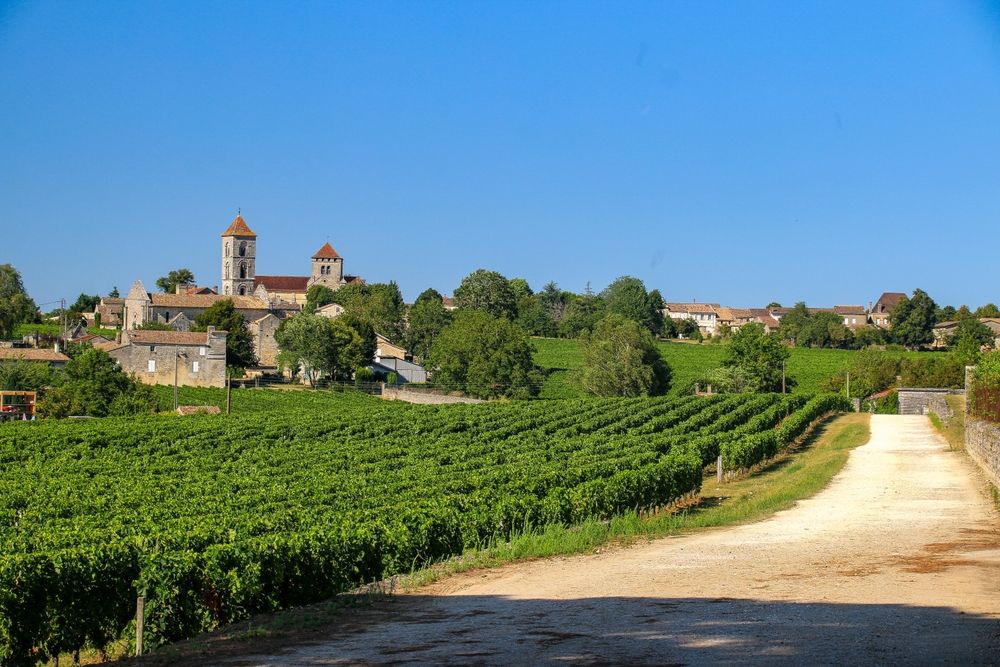
Sitting on the Right Bank of the Gironde estuary, about 40 kilometres east of Bordeaux city, Saint-Émilion is one of the most visited and most respected wine destinations in France. Its vineyards are inscribed as a UNESCO World Heritage Cultural Landscape — one of only a handful of wine regions in the world to hold that status. The reason is not just the wine. It is the entire package: the medieval town, the underground churches, the limestone plateau, and the centuries of unbroken viticulture.
This guide covers what makes Saint-Émilion worth visiting, how to understand the wines, and what to do when you arrive.
Join thousands of readers getting the best of France every week — delivered straight to your inbox.
A History Rooted in Roman Vines
The Romans were the first to plant vines here. The region’s chalky limestone soils and gentle slopes proved ideal for viticulture, and the tradition never stopped. By the Middle Ages, Saint-Émilion’s wines were being exported across Europe, and the English — who controlled Bordeaux for three centuries — played a key role in building its international reputation.
The town itself grew up around a hermit monk named Émilion, who is said to have lived in a cave beneath what is now the town centre in the 8th century. Pilgrims came to visit, a community formed, and the settlement took his name. The cave still exists. You can visit it today.
In 1999, UNESCO inscribed the entire cultural landscape of the Saint-Émilion jurisdiction as a World Heritage Site. That designation covers not just the vineyards but the underground monolithic church — the largest in Europe, carved directly out of the limestone — the medieval ramparts, and the ancient town centre.
Left Bank vs Right Bank: Understanding Bordeaux Wine
Bordeaux wine is not one single thing. The region is split by the Gironde estuary and the Dordogne and Garonne rivers, creating two distinct zones with different soils, climates, and grape varieties.
The Left Bank — home to the famous appellations of Médoc, Pauillac, and Margaux — is dominated by Cabernet Sauvignon. These wines are firm, structured, and built to age. They can be quite tannic in their youth and often need a decade or more to open up. Names like Château Margaux and Château Lafite Rothschild come from here.
The Right Bank — where Saint-Émilion sits, alongside Pomerol — favours Merlot, with Cabernet Franc as a supporting grape. The soils here are heavier: clay over limestone, which holds moisture and suits Merlot’s thinner skin better than the well-drained gravels of the Left Bank. The result is a wine that is softer, rounder, and often more approachable when young.
Saint-Émilion’s classification system — the Classement de Saint-Émilion — divides the top châteaux into Premier Grand Cru Classé A and B, and Grand Cru Classé. Unlike the Médoc’s 1855 classification, which has barely changed in 170 years, the Saint-Émilion classification is reviewed roughly every decade. That review process has been controversial at times, with châteaux gaining and losing status through legal challenges, but it does mean the system is at least intended to reflect current quality rather than historical prestige.
If you want to understand Bordeaux wine, tasting from both banks is the clearest way to grasp the difference.
The Village: What to See and Do
Saint-Émilion is a small town — fewer than 2,000 permanent residents — but it draws hundreds of thousands of visitors each year. The old town sits on a plateau and a hillside, with the vineyards spreading across the slopes below and beyond.
The Monolithic Church is the centrepiece. Carved out of solid limestone between the 9th and 12th centuries, it is the largest underground church in Europe, with space for several hundred people. Entry is via a guided tour only, which also includes the catacombs and the hermit’s cave. It is worth every minute.
The Bell Tower of the church rises above the town and is one of the most recognisable landmarks in Bordeaux wine country. Climbing it gives a clear view over the vineyards and the surrounding landscape.
The Collegiate Church of Saint-Émilion, above ground and dating to the 12th century, has an elegant cloister that is open to visitors throughout the year.
The Ramparts encircle part of the medieval town and are largely intact. Walking along them gives a good sense of the town’s scale and its relationship to the surrounding landscape.
Wine tasting is, of course, the main draw. The town centre is well supplied with tasting rooms and wine shops, ranging from cooperative producers to individual château boutiques. Visiting a château directly — many accept appointments — is the best way to understand the land behind the wine. Saint-Émilion is compact enough that some châteaux are a short walk from the town gates.
The Sunday market fills the main square with local produce, cheeses, and wine. If you are there on a Sunday, it is worth getting up early.
From Bordeaux wine routes to Provençal villages — we cover the France that’s worth your time.
Getting There and Getting Around
Saint-Émilion is about 40 kilometres east of Bordeaux. By train, the journey takes around 35 minutes from Bordeaux Saint-Jean station — there are several services daily, and the Saint-Émilion station is a short walk from the town centre. By car, it is a straightforward drive along the A10 or the D936.
The town itself is small enough to walk everywhere, but the surrounding wine country requires a car, a bike, or a guided tour. Several companies in Bordeaux offer half-day and full-day wine tours that include transport and tastings at multiple châteaux.
The best time to visit is spring or autumn. July and August see the highest visitor numbers. Harvest — vendange — typically runs from late September into October, depending on the year. This is when the vineyards are most active and the atmosphere is at its liveliest.
Where to Stay
Saint-Émilion has a small number of hotels and chambres d’hôtes within the medieval town — booking ahead is essential in summer. For more options, the surrounding villages and some of the châteaux themselves offer accommodation, ranging from converted farmhouses to more formal château hotels.
Staying overnight rather than visiting as a day trip from Bordeaux makes a significant difference. The town is quieter in the mornings and evenings, and a walk through the vineyards at dusk with fewer crowds is worth the extra night.
What to Eat
Saint-Émilion is famous for its macarons — the local variety, made without the almond paste filling common in Paris, has been produced here since the 17th century by Ursuline nuns. Several bakeries in town continue the tradition today.
Beyond the macarons, the region’s cuisine follows the broader Southwest France style: duck confit, foie gras, magret de canard, and dishes built around slow-cooked meats. Bordeaux wine features heavily in sauces and accompaniments — unsurprisingly.
The town has a good range of restaurants, from simple lunch spots to more formal dining. Reservations are recommended during the summer months.
Practical Information
- Location: Saint-Émilion, Gironde, Nouvelle-Aquitaine, approximately 40 km east of Bordeaux
- By train: 35 minutes from Bordeaux Saint-Jean, multiple daily services
- Best months: April–June, September–October
- Underground church tours: Book through the tourist office on Place des Créneaux
- Tourist office: Office de Tourisme de Saint-Émilion, Place des Créneaux
- Note on access: The town is hilly with steep and cobbled streets. Most key sites are accessible with advance planning.
Get honest, practical guides to France’s best places — no fluff, just the good stuff.
Saint-Émilion does not need exaggeration. The facts are compelling enough: 2,000 years of continuous winemaking, a UNESCO-inscribed landscape, an underground church carved by hand into solid rock, and a wine tradition that has shaped what the world understands Bordeaux to mean. It is one of those places that earns its reputation.
Thinking about it seriously?
If you’ve started actually planning a move, our complete our complete Moving to France guide walks through every step, every cost, and the paperwork that catches most people out.
🇫🇷 Discover the France Most Tourists Never Find
Get our free guide to 25 hidden villages of France — then join 7,000+ readers for weekly stories about places most guidebooks never mention.
Get Your Free Village Guide →Tours & experiences you might love


Powered by Viator. Some links are affiliate links — we may earn a small commission at no extra cost to you.

Leave a Reply